Coyote hunting demands a unique set of skills and the right gear to level the playing field after dark. A quality thermal monocular is no longer a luxury reserved for elite hunters; it has become an essential tool for locating and identifying targets in complete darkness, thick brush, or challenging weather conditions. Spotting a coyote before it spots you is the ultimate advantage.
Finding a thermal monocular that delivers on performance without breaking the bank can be a challenge. This roundup is designed to help budget-conscious hunters navigate the market. We have compiled a list of the top thermal monoculars for 2025 that offer a powerful combination of clear imaging, reliable detection range, and essential features, all while providing exceptional value for your investment.
Our Top Picks for Budget Coyote Hunting Thermal Monoculars
- Pulsar Helion 2 XQ38 Thermal Monocular
- Teslong Thermal Monocular, 256×192 Thermal Imaging Monocular
- ATN Odin LT Wearable Compact Thermal Monocular
- AGM Global Vision Asp-Micro TM160 Thermal Imaging Monocular
- Burris Thermal Series Handheld Thermal Vision Device
- AGM Global Vision REFURBISHED Asp-Micro TM384
- InfiRay Thermal Monocular for iPhone, T2 Pro Thermal Camera
- TOPDON TS004 Thermal Imaging Monocular
- Bering Optics HOGSTER Vibe Thermal Scopes
- ATN OTS 4T 384 2.5-10x Smart Thermal Monocular
Pulsar Helion 2 XQ38 Thermal Monocular
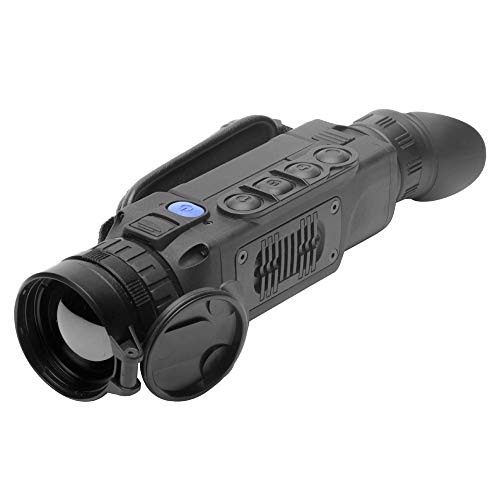
The Pulsar Helion 2 XQ38 is a high-performance thermal monocular that brings professional-grade features within reach. It features a highly sensitive thermal sensor with a NETD of less than 40mK and a lightning-fast 50Hz refresh rate, which provides a smooth, clear image even when scanning quickly or tracking moving coyotes. This level of clarity and responsiveness is a significant advantage in the field.
This unit is packed with useful tools for the hunter, including a 3.5-14x variable magnification and a stadiametric rangefinder to help judge distance. The integrated accelerometer and a long-lasting 8-hour rechargeable battery make it a reliable partner for extended hunting sessions. Please note this product is subject to U.S. export control regulations.
Teslong Thermal Monocular, 256×192 Thermal Imaging Monocular

Teslong offers a compelling package for hunters seeking a straightforward and effective thermal monocular. It uses a 256×192 thermal sensor paired with a 720×540 LCOS display to deliver clear thermal imaging for identifying targets in various outdoor conditions. The device includes a practical hotspot marking feature, allowing you to quickly pinpoint the warmest part of a potential target.
One of its strongest assets is the substantial 4800mAh rechargeable battery, which provides over 10 hours of continuous use on a single charge. This ensures you can spend a full night in the field without worrying about power. The diopter adjustment is a thoughtful addition, allowing users to customize the view to their specific vision needs for a sharp image.
ATN Odin LT Wearable Compact Thermal Monocular

The ATN Odin LT stands out for its compact, wearable design that prioritizes portability and ease of use. Driven by ATN’s Obsidian LT core, this monocular is ergonomically designed to fit comfortably in one hand, making it simple to manipulate and access the menu while on the move. Its lightweight build is ideal for hunters who need to cover a lot of ground.
It offers essential thermal viewing modes like White Hot and Black Hot, allowing you to choose the color palette that provides the best contrast for your environment. The hands-free capability adds to its versatility, making it a great tool for scanning an area while keeping your hands available for other tasks.
AGM Global Vision Asp-Micro TM160 Thermal Imaging Monocular

The AGM Asp-Micro TM160 is a feature-rich handheld thermal imager that performs well for short to medium-range detection. It is equipped with a 160×120 infrared detector and a high-resolution 720×540 LCOS display, which work together to produce a clear thermal image. This makes it suitable for hunting, as well as other applications like search and rescue.
Beyond basic observation, this monocular includes practical functions such as distance measurement and highest temperature target tracking. These tools can help you gauge how far away a coyote is and maintain a visual lock on the primary heat signature in a cluttered environment, even in total darkness.
Burris Thermal Series Handheld Thermal Vision Device
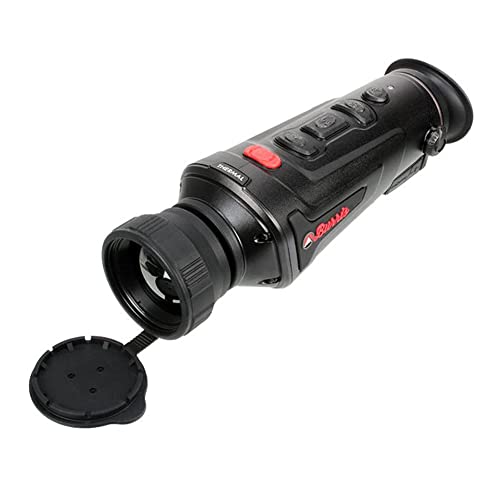
Burris brings its optical expertise to the thermal market with this modern, lightweight handheld device. It is capable of detecting and hot-tracking targets at distances exceeding 750 yards, giving you plenty of range to spot coyotes from a safe and effective position. The smooth zoom function allows for detailed observation once a target is acquired.
A key feature is the real-time Wi-Fi connection to your mobile phone, which lets you control the monocular and record video directly from your device. This is perfect for documenting your hunt or sharing the view with a partner. With five color palettes and adjustable contrast and brightness, you can fine-tune the image to your preference.
AGM Global Vision REFURBISHED Asp-Micro TM384

For hunters wanting higher resolution on a tight budget, this refurbished AGM Asp-Micro TM384 presents an excellent opportunity. It boasts a 384×288 resolution thermal detector, which provides a significantly sharper and more detailed image compared to lower-resolution models. This allows for better identification of targets at longer ranges.
Being a refurbished unit, it offers access to premium specs at a reduced cost, and it comes with the reassurance of a 1-year warranty from the manufacturer. The device includes advanced image processing like adaptive AGC and 3D DNR to deliver a clean and stable picture, making it a very capable tool for serious coyote hunting.
InfiRay Thermal Monocular for iPhone, T2 Pro Thermal Camera

The InfiRay T2 Pro offers a unique and integrated approach by connecting directly to your iPhone. It uses a 256×192 IR resolution sensor to provide clear thermal imaging, which is then displayed on your phone’s large, high-resolution screen. This setup can offer a very clear and expansive view of your surroundings.
It features an impressive 2x-16x manual zoom and claims a detection range of up to 800 yards for deer-sized animals. Since it draws power from your iPhone, you can benefit from the phone’s battery life for extended use. The real-time hotspot tracking assists in quickly locating your target against the background.
TOPDON TS004 Thermal Imaging Monocular

The TOPDON TS004 is a robust thermal monocular built for reliability and clarity in the field. It features a 256×192 IR resolution and a smooth 50Hz refresh rate, which helps to minimize motion blur and provide a vivid thermal image. This combination is effective for scanning fields and woodlines for coyote activity.
With an IP67 rating, it is protected against dust and water immersion, making it suitable for use in various weather conditions. The large 5000mAh battery supports up to 11 hours of operation, and the wireless connection to the TopInfrared app allows for live monitoring, video recording, and image capture directly from your smartphone.
Bering Optics HOGSTER Vibe Thermal Scopes

While technically a thermal scope, the Bering Optics HOGSTER Vibe is included for its exceptional value and performance, and it can be used as a handheld spotting device. It features a high-quality 384×288 Vanadium Oxide core and a premium 35mm Germanium lens, which work together to produce a crisp, high-contrast image.
With a 2.0x-8.0x magnification range and an 800-yard detection range for hog-sized targets, it is more than capable for coyote hunting. A significant benefit is the unmatched 4-year warranty from the Texas-based manufacturer, providing long-term peace of mind. It also includes photo and video recording with Wi-Fi streaming.
ATN OTS 4T 384 2.5-10x Smart Thermal Monocular
The ATN OTS 4T 384 is a smart thermal monocular that integrates advanced technology for a comprehensive hunting tool. It boasts a 384×288 sensor resolution, providing a detailed and clear image for effective target identification. The 2.5-10x variable magnification allows for wide-field scanning and close-up inspection of potential targets.
As part of ATN’s smart series, it likely includes features such as video recording, streaming capabilities, and ballistic calculators. These smart features enhance its functionality beyond simple observation, making it a versatile device for the tech-savvy hunter who wants to record their excursions or use advanced ranging tools.
Buying Guide: How to Choose a Budget Thermal Monocular for Coyote Hunting
When I’m looking for the best thermal monocular for coyote hunting on a budget, I focus on a few key specs that make the biggest difference in the field without destroying my wallet. It’s all about balancing performance and price. The first thing I check is the sensor resolution. This is the heart of the unit and determines how clear the image will be. For coyote hunting, where you need to identify a target at a distance, I wouldn’t go lower than a 256×192 sensor. A 320×240 is a fantastic sweet spot for budget models, giving you a detailed enough picture to tell a coyote from a dog or a deer.
Next up is the thermal core’s NETD value. This is a measure of thermal sensitivity. A lower NETD, typically under 40mK (millikelvin), means the device can detect smaller temperature differences. This translates to a cleaner, sharper image, especially on cooler nights when the thermal contrast between a coyote and its surroundings might not be extreme. A good NETD helps you see more detail and reduces that fuzzy, noisy look.
Magnification is another area where I see people get confused. A thermal monocular isn’t a traditional day scope; its primary job is detection and observation. I find that a base magnification of around 2x to 4x is perfect for scanning large fields and woodlines. Many models offer digital zoom, but remember that this just enlarges the pixels you already have, so the image can get blocky fast. I rely on the base optical magnification for clarity and use digital zoom sparingly.
Battery life is a practical consideration that can ruin a hunt if overlooked. There’s nothing worse than your unit dying just as the action heats up. I look for models that promise a minimum of 5-6 hours of continuous use on a single charge. Some units use proprietary batteries, while others take common rechargeable CR123 or AA batteries. I have a slight preference for models that use common batteries because I can always carry cheap spares, but built-in rechargeable packs are often more convenient.
Finally, I consider the physical design. It needs to be rugged enough to handle being knocked around in a truck or ATV. A good IP rating for water and dust resistance (like IP67) gives me peace of mind if I get caught in a drizzle. The user interface and menu should be simple to navigate with gloved hands. Features like video recording and multiple color palettes (like White Hot, Black Hot) are nice bonuses, but for a true budget pick, I prioritize core detection performance above all else. Finding the right balance of these features is the key to landing one of the best thermal monoculars for coyote hunting on a budget.
Frequently Asked Questions
What is a realistic detection range for a budget thermal monocular on coyotes?
This is probably the most common question I get. With a budget thermal monocular featuring a 256×192 or 320×240 sensor, you can realistically detect a coyote-sized heat signature out to 150-300 yards, sometimes more under ideal conditions. “Detection” means seeing a hot spot and knowing something is there. Recognizing that it’s definitely a coyote (and not a fox or dog) happens at a closer range, usually inside 150 yards. The actual range is heavily influenced by the environment, weather, and the coyote’s own body heat against the background.
Can I use a thermal monocular as a coyote hunting scope?
No, and this is a critical safety point. A thermal monocular is a scanning and observation tool. It is not designed to be mounted on a rifle and used as a scope. The recoil from a firearm will absolutely destroy the delicate internal thermal core and electronics. If you want to shoot using thermal, you need a dedicated thermal riflescope that is built and certified to handle the repeated shock of recoil.
How important is refresh rate for coyote hunting?
The refresh rate, measured in Hertz (Hz), is very important for a smooth viewing experience. Most modern budget monoculars have a 50Hz refresh rate, which is perfectly adequate for scanning and tracking moving coyotes. A lower refresh rate, like 30Hz, can appear a bit choppy or laggy when you pan the device quickly. For the fast-paced action of coyote hunting, especially when a coyote is on the run, I strongly recommend sticking with a 50Hz model to avoid that disorienting lag.
What is the best thermal color palette for spotting coyotes?
This is largely personal preference, but most hunters, including myself, stick with White Hot or Black Hot. White Hot displays warmer objects as white and cooler backgrounds as black. Black Hot is the inverse. I find White Hot excellent for picking out the distinct shape of a coyote against a dark background, like a woodline. The high contrast makes it pop. I might switch to Black Hot in very grassy or cluttered areas where a white blob might blend in. The key is to experiment during your first few outings to see what your eye picks up fastest.
Are cheaper thermal monoculars durable enough for hunting?
Yes, but you have to be smart about it. Reputable brands building budget models understand they will be used in tough conditions. Look for a monocular with a solid build quality and a good IP rating for water and dust resistance (IP67 is great). It won’t be as bombproof as a $5,000 military-grade unit, but it should easily withstand the bumps, vibrations, and weather you encounter during a normal hunt. Just treat it with reasonable care, and it should last you for many seasons.
Is it worth waiting for sales to buy a thermal monocular?
Absolutely. The market for thermal optics is competitive, and prices do fluctuate. Major holiday sales like Black Friday, Cyber Monday, and around Christmas are excellent times to look for deals. I have also found that new model releases are the best time to buy the previous year’s model, as retailers will often discount the older inventory significantly. With a little patience, you can often get a much better unit for your money, making your search for the best thermal monocular for coyote hunting on a budget a success.