Mastering the art of knife throwing requires patience, skill, and the right tools. The perfect throwing knife is balanced, durable, and suited to your skill level, whether you’re a beginner learning the basics or a competitor honing your accuracy. A good set can make practice more effective and enjoyable, helping you stick your target consistently.
With so many options on the market, choosing can be tricky. This roundup highlights eight excellent sets designed for practice, from budget-friendly beginner packs to professional-grade throwers. We’ve evaluated key factors like balance, construction, and included accessories to help you find your ideal match.
Our Top Picks for Throwing Knives
- Smith & Wesson 8in Throwing Knives Set 6 Pack
- BladesUSA Perfect Point Throwing Knives – Set of 3
- Under Control Tactical Best Throwing Knives for Competition
- Cold Steel True Flight Thrower, Green
- Böker Knife Magnum LiL Friend Micro 02SC743
- SOG Fling Throwing Knives- 3 Pack Balanced Throwing Knife Set
- United Cutlery UC2770 M48 Cyclone Throwing Knife Set
- Gil Hibben The Outrider Throwing Knife
Smith & Wesson 8in Throwing Knives Set 6 Pack
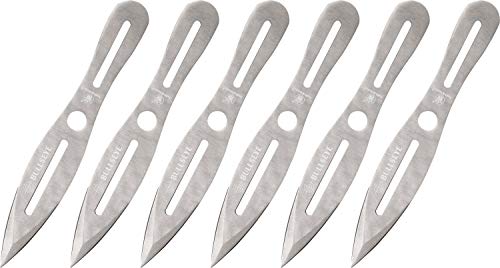
This six-pack from the trusted Smith & Wesson brand offers excellent value for those starting out or wanting a high-quantity practice set. Each knife measures a full 8 inches in length, providing a good heft and size that is manageable for learning different throwing techniques. The set is designed with an ergonomic handle to promote a secure and comfortable grip.
Constructed from reliable 2Cr13 stainless steel, these knives are built to withstand repeated impact. The included black nylon belt sheath is a practical addition, allowing you to safely carry and conveniently access all six knives at once, making your practice sessions more organized and portable.
BladesUSA Perfect Point Throwing Knives – Set of 3
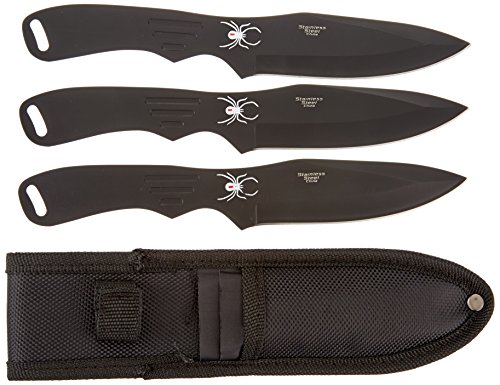
The BladesUSA Perfect Point set stands out with its distinctive spider-web design and full-tang black stainless steel construction. Made from 3CR13 steel, these knives provide a solid balance of hardness and resistance to corrosion, ensuring they remain reliable over time. The set of three is a great middle-ground for practitioners who want quality without a large bundle.
These knives are noted for being well-balanced, a critical feature for consistent throwing performance. This makes them suitable for both newcomers working on their technique and experienced throwers seeking dependable tools for regular practice or martial arts training.
Under Control Tactical Best Throwing Knives for Competition
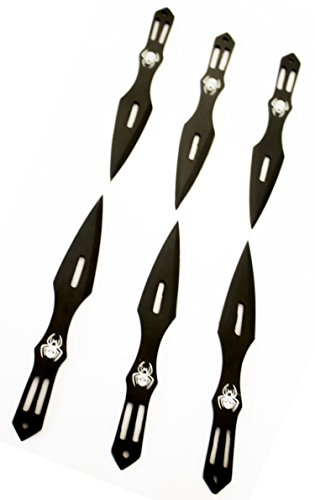
Inspired by the traditional Kunai design, this set of six is marketed for serious martial arts and competition use. The knives are relatively lightweight at 1.1 ounces each and feature a 5.5-inch profile, which can aid in achieving faster throws and reducing arm fatigue during extended practice sessions.
The manufacturer emphasizes a precision-engineered shape intended to minimize wind resistance for improved accuracy. Along with the six sharp blades, the package includes a practical black nylon wrist sheath, offering a unique and accessible way to carry your knives ready for use.
Cold Steel True Flight Thrower
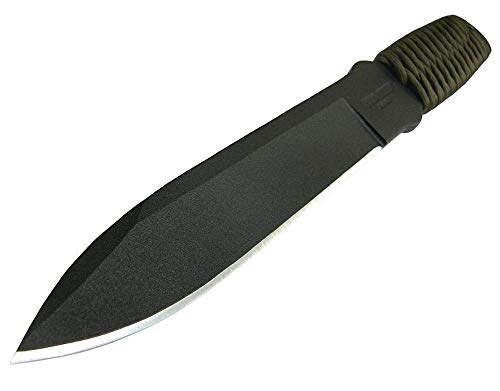
The Cold Steel True Flight Thrower is a single, high-quality knife made for the dedicated enthusiast. It is crafted from 1055 carbon steel, a material known for its strength and ability to hold up to rigorous impact, and features a protective baked-on black coating.
This model has a strong reputation among throwing communities for its reliability and accuracy in flight. It comes with a durable Cor-Ex sheath for safe storage and transport. As a individual knife, it is ideal for those who prefer to invest in one exceptional tool rather than a multi-pack.
Böker Knife Magnum LiL Friend Micro

The Böker Magnum LiL Friend is a compact and unique option, with a very short 3.5 cm blade. Its small size and light 38-gram weight make it a specialized tool, perhaps better suited for close-range target practice or for those with advanced skills looking for a challenging throw.
Despite its micro size, it is made from 440 steel, offering good durability for its scale. This knife is an interesting choice for a collector or a thrower seeking to add a small, precision-focused practice knife to their arsenal.
SOG Fling Throwing Knives- 3 Pack

SOG brings its tactical reputation to throwing knives with this three-pack set. Each knife is a full-tang 9.5-inch stainless steel construction, promising enhanced durability. The handles are wrapped in 7 feet of paracord, providing an excellent grip and the added benefit of having spare cordage available in a pinch.
This robust build is intended for those who throw often and with force. The design supports various throwing styles, including no-spin and rotational techniques, making them a versatile choice for recreational and professional practice.
United Cutlery UC2770 M48 Cyclone Throwing Knife Set
United Cutlery’s M48 Cyclone set features a distinct, aggressive design with a unique curved blade that resembles a cyclone or talon. This aesthetic is matched with a functional full-tang construction, aiming to provide a secure and balanced feel in the hand during a throw.
Sets like these from United Cutlery often appeal to those who appreciate a more tactical or stylized look in their practice gear. The design is meant to facilitate a stable rotation, which can help with achieving consistent stick patterns on the target.
Gil Hibben The Outrider Throwing Knife
Designed by renowned knife maker Gil Hibben, The Outrider is a single, high-grade throwing knife. Hibben’s designs are known for their balance and expert craftsmanship, often featuring in collections and used by skilled practitioners.
This knife is built for performance, with careful attention to weight distribution and aerodynamics. It represents a choice for the serious thrower or collector who values the input of a master designer and seeks a reliable, accurate tool for advanced practice.
What to Look For in the Best Throwing Knives for Practice
When you’re starting out, picking the right set of practice knives can feel overwhelming. I’ve been there. The wrong choice can make learning frustrating and even damage your gear. So, let’s break down what actually matters when you’re looking for the best throwing knives for practice. It’s not about fancy looks; it’s about balance, durability, and feel.
First, consider the balance. You’ll hear about “handle-heavy,” “blade-heavy,” and “balanced” knives. For beginners, I usually recommend a balanced knife or one that’s slightly handle-heavy. These are more forgiving and teach you good technique without forcing a specific throwing style. Blade-heavy knives are great for spin throwing but can be trickier to learn on. The weight is crucial too. A good practice knife should have some heft—typically between 8 to 12 ounces for the set. Too light, and they won’t stick; too heavy, and your arm will tire quickly.
Next, let’s talk construction. You want a single, full-tang piece of steel. No handles that can splinter or break off. Period. This is a safety issue. The steel should be tough but not brittle. High-carbon steel is common and holds up well, though it can rust if you don’t take care of it. Stainless steel is more corrosion-resistant but can sometimes be too hard, making it prone to snapping on a bad throw. Look for a hardness around 50-55 HRC; it’s a sweet spot that allows the knife to bend rather than shatter.
Finally, think about the practical stuff. A blunt tip is safer for beginners and is kinder to wooden targets. A smooth, unfinished finish is actually better than a polished one—it gives you a more secure grip. And length matters! Knives between 10 to 13 inches are ideal for learning. They’re long enough to provide a good grip and rotation but not so long they’re unwieldy. Remember, you’re not just buying a tool; you’re buying a training partner. Getting a set of three identical knives is the standard and the smart way to go, so you can develop a consistent rhythm. Keep these points in mind, and you’ll find a set that helps you improve, not fight your gear.
FAQ
What’s the best throwing distance for a beginner?
Start close. Really close. I tell new throwers to begin about 8 to 10 feet from the target. At this range, you can focus on your form, release, and rotation without overthinking the distance. The goal is to get the knife to stick consistently. Once you’re hitting reliably at 10 feet, take a small step back. There’s no rush. Mastering short distances builds the muscle memory you need for longer throws later on.
Should I sharpen my practice throwing knives?
No, and this is important. Keep the edges and tip blunt. A sharp knife is dangerous to retrieve from a target and can cause severe injury if it bounces back. The goal is to get the knife to stick, not to cut. The force of the throw is what plants it into the wood. A sharp point can also dig too deep into the target, making it a pain to pull out. For safe and effective practice, blunt is better.
What kind of target should I use?
A soft, forgiving wood is your best friend. I use a vertical grain softwood like cottonwood, pine, or poplar. Avoid hardwoods like oak—they’ll destroy your knife tips. You can build a simple target by strapping together several thick rounds of a log or constructing a box frame and packing it with layered wood. Always ensure your target is wider and taller than your spread, and have a solid, safe backdrop in case of misses.
Is there a difference between “no-spin” and “spin” throwing?
Yes, they’re fundamentally different techniques. Spin throwing is the classic method where the knife rotates in the air. The distance you stand determines how many times it spins. No-spin, or “athletic” throwing, involves a technique where you throw the knife so it flies straight with minimal rotation, like a dart. It’s harder to learn but offers greater accuracy at varying distances. Most beginners start with spin throwing, as it’s more intuitive.
How do I maintain my throwing knives?
Prevent rust. After a practice session, wipe down your knives with a dry cloth. If they’re wet or you’ve been sweating, give them a light coat of food-grade mineral oil or a dedicated knife protectant. Store them in a dry place. If you see rust spots, you can use fine steel wool or a Scotch-Brite pad with oil to gently scrub it off. Inspect them regularly for stress cracks or major bends. A small bend can often be straightened in a vise, but a cracked knife should be retired.
Can I use any knife for throwing?
Technically, you can throw anything, but you shouldn’t. Kitchen knives, pocket knives, and survival knives are not designed for the impact. They can break, sending sharp fragments flying, or the handles can fail. For consistent, safe, and effective practice, investing in a proper set of the best throwing knives for practice is non-negotiable. They are built from a single piece of steel to withstand repeated impacts and are balanced specifically for the task.