Hiking poles are more than just extra legs on the trail; they are essential tools for stability, endurance, and safety. By transferring some of the load to your upper body, they reduce impact on your knees and joints, improve balance on uneven terrain, and can even increase your overall hiking speed. Whether you’re navigating a rocky descent, crossing a stream, or simply looking to maintain energy on a long-distance trek, the right pair of poles makes a significant difference.
The market offers a wide variety, from ultralight carbon fiber models favored by fastpackers to durable, adjustable aluminum poles perfect for backpacking. Key features to consider include the locking mechanism, grip material, weight, and packability. This roundup highlights ten of the best options available, each with distinct strengths to match different hiking styles, terrains, and budgets.
Our Top Picks for Hiking Poles
- Cascade Mountain Tech Lightweight Aluminum Trekking Poles
- Trekology Trek-Z Collapsible Hiking & Trekking Poles
- Foxelli Carbon Fiber Trekking Poles with Cork Grips
- BLACK DIAMOND Distance Carbon Z Trekking Poles
- BLACK DIAMOND Trail Cork Trekking Poles
- LEKI Black Series FX Carbon Collapsible Walking Poles
- Cascade Mountain Tech Carbon Fiber Trekking Poles
- MSR Dynalock Ascent Carbon Backcountry Poles
- Hiker Hunger Carbon Fiber Trekking Poles
- REI Co-op Traverse Power Lock Cork Trekking Poles
Cascade Mountain Tech Lightweight Aluminum Trekking Poles
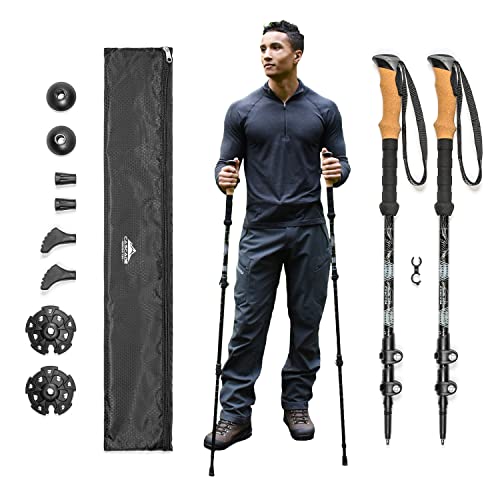
These poles offer a robust balance of durability and value. Constructed from aircraft-grade 6061 aluminum, they provide excellent lateral strength and are less prone to snapping under pressure compared to some carbon fiber options. The quick lock mechanism allows for easy, on-the-fly adjustments from 26 to 54 inches, accommodating a wide range of user heights and terrain needs.
Comfort is a priority with the natural cork grip, which helps absorb vibration and wick away moisture. The extended EVA foam down grip is notably generous, offering ample space for hand placement during steep ascents or descents. With adjustable wrist straps and a included tip kit, these poles are a complete, reliable package for most hikers seeking dependable trail support.
Trekology Trek-Z Collapsible Hiking & Trekking Poles

Designed with user-friendliness in mind, the Trek-Z poles are an excellent choice for beginners and seasoned walkers alike. Their flip-lock system with a secure metal stopper makes adjustment simple and reliable, offering a 20cm range to fit users from 5’8″ and under or 5’9″ and taller. The cork-texture grip improves hold in various conditions.
These poles emphasize lightweight comfort and packability. Weighing just around 10.5 ounces per pole, they are easy to carry all day. The EVA foam shafts provide a secure grip, and included mud stops add functionality in wet environments. Sold with a convenient carrying bag, they represent a solid, budget-conscious entry into using trekking poles.
Foxelli Carbon Fiber Trekking Poles with Cork Grips
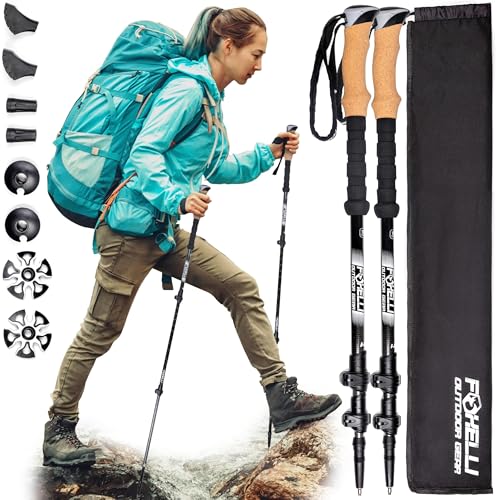
For hikers prioritizing minimal weight, the Foxelli carbon fiber poles are a standout. At only 7.6 ounces per pole, they help conserve energy on long trails. The 100% carbon fiber construction delivers a good strength-to-weight ratio, suitable for demanding backpacking trips while being gentle on joints.
The ergonomic design focuses on all-day comfort. The cork grips naturally conform to your hands and manage sweat, while the extended EVA foam sleeve offers a secondary hold point. The lever locks are designed for easy, secure adjustments without slipping, providing stable support from 24 to 54 inches for hikers of virtually any size.
BLACK DIAMOND Distance Carbon Z Trekking Poles

These poles are built for speed and efficiency. The ultralight 100% carbon fiber construction is tailored for mountain runners, fastpackers, and hikers who need reliable support without any unnecessary weight. The fixed-length, three-section Z-pole design deploys instantly with a single pull and folds down compactly.
By eliminating adjustable locks, the fixed-length design maximizes rigidity and durability, offering consistent performance on technical terrain. This streamlined approach is perfect for athletes and adventurers who value a fast transition and a pole that feels solid and responsive with every plant.
BLACK DIAMOND Trail Cork Trekking Poles

A classic choice for adjustable trekking poles, this model combines trusted materials with a proven locking system. The high-strength aluminum shafts provide dependable durability for rocky trails and heavy pack use. The FlickLock adjustment mechanism allows for quick, secure length changes to adapt to varying incline.
Comfort is ensured by the 100% natural cork grips, which mold to your hand over time, and the extended dual-density foam sleeves. This design offers versatile hand positions for ascents and descents. They are a versatile, season-proof option for backpackers and hikers who need adjustable, all-condition reliability.
LEKI Black Series FX Carbon Collapsible Walking Poles

LEKI brings its renowned engineering to a sleek, all-black carbon pole. The carbon construction manages to keep the weight around half a pound per pair while maintaining impressive rigidity on the trail. The minimalist aesthetic is matched by functional, user-friendly design.
Adjustment is handled by the single Speed Lock 2 Plus switch, allowing the pole to be set between 110 and 130 cm. It collapses into three compact sections for easy packing. This pole is for the hiker who wants lightweight carbon performance from a heritage brand with a clean, modern look.
Cascade Mountain Tech Carbon Fiber Trekking Poles

This set delivers carbon fiber benefits at a very accessible point. Weighing just 8.1 ounces each, they help lighten your load for speed or long-distance comfort. The carbon fiber construction is both strong and user-friendly, making them suitable for everyone from beginners to thru-hikers.
The reliable quick lock system supports easy adjustment from 26 to 54 inches, securing your chosen height during use. As a straightforward, no-fuss option, these poles provide essential trail support, durability, and weight savings without a complex feature set.
MSR Dynalock Ascent Carbon Backcountry Poles

Built for demanding, multi-season use, these poles feature a unique Kevlar-reinforced carbon fiber construction. This makes them exceptionally durable and versatile enough for backcountry skiing, splitboarding, and summer hiking. They are designed to handle the rigors of off-trail and alpine environments.
The three-piece design deploys quickly and folds small for storage. The DynaLock mechanism offers tool-free tension adjustment and 20 cm of length adjustment, allowing for a precise and secure fit. These are a top choice for the adventurer who needs one robust pole for year-round mountain activities.
Hiker Hunger Carbon Fiber Trekking Poles

These poles focus on delivering premium features often found in more expensive models. The 3k 100% carbon fiber build keeps weight down to 7.6 ounces per pole for efficient movement. The flip lock lever technology uses metal components for a secure, dependable hold that is often more reliable than twist-lock mechanisms.
Comfort is addressed with moisture-wicking cork grips, a nonslip EVA foam extension, and neoprene-padded hand straps to prevent chafing. This combination of secure locking, lightweight materials, and thoughtful comfort details makes them a strong contender for serious hikers.
REI Co-op Traverse Power Lock Cork Trekking Poles
From a trusted name in outdoor gear, these poles offer a balance of performance and value. They feature a reliable external lever lock system (Power Lock) that is easy to operate, even with gloves on, and provides a strong, slip-free hold. The natural cork grips are designed for comfort and moisture management.
Constructed with durable aluminum, they are built to withstand regular use on diverse trails. The extended foam grip offers versatility for different hand positions. As a product from REI Co-op, they come with the assurance of quality and testing that meets the needs of dedicated hikers.
Buying Guide: How to Choose the Best Hiking Poles for Trail Support
I’ve learned that a good pair of hiking poles can be the difference between a great day on the trail and a painful, wobbly one. They’re not just for stability; they take significant pressure off your knees and joints, especially on descents, and can help you maintain a steady rhythm. But with so many options, choosing can feel overwhelming. Here’s what I look for when I’m picking out my next set of poles for trail support.
First, consider the shaft material. Aluminum poles are durable, affordable, and can bend under extreme stress instead of snapping, which I find reassuring. Carbon fiber poles are lighter and reduce arm fatigue on long days, but they tend to be more expensive and can crack if jammed in a rock crevice. For most hikers, aluminum is a fantastic, reliable choice. If you’re counting every ounce on a thru-hike, carbon fiber might be worth the investment.
Next, think about the grip. This is your main point of contact, so comfort is key. Foam grips are soft, absorb sweat well, and are great in both hot and cold weather, making them my personal favorite for all-around use. Cork grips mold to your hand over time and also manage moisture nicely. Rubber grips are durable and provide good insulation in the cold but can get slippery when wet. Try to get a feel for different types if you can.
The locking mechanism is critical for safety and ease of use. External lever locks (often called flick locks) are common and reliable. They’re easy to adjust with gloves on and I find them very secure. Twist locks are a bit sleeker but can freeze or get jammed with dirt, and they sometimes slip. I almost always go for poles with lever locks for their consistent performance and simple field maintenance.
Don’t forget about the basket and tip. Most poles come with small, removable trekking baskets suitable for dirt trails. If you plan to hike in snow or soft mud, you’ll want to swap them for larger snow baskets. The carbide or steel tips provide excellent traction on rock and dirt, but many poles come with rubber tip protectors (or “paws”) for use on pavement or sensitive trail surfaces to prevent damage and reduce noise.
Finally, consider adjustability and packed size. Telescoping poles with two or three adjustable sections offer the most versatility for different users and terrains. They fold down reasonably small. For the absolute smallest packed size, look at folding or “Z-poles,” which collapse into short segments. They’re super convenient for travel but often lack adjustability on the go. Think about how you’ll use and transport your poles to decide which system fits your style best.
FAQ
Do I really need two hiking poles, or is one enough?
I always recommend using two poles. While one pole (often called a trekking staff) can offer some balance, two poles provide symmetrical support, better weight distribution, and a more efficient walking rhythm. Using two poles engages your upper body, turning a hike into a full-body workout and significantly reducing the impact on your knees and legs, especially during downhill sections. For the best trail support, a pair is the way to go.
What is the correct way to adjust the length of my hiking poles?
A good rule of thumb is to adjust the pole so your elbow forms a 90-degree angle when the tip is on the ground next to your foot. On flat ground, this is your standard length. When heading uphill, shorten each pole by 5-10 cm to help with the ascent. Conversely, when going downhill, lengthen them by 5-10 cm to provide better support and reduce strain on your knees as you descend. Always make sure your locking mechanisms are fully secured after adjusting.
Can I use my hiking poles on an airplane?
This is a common travel headache. Most airlines require trekking poles to be packed in your checked luggage because they are considered potential weapons or hazardous items in the cabin. Some folding models that pack down very small might slip through in a large backpack, but it’s a major gamble. I never risk it and always check my poles. To protect them, I use a simple pole bag or secure them to the side of my checked duffel bag.
How do I maintain and care for my hiking poles?
Basic maintenance will make your poles last for years. After muddy or wet hikes, I rinse the shafts with clean water, dry them thoroughly, and extend the sections to let the interiors air dry to prevent corrosion. Periodically check the locking mechanisms for dirt and grit, and clean them out. For twist locks, a very small amount of silicone-based lubricant on the threads can help. Inspect the tips regularly and replace them if they become overly worn or loose.
Are expensive carbon fiber poles worth the extra cost?
It depends on your hiking style and budget. Carbon fiber poles are noticeably lighter, which reduces arm fatigue over many miles—a real benefit for long-distance backpackers or fast-and-light hikers. However, they are more brittle than aluminum and can fail catastrophically if seriously stressed (like in a fall or a rock jam). For most casual to regular hikers, a quality aluminum pole offers exceptional durability and performance at a friendlier price point. The best hiking poles for trail support are the ones you’ll actually use and trust.
What should I do if my pole’s locking mechanism starts to slip?
Slipping is usually caused by dirt, wear, or temperature changes. First, clean the mechanism and the shaft sections thoroughly. For lever locks, check if the locking collar can be tightened—many have a small screw you can adjust with an Allen key to increase clamping pressure. For twist locks, ensure they are completely clean and dry. If they continue to slip after cleaning and minor adjustments, it might be time to contact the manufacturer for replacement parts, as many offer good warranties on these components.