For the serious deer hunter, success often hinges on the perfect blend of concealment, comfort, and field of view. A high-quality hunting blind provides that critical edge, breaking up your outline and masking movement to get you within range for an ethical shot. With options ranging from spacious hub-style tents to portable netting, choosing the right blind is a key strategic decision for your season.
This roundup examines ten of the best hunting blinds for deer, highlighting models built for solo hunters, duos, and small groups. We’ve focused on features that matter most in the field: durability, silent window operation, effective camouflage patterns, and ease of setup. Whether you need a permanent spot setup or a mobile blind for spot-and-stalk tactics, there’s an option here to meet your specific hunting style and environment.
Our Selection of Top-Performing Deer Blinds
- Ameristep Care Taker Ground Blind
- Ginsco Camo Netting
- Rhino Blinds R150-PRED Hunting Ground Blind
- PRIMOS Double Bull Surround View Blind 360
- Primos Double Bull Stakeout Blind
- Muddy Twin Peaks Hunting Ground Blind
- Primos Replacement Black Curtain
- ALPS OutdoorZ Deception Pop Up Hunting Blind
- TLC Sport 270 Degree See Through Ground Blind
- Barronett Blinds Ox 5 Hub Hunting Blind
Ameristep Care Taker Ground Blind

The Ameristep Care Taker is designed for hunters who value practicality and ease of transport. Its integrated wheel system makes moving this two-person blind to your chosen location remarkably simple, even over rough terrain. This feature is particularly useful for hunters who need to relocate their setup without multiple trips.
Despite its comfortable capacity for two, the blind maintains a relatively small footprint. This makes it a versatile choice for deployment in thickly wooded areas or other environments where a larger structure would be difficult to conceal. It offers a balanced solution between interior space and overall portability.
Ginsco Camo Netting
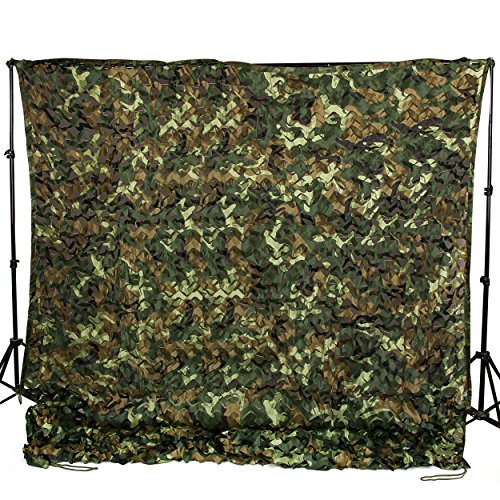
For the hunter who prefers a highly customizable and minimalist approach, the Ginsco Camo Netting is an excellent tool. This polyester oxford fabric netting is waterproof, quick-drying, and treated to eliminate shine, providing effective concealment. Its reinforced backing with rope net adds significant durability for long-term use.
This netting serves multiple functions as a hunting blind, privacy screen, or sunshade. The loose weave allows you to push a rifle barrel or scope through for a clear shot while remaining hidden. Four corner rope loops make it easy to hang and secure in various configurations, and multiple pieces can be joined together for larger coverage areas.
Rhino Blinds R150-PRED Hunting Ground Blind

The Rhino Blinds R150 is built around strength and simplicity. Its construction uses a true 150-denier polyester fabric, which provides a robust barrier against the elements and brush. This three-person blind offers a generous 66-inch center height and substantial floor space, making it comfortable for extended sits.
A major advantage of this model is its user-friendly setup. The hub-style design allows for a quick deployment, potentially in about a minute with some practice. The fast takedown is equally valuable when you need to leave your spot quietly and efficiently at the end of a hunt.
PRIMOS Double Bull Surround View Blind 360

The PRIMOS Double Bull Surround View 360 offers a significant tactical advantage with its one-way see-through wall technology. This feature allows you to monitor a full 360 degrees of your surroundings without your silhouette or movement being visible from the outside. It effectively removes blind spots.
The blind includes four of these see-through walls, with one movable blackout wall that can be positioned based on the sun’s angle or your specific need for darkness. Combined with a 180-degree full-front shooting window, this blind provides exceptional situational awareness and shot opportunities from almost any direction.
Primos Double Bull Stakeout Blind
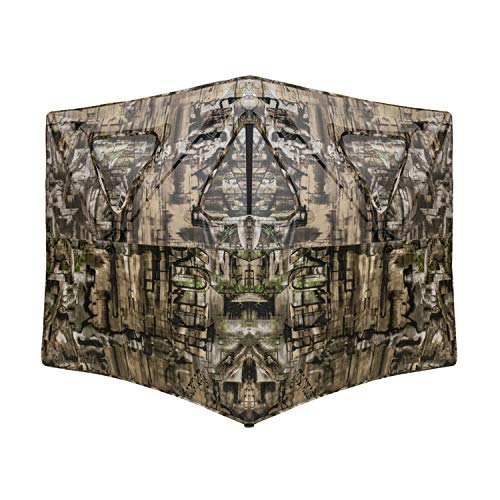
Designed for maximum portability, the Primos Double Bull Stakeout is an ideal choice for the mobile hunter. Its two-hub design allows it to pack down small and light, making it easy to carry deep into the backcountry or use for quick, temporary setups. The low 37-inch profile helps it blend into fields and brush lines.
This blind incorporates the SurroundView one-way mesh in three triangular shooting windows. These windows open and close quietly, providing critical shooting lanes while maintaining concealment. Its compact corner-to-corner size makes it perfect for a single hunter who prioritizes stealth and easy transport.
Muddy Twin Peaks Hunting Ground Blind

The Muddy Twin Peak introduces a unique architectural design with its dual-peak roof. This design increases headroom and interior space, allowing two hunters to move more freely without contacting the ceiling. It is constructed from a rugged, water-resistant 600-denier fabric with a blacked-out interior to hide movement.
This blind is built for silent operation, featuring 180 degrees of abyss window netting, two peak ports, and silent drop-down windows. The reinforced rod structure that creates the twin peaks adds considerable strength to the hub-style frame, promising stability and durability throughout the hunting season.
Primos Replacement Black Curtain

This product is a dedicated accessory for owners of the Primos Double Bull SurroundView 360 blind. It serves as a replacement blackout curtain, which is a crucial component for managing light inside the blind. Having a spare ensures your setup remains fully functional.
The movable blackout wall is key for blocking sunlight that might silhouette you from behind a see-through wall. This replacement part allows you to maintain the full versatility and concealment of your original blind, extending its useful life and performance.
ALPS OutdoorZ Deception Pop Up Hunting Blind

The ALPS OutdoorZ Deception blind focuses on a low-profile, efficient four-hub design. Its small footprint makes it exceptionally easy to deploy and take down quietly, which is vital when setting up near wary game. The aluminum hubs and fiberglass poles provide a reliable structure.
This lightweight blind is designed for mobility and works well with low-profile seating. It includes wide windows with silent opening mechanisms and an extra-large door for easy access. It’s a solid choice for hunters who frequently change locations and need a blind that won’t slow them down.
TLC Sport 270 Degree See Through Ground Blind
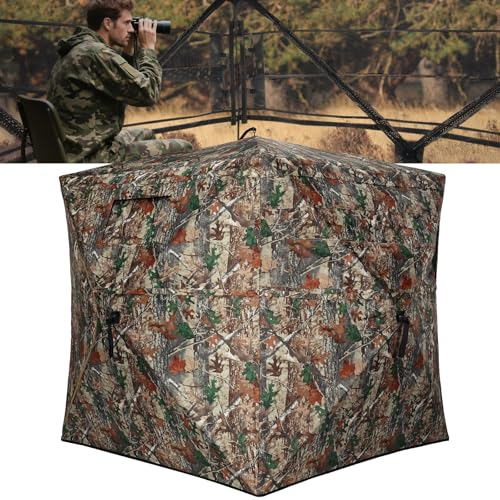
The TLC Sport blind provides an extensive field of view through its three panels of one-way see-through mesh. This 270-degree visibility allows hunters to observe nearly their entire surroundings without turning their bodies excessively, reducing the chance of being detected.
It features a unique camouflage pattern with brush-in loops, helping it integrate naturally into various environments. The windows are designed for noise-free operation, and the blind accommodates two to three persons. This combination of wide visibility and effective concealment makes it a strong contender for open-field hunting.
Barronett Blinds Ox 5 Hub Hunting Blind
Barronett Blinds is known for building spacious, durable hunting blinds, and the Ox 5 model continues that tradition. The five-hub design typically translates to more vertical wall space and a roomier interior compared to standard four-hub blinds, offering ample room for multiple hunters and their gear.
These blinds are generally constructed with tough fabrics and feature silent-sliding windows for a variety of shooting angles. The larger structure provides excellent stability in wind and more freedom of movement inside, making it suitable for all-day hunts where comfort is a priority.
Buying Guide: How to Choose Your Deer Blind
Picking the right hunting blind is a big deal. I’ve spent plenty of seasons tucked into them, and the wrong choice can mean a cold, uncomfortable, and unsuccessful hunt. Let’s break down what really matters when you’re looking for one of the 10 best hunting blinds for deer. First, think about material and durability. Most blinds are made of polyester or nylon, often with a water-resistant or waterproof coating. Look for thick, quiet fabric that won’t rustle loudly with every slight movement. The frame is just as important; steel hubs are strong but heavy, while fiberglass or carbon poles are lighter and resist temperature changes better.
Next up is size and setup. How many people are usually with you? A one-man blind is super portable but can feel like a coffin after a few hours. A two-to-three-person model gives you room for your gear and to draw a bow without smacking the wall. “Pop-up” hubs are famous for fast deployment, but practice at home first—nothing is more frustrating than fighting a blind in the dark. Also, check the window configuration. You want plenty of them, with quiet, adjustable openings so you can see shooting lanes without creating a big, moving silhouette.
Camouflage and concealment are obvious, but it’s not just about the pattern. Think about the blind’s shape and how it breaks up your outline. Some have a brushed or textured fabric to mimic tree bark, and others use a “shadow” effect. Many now come with brush loops so you can add natural vegetation right to the blind. Finally, don’t ignore the little things. A good, sewn-in floor keeps out moisture and bugs. Silent window slides are a must. Good anchor points for staking and tying down are critical for stability in wind. Ventilation is key to avoid fogging and overheating. Weigh all these factors against your primary hunting style—spot-and-stalk versus fixed position, bow versus rifle—to find your perfect match.
FAQ
What’s the best way to set up and brush in my blind?
The key is to make it look like it belongs. I always set mine up a few weeks before the season if possible, so deer get used to it. Place it in a natural backdrop, not silhouetted against the sky. Use the built-in brush loops and local vegetation—cut branches, tall grass—to break up the hard angles and shadow of the blind. Don’t just pile brush on top; weave it into the sides and create a natural-looking transition from the blind to the surroundings.
Are pop-up blinds really noisy when deer are close?
They can be, but modern designs are much better. The noise usually comes from two places: the fabric itself and the windows. Look for blinds made with quiet, textured material. Practice opening and closing the windows slowly and smoothly before the hunt. When a deer is in close, I barely move the window open just enough for my shot, rather than sliding it all the way up. Sometimes, leaving a few windows slightly cracked open beforehand avoids the movement altogether.
Can I use a ground blind for bowhunting deer?
Absolutely, but you need the right blind. It must have enough interior height and width for you to draw your bow fully without the limbs hitting the walls or ceiling. The shooting windows need to be large enough and positioned correctly for a seated shot. I prefer a hexagon or octagon shape over a square one, as the angled walls give you more room. Always practice shooting from inside the blind before taking it into the field.
How important is a full floor in a hunting blind?
For me, it’s essential. A sewn-in, waterproof floor keeps you dry from damp ground, blocks drafts, and most importantly, keeps out spiders, snakes, and other critters you might not want as company. It also helps contain your scent. The only downside is that water can pool on top if it’s not taut, so make sure you stake it out properly.
What should I look for in terms of window coverage?
You want 360-degree visibility and shooting potential. Look for a blind with plenty of windows, including at least one large “shooter” window on each panel. Blackout interior fabric around the windows is a huge plus, as it hides your movement inside the dark interior. The best windows have a two or three-layer system with silent-adjusting shoot-through mesh and a solid black panel you can close for total concealment.