For bikepackers, every gram matters. The quest for a lighter load is relentless, as it translates directly to less fatigue and more miles of joyful riding. Your shelter is one of the biggest pieces of gear, making it a prime target for weight savings without sacrificing essential protection and comfort.
The ideal bikepacking tent strikes a careful balance: it must be incredibly lightweight and packable to fit on a bike frame, yet durable enough to handle trailside conditions. From specialized bikepacking models with bike-friendly features to minimalist ultralight shelters, the right choice can redefine your journey. This roundup highlights eight top tents designed to help you travel farther and faster.
The Best Bikepacking Tents for a Lighter Load
- Big Agnes Copper Spur HV UL2 Ultralight Bikepacking Tent
- NEMO Equipment Hornet Elite OSMO Ultralight Backpacking Tent
- Ultralight Tent 3-Season Backpacking Tent 1 Person/2 Person
- LANSHAN 2 PRO Ultralight Hiking Tents, 2 Person
- MSR Hubba Hubba NX 2-Person Bikepacking Tent
- Six Moon Designs Lunar Solo Backpacking Tent
- Tarptent Double Rainbow Li Bikepacking Tent
- Gossamer Gear The Two Ultralight Tent
Big Agnes Copper Spur HV UL2 Ultralight Bikepacking Tent
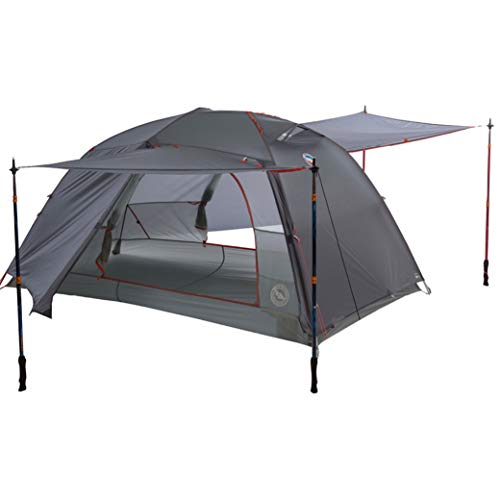
Designed specifically for two-wheeled travel, the Big Agnes Copper Spur HV UL2 Bikepack tent is a feature-rich shelter that understands a cyclist’s needs. It includes a burly compression sack built to withstand trail abuse and features daisy-chain webbing for multiple bike-frame attachment options. The shortened 12-inch pole segments are ideal for packing onto handlebars or in saddlebags, making transportation straightforward.
Beyond its bikepacking-specific design, this tent offers exceptional livability with its two doors and two vestibules. The high-volume pole architecture increases interior space and strength, while the proprietary double rip-stop fabric provides tear resistance without a weight penalty. The simplified setup with TipLok Tent Buckles makes pitching quick, so you can spend less time assembling camp and more time recovering from your ride.
NEMO Equipment Hornet Elite OSMO Ultralight Backpacking Tent

The NEMO Hornet Elite OSMO stands out for its advanced, eco-conscious materials. Its OSMO fabric is made from 100% recycled yarns, is PFAS-free, and offers significantly better water repellency with less stretch when wet compared to standard nylons. This results in a reliable shelter that performs consistently in damp conditions while supporting sustainable manufacturing practices.
This tent maintains a strong focus on weight savings and practical design. The new Divvy Cube stuff sack allows partners to split the tent weight efficiently, and it packs more neatly into a backpack or bikepacking bag. Generous doors and vestibules provide easy access and covered storage for gear, ensuring a comfortable and organized campsite after a long day on the bike.
Ultralight Tent 3-Season Backpacking Tent 1 Person/2 Person

This LanShan-style tent offers a remarkable balance of low weight, low cost, and reliable performance. With a package weight around 2.9 pounds for the two-person version, it makes a compelling option for budget-conscious bikepackers looking to cut weight. Its compact packed size integrates easily into a bike bag or backpack, taking up minimal space.
Setup is straightforward, with the inner and outer tents connected via hooks for simultaneous pitching. It uses trekking poles for support, which saves further weight if you already carry them, or you can use optional dedicated poles. The waterproof ratings are substantial, with a seam-taped rainfly and a bathtub floor designed to keep you dry during storms, offering great value for its weight class.
LANSHAN 2 PRO Ultralight Hiking Tents, 2 Person

The LANSHAN 2 PRO represents a refined, lighter evolution of the popular LanShan design. Weighing just 2.21 pounds, it shaves a significant half-pound off the standard version while upgrading the materials. The entire tent uses durable 20D nylon, creating a more uniform and robust build that maintains excellent waterproof protection.
This shelter provides ample space for taller individuals and their gear, making it comfortable for long trips. Like its predecessor, it sets up quickly with trekking poles, promoting a minimalist and efficient packing strategy. The combination of its tiny packed size, impressive weight, and proven stormworthiness makes it a favorite among gram-counting adventurers who need reliable shelter.
MSR Hubba Hubba NX 2-Person Bikepacking Tent
The MSR Hubba Hubba NX is a legendary name in backpacking, and its bikepacking version is tailored for cycle tours. It features shorter, segmented poles that pack neatly on a bike frame and a modified stuff sack designed for rugged transport. The familiar, trusted design ensures a quick and intuitive setup, which is always welcome after exhausting miles.
This tent is celebrated for its perfect balance of weight, space, and durability. Two large doors and vestibules offer easy entry and ample gear storage. The unified body and rainfly pitch together, and the robust materials stand up to varied weather. It’s a versatile, do-it-all shelter that transitions seamlessly from backpacking to bikepacking without compromise.
Six Moon Designs Lunar Solo Backpacking Tent
The Six Moon Designs Lunar Solo is a premier single-person shelter that excels in weight efficiency. Its single-wall, trekking-pole-supported design eliminates redundant components, achieving a very low pack weight and volume. This makes it an outstanding choice for solo bikepackers who prioritize a minimalist and compact kit.
Despite its light weight, it offers generous interior space with a large offset door and strategic mesh panels for ventilation. The design manages condensation effectively for a single-wall tent and provides excellent weather protection. For the solo rider wanting to maximize weight savings without feeling cramped, the Lunar Solo presents a sophisticated and practical solution.
Tarptent Double Rainbow Li Bikepacking Tent
For those seeking the ultimate in weight savings, the Tarptent Double Rainbow Li utilizes Dyneema Composite Fabric (DCF). This material is incredibly strong for its weight, completely waterproof, and does not absorb water. The result is a two-person tent that is astonishingly light and packs down to a very small size.
This tent features a hybrid single/double-wall design that simplifies setup and improves condensation management. It can be pitched freestanding with optional poles, adding versatility. While a premium option, its weight-to-space ratio is exceptional, making it a top-tier choice for bikepackers who want to invest in the lightest possible high-performance shelter.
Gossamer Gear The Two Ultralight Tent
Gossamer Gear’s The Two is built with a clear focus on minimizing weight while maximizing livability. It uses lightweight silnylon and a strategic pole structure to create a spacious two-person interior that belies its low weight. The design emphasizes simplicity and efficiency, both in use and in packing.
Large side doors and vestibules make access and organization easy for two people and their gear. The tent pitches quickly and offers reliable weather protection for three-season conditions. It represents a thoughtful design from a company dedicated to ultralight travel, providing a comfortable shelter that won’t weigh down your bike bags.
Buying Guide: How to Choose the Best Bikepacking Tent for Weight Savings
When I’m planning a multi-day ride where every gram counts, my tent choice becomes one of my most critical decisions. The wrong shelter can feel like an anchor, while the right one is a liberating home-away-from-home. The goal is to find that perfect balance between minimal weight, livable space, and durability that can handle a surprise storm. Let’s talk about what I look for when I want to save weight without sacrificing too much comfort.
First, I always consider the tent’s packed size and shape. For bikepacking, a long, cylindrical stuff sack is often better than a bulky rectangle because it fits neatly into a handlebar roll or a seat pack. I check the length carefully—some ultralight tents pack down surprisingly small, while others are just light but still bulky. The shape can be as important as the weight on the bike.
Next, I think about pole structure and setup. Trekking pole tents save a ton of weight by using my existing gear as support, but that means I’m always carrying those poles on my bike. Freestanding tents are often easier to pitch on hard ground or in a campground, but their pole hubs can create awkward pack shapes. I also look at the fabric: silnylon is lighter and packs smaller but can sag when wet; silpoly is slightly heavier but doesn’t sag and dries faster, which I appreciate after a damp night.
I never forget about weather protection and seasonality. A true three-season tent will have a full-coverage rainfly and decent ventilation to reduce condensation, which is a real buzzkill in a tiny space. For most of my trips, I don’t need a four-season fortress, but I do need something that can handle a windy night and a downpour. I check the hydrostatic head rating on the fly and floor—a higher number means better waterproofing. Finally, I weigh the livability factors: can I sit up in the vestibule to cook in the rain? Is there enough interior length for me? Finding the best bikepacking tent for weight savings is a personal equation, and for me, it’s worth spending time to get it right.
FAQ
How light is “light enough” for a bikepacking tent?
This is super personal and depends on your budget and trip style. For me, a solid target is under 3 pounds (about 1.4 kg) for a solo tent, and under 4.5 pounds (about 2 kg) for a two-person shelter. The lightest options can dip below 2 pounds, but they often use more fragile materials and have less space. I think the sweet spot is where you stop noticing the weight on your bike but don’t feel like you’re sleeping in a glorified bivy sack.
Is a single-wall or double-wall tent better for saving weight?
Single-wall tents, which use one layer of fabric, are almost always lighter and pack smaller. The big trade-off is condensation. Without a separate rainfly, moisture from your breath can collect on the inside of the tent. In dry climates, this is less of an issue. For humid or cooler trips where condensation is likely, I usually prefer a double-wall tent for the better ventilation, even if it adds a few ounces. It’s the difference between waking up dry or dealing with a damp sleeping bag.
Can I use my regular backpacking tent for bikepacking?
Absolutely, and I did for years! The main thing to check is the packed size and shape. A backpacking tent that packs into a short, fat bundle might not fit in your bike bags as well as a longer, skinnier one. If it’s light and you can securely strap it to your handlebars or seat post, it’ll work just fine. The core principles of shelter are the same; bikepacking just adds a new puzzle for how to carry it all.
Are trekking pole tents a good option for bikepacking?
They can be, but it requires a specific approach. The obvious pro is massive weight savings since you’re using poles you’d carry anyway. The con is that you now have to securely carry trekking poles on your bike frame, which can be tricky. I’ve seen riders use strapped bundles or even a frame bag designed for them. If your route involves significant hiking-a-bike sections, having the poles handy is a bonus. It’s a brilliant system if you can solve the carrying puzzle.
What features are worth a slight weight penalty?
For me, two features are non-negotiable. First, two vestibules on a two-person tent. It’s worth a few extra grams to have a place for my gear and wet shoes without crawling over my riding partner. Second, decent headroom. Being able to sit up straight to change clothes or just escape the bugs makes a rainy evening much more pleasant. I also think a durable, waterproof floor is worth the investment to avoid worrying about every little rock or twig.