Securing your vessel in rough weather demands more than just any rope. The right dock line is your first line of defense against chafing, sudden gusts, and choppy waters, combining immense strength with crucial elasticity to absorb shock. This roundup focuses on lines built to withstand these punishing conditions, evaluating construction, material resilience, and features that provide security and peace of mind when the forecast turns foul.
From heavy-duty braided nylon to specialized chafe guards and corrosion-resistant hardware, each product here is selected for its potential to perform under pressure. We’ve analyzed specifications for tensile strength, UV and saltwater resistance, and overall durability to help you choose a reliable set of lines that will keep your boat safely docked through storms and seasons.
Our Top Picks for Heavy-Weather Dock Lines
- Skog Å Kust Premium PWC Dock Lines | 2-Pack
- SeaSense Solid Braid MFP Dock Line with Chafe Guard
- Double-Braided Nylon Dock Line from Regatta Marine Essentials
- Budge Hard Top T-Top Boat Cover
- TAYLOR MADE PRODUCTS Braided Dock Line
- Attwood 11733-7 Premium 3-Strand Twisted Nylon Dock Line
- PACTHSD 2 Pack 1/2″ x 30′ Dock Lines
- Seachoice Double-Braid Nylon Dock Line w/Eye Splice
- SeaSense Premium Double Braid Nylon Dock Line
Skog Å Kust Premium PWC Dock Lines | 2-Pack

For smaller craft like personal watercraft, kayaks, or tenders in rough conditions, this two-pack offers a tailored solution. The inclusion of both a 7-foot and a 14-foot line provides versatility for different docking scenarios. Their high-visibility yellow and green color scheme is a critical safety feature, ensuring the lines are easily seen day or night, which is vital for preventing accidents on a storm-tossed dock.
Built with a 1/2-inch braided core rated for 2,200 lbs, they provide substantial holding power for lightweight vessels. The rust-proof 316 stainless steel snap clip allows for quick and secure attachment, while the custom-spliced 10-inch loop offers a strong and reliable connection point. This combination of strength, visibility, and corrosion-resistant hardware makes them a robust choice for securing smaller boats in challenging weather.
SeaSense Solid Braid MFP Dock Line with Chafe Guard

Chafing is a primary cause of dock line failure in rough weather, where constant motion wears through the rope. This SeaSense line directly addresses that threat with its integrated chafe guard. This protective feature significantly extends the line’s lifespan by shielding it from abrasive contact with cleats, pilings, and the dock edge during heavy movement.
Constructed from solid braid MFP (multifilament polypropylene), this line offers a good balance of strength and resistance to environmental factors like mildew and rot. The 1/2-inch diameter and 15-foot length are suitable for a range of mid-sized boats. For boaters seeking a straightforward, durable line with essential protection against wear, this is a practical and reliable option for rough conditions.
Double-Braided Nylon Dock Line from Regatta Marine Essentials

This four-pack from Regatta Marine Essentials provides excellent value for boaters needing to secure their vessel with multiple lines, a common requirement for rough weather docking. The double-braided nylon construction is a proven standard, offering a smooth feel, good handling characteristics, and reliable strength with important shock-absorbing elasticity.
Each line features a 12-inch spliced eye, creating a strong, secure loop without the weakness of a knot. The 3/8-inch diameter and 15-foot length make this set ideal for smaller to medium-sized boats. Having four identical, quality lines ensures you can properly set bow, stern, and spring lines to keep your boat positioned safely and reduce strain in wind and waves.
Budge Hard Top T-Top Boat Cover

While not a dock line, proper protection is a key part of rough-weather preparedness. This hard-top boat cover shields your investment from the elements when docked or stored. Its construction from heavy-duty 600 denier polyester provides a waterproof barrier against driving rain and snow, while UV resistance protects against sun damage that can degrade your boat’s surfaces over time.
The secure, trailerable fit is essential for windy conditions. Integrated straps, buckles, and a full elastic hem work together to create a snug fit that resists billowing and coming loose. Furthermore, the breathable fabric promotes airflow, which helps reduce moisture buildup and mildew under the cover, keeping your boat in better condition through all seasons.
TAYLOR MADE PRODUCTS Braided Dock Line

Taylor Made’s braided dock line is engineered for durability in the marine environment. The polypropylene nylon blend is specifically noted for its resistance to abrasion, oil, grease, gasoline, and mildew. This chemical resistance is valuable in a marina setting where fuel spills or other contaminants may be present, ensuring the line’s integrity isn’t compromised.
The line remains soft and flexible for easy handling and knot-tying, even after prolonged use. The spliced eye end provides a stronger connection than a knotted one, and the whipped end prevents fraying. Designed for docking, mooring, and rafting, its balanced construction offers reliable performance and protection for your boat’s gunwales in various conditions.
Attwood 11733-7 Premium 3-Strand Twisted Nylon Dock Line

The classic 3-strand twisted nylon design is renowned for its exceptional elasticity and shock absorption, making it a top choice for rough weather. This Attwood line is engineered to stretch significantly under load, which cushions the boat and reduces peak stress on both the cleats and the line itself during sudden surges or waves.
With a 1/2-inch diameter and a generous 20-foot length, it provides ample scope for creating effective spring lines, which are crucial for controlling boat movement in a slip during storms. The pre-spliced end offers a ready-to-use strong point, while the twisted construction allows for field splicing if a different configuration is needed. Its high wet strength ensures it retains its holding power when soaked.
PACTHSD 2 Pack 1/2″ x 30′ Dock Lines
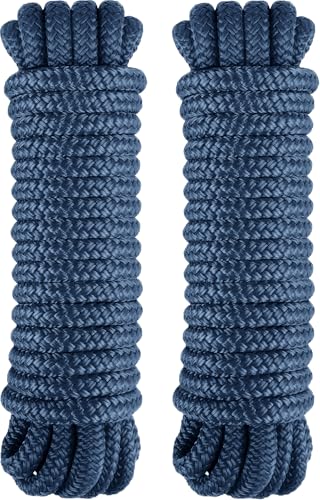
For larger boats up to 35 feet, having long, strong dock lines is non-negotiable for rough weather. This two-pack from PACTHSD provides substantial 30-foot lines, offering the extra length needed for proper spring line angles and tide/storm surge range. The 1/2-inch double-braided nylon construction boasts a high average tensile strength of 7,600 lbs.
These lines are built to resist harsh conditions, with features including UV resistance, protection against rot, and high abrasion resistance. The 16-strand braided design aims to prevent snapping by distributing load evenly, while still providing crucial shock absorption. The 12-inch spliced eyes are robust and ready for immediate use, making this set a strong contender for securing larger vessels.
Seachoice Double-Braid Nylon Dock Line w/Eye Splice

Consistency and reliability over time are what set this Seachoice line apart. The pre-shrunk and heat-stabilized treatment is a significant feature, meaning the line is engineered to retain its original length and shape despite repeated wetting and drying cycles. This prevents unexpected slackening or tightening in your dock setup, which is vital for maintaining security.
It offers higher wet strength and superior abrasion resistance compared to many standard nylon lines, according to the manufacturer. This focus on long-term performance and consistent holding power makes it a trustworthy choice for boaters who need their dock lines to perform season after season, especially when faced with unpredictable and severe weather.
SeaSense Premium Double Braid Nylon Dock Line
SeaSense’s premium offering in the double-braid nylon category is designed for demanding docking situations. This type of construction typically provides an excellent balance between strength, flexibility, and controlled stretch. The double-braid design often features a braided core for strength, surrounded by a braided sheath for protection against abrasion and UV rays.
As a premium line, it likely incorporates high-quality nylon filaments and precise manufacturing for consistent performance and durability. For boaters facing rough weather, a premium double-braid line from a trusted brand like SeaSense represents a commitment to safety and equipment integrity, providing confidence that your boat is secured with a top-tier product.
How to Choose the Best Dock Lines for Rough Weather
When the forecast turns nasty and the wind starts howling, the gear connecting your boat to the dock isn’t just a convenience—it’s your primary defense. Choosing the right dock lines for rough weather is a serious decision. I’ve learned through experience that you can’t just grab any old line from the locker and hope for the best. You need gear built for the job, and that starts with understanding a few key factors.
First, let’s talk about material. For storm conditions, you want three-strand twisted nylon. This is non-negotiable in my book. Nylon has crucial stretch, typically 15-30%, which acts as a shock absorber. When a big wave or gust hits, the line stretches, absorbing that energy instead of transferring it directly to your cleats or the dock’s pilings. That stretch saves hardware and reduces sudden, damaging jerks on your boat. Polyester or other low-stretch materials are a recipe for disaster in a blow.
Size is everything. The general rule is 1/8-inch of line diameter for every 9 feet of boat length. But for rough weather, I always go up one size. If my 36-foot boat normally uses 1/2-inch lines, I’m switching to 5/8-inch for a storm. The increased diameter provides a massive strength reserve and more material to absorb chafe. Speaking of chafe, it’s the number one killer of dock lines. You must invest in high-quality, woven chafe guards and secure them properly at every contact point—cleat horns, chocks, and pilings. I also use multiple lines, spring lines are critical to limit fore-and-aft movement, and I never rely on just two headlines and two stern lines.
Finally, inspect your gear. Check every inch of your dedicated storm lines for fading, stiffness, or hidden damage. Look at the splices and eyes. A worn line can fail catastrophically. Your dock lines for rough weather are a safety system. Buying the strongest, most appropriately sized nylon lines and protecting them from chafe isn’t an expense; it’s the cheapest insurance policy you’ll ever buy for your boat.
FAQ
How much longer should my storm lines be compared to my regular dock lines?
For a proper rough weather setup, your lines should be longer than usual to allow for better spring line angles and to accommodate the higher tides and surge often associated with storms. I recommend having lines that are at least 50% longer than your boat’s length for creating effective spring lines. This extra length lets you tie off to more distant, secure points on the dock, which helps control movement much better than short, straight lines.
Can I use my existing dock lines and just double them up for a storm?
While doubling up is a smart strategy to add redundancy, it doesn’t replace having properly sized and dedicated gear. If your regular lines are undersized or made from a low-stretch material, doubling them won’t provide the necessary shock absorption. The best practice is to have a dedicated set of larger-diameter, three-strand nylon lines specifically for bad conditions. You can then use your regular lines as secondary backups, ensuring you have multiple points of failure before anything breaks.
What’s the best knot or hitch for securing a dock line in rough weather?
For cleating off, the standard cleat hitch is reliable and secure if done correctly—make sure you get a full, final locking turn. For tying to pilings or rings, I prefer a round turn with two half hitches. The initial round turn takes the immediate load and reduces friction on the standing line, while the two half hitches secure it. Never use a slip knot or anything that can jam under load and become impossible to untie. Practice these knots until they’re second nature.
How often should I replace my dedicated rough-weather dock lines?
There’s no strict calendar schedule; it depends on use and exposure. You should do a thorough hands-on inspection before every storm season. Look for significant abrasion, any cuts in the strands, stiff or brittle sections (a sign of UV degradation), and weakened or frayed splices. If a line has taken a severe overload—feeling permanently stretched and thin—retire it. Even if they look okay, I consider replacing my primary set every 5-7 years as a precaution, as nylon degrades from constant UV exposure.
Is there a difference between “marine” nylon and hardware store nylon rope?
Yes, there can be a significant difference. True marine-grade nylon for dock lines is manufactured to higher standards for consistency, UV resistance, and strength. Hardware store rope is often intended for general use and may not have the same treatment against sunlight and saltwater, leading to faster degradation. The splices and eyes on professionally made lines are also typically stronger and more reliable. For something as critical as your dock lines for rough weather, the marine-specific product is worth the investment.