Finding the perfect home base for your family adventure is key to a successful camping trip. Cabin tents, with their near-vertical walls and generous headroom, offer the spacious and comfortable living area families need. They transform a patch of ground into a cozy shelter where everyone can stand up, move around, and sleep comfortably, rain or shine. This roundup focuses on tents built for group comfort, weather protection, and easy setup, helping you spend less time wrestling with poles and more time making memories.
From instant pop-up designs to models with built-in lighting and room dividers, the right cabin tent can make all the difference. We’ve compiled a list of top-rated options to suit various family sizes, budgets, and camping styles. Whether you prioritize lightning-fast assembly, maximum weatherproofing, or extra living space, one of these nine tents is ready to be your family’s outdoor retreat.
Our Top Picks for Family Cabin Tents
- Coleman Prairie Breeze Lighted Cabin Tent
- Coleman WeatherMaster 10-Person Tent
- CORE 9 Person Instant Cabin Tent with LED Lights
- GoHimal 8 Person Waterproof Family Tent
- Eureka! Copper Canyon LX 8-Person Tent
- Wenzel 8 Person Klondike Tent
- Big Agnes Footprint for Mad House Tent
- Ozark Trail 10-Person 3-Room Instant Cabin Tent
- Caddis Rapid 6 Person Cabin Tent
Coleman Prairie Breeze Lighted Cabin Tent
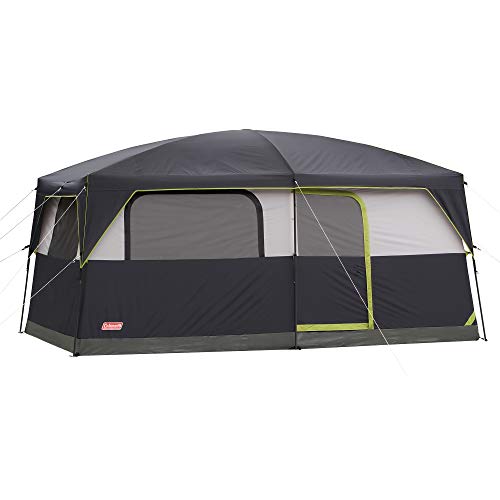
This tent brings home comforts to the campsite with its integrated LED lighting and fan system. The built-in ceiling light provides illumination for evening games or reading, while the fan helps circulate air on warmer nights. It creates a welcoming atmosphere that feels less like roughing it and more like a comfortable outdoor room.
Beyond the amenities, it is built with Coleman’s trusted WeatherTec system, featuring welded corners and a rainfly to help keep the interior dry. The setup is designed to be straightforward with snag-free poles and an Insta-Clip suspension. With a high ceiling and a spacious 9-person capacity, it offers plenty of room for the whole family and their gear.
Coleman WeatherMaster 10-Person Camping Tent

For families who need maximum space and reliable weather protection, the WeatherMaster is a top contender. It includes a room divider, creating two separate spaces for privacy or organizing sleeping and living areas. This feature is excellent for larger families or those who want to separate kids’ and adults’ sleeping quarters.
Its core strength lies in its robust weatherproofing. The WeatherTec system uses welded floors and inverted seams to block moisture, and the strong frame is tested to withstand winds over 35 mph. The nearly vertical walls and high ceiling make the interior feel exceptionally roomy and livable, suitable for multiple air beds and standing comfort.
CORE 9 Person Instant Cabin Tent with LED Lights

Speed and convenience define this instant tent from CORE. Its pre-attached poles allow the entire structure to pop up and be ready in about two minutes, a major advantage when arriving at camp late or with impatient campers. The integrated LED lighting system on the ceiling pole offers three brightness settings, all controlled by a handy wall switch.
The tent provides a generous footprint that can fit two queen air beds. The center height is 78 inches, allowing most adults to stand upright comfortably. It’s a strong option for families who value a quick, hassle-free setup without sacrificing modern features like built-in lighting.
GoHimal 8 Person Tent for Camping

The GoHimal tent focuses on delivering robust protection and smart space management. It uses high-quality 190T ripstop polyester with a PU2000mm waterproof coating to resist rain, supported by strong fiberglass poles for stability in wind. A divided curtain is included to create separate private rooms within the large interior.
Ventilation is a highlight, with a large mesh door, four mesh windows, and a top canopy design that promotes excellent airflow while keeping bugs out. The spacious interior dimensions can accommodate three queen air mattresses, making it a practical and well-ventilated shelter for a family of eight.
Eureka! Copper Canyon LX

Eureka! is known for livable family tents, and the Copper Canyon LX exemplifies this with its exceptional interior space. The steep, near-vertical walls and full standing height maximize usable room, making it easy to walk around, change clothes, and set up cots or tall air mattresses without feeling cramped.
Setup is designed for two people and is relatively simple using a combination of pole sleeves, corner hubs, and quick clips. As a three-season tent, it provides reliable shelter for most camping conditions with ample mesh panels for ventilation. It’s built for car campers who prioritize interior comfort and living space above all.
Wenzel 8 Person Klondike Tent

The Wenzel Klondike offers a unique feature: a convertible screen room. This front area can be used as a bug-free outdoor lounge space or fully enclosed for extra weather-protected storage. This adds valuable versatile living space to your campsite without needing a separate screen house.
It includes a removable, seam-sealed rainfly for weather protection and versatility, along with multiple mesh roof vents and windows to manage condensation and airflow. The inverted “T” style door provides easy access. It’s a classic design that provides extra utility for families who enjoy spending time outside the main sleeping area.
Big Agnes Footprint for Mad House Mountaineering Tent

This product is a protective ground cloth, or footprint, specifically designed to fit the Big Agnes Mad House tent. Using a footprint is a smart way to extend the life of any tent by providing an extra layer of protection against abrasion, moisture, and sharp objects on the ground.
It is made from a durable, lightweight material and packs down small. While not a tent itself, it is an essential accessory for serious campers who invest in a quality shelter like the Mad House and want to ensure its floor remains in excellent condition for many seasons of use.
Ozark Trail 10-Person 3-Room Instant Cabin Tent
This tent is built for large groups and families who desire maximum compartmentalization. The three-room design offers exceptional flexibility, allowing you to create separate sleeping quarters, a kids’ play area, or a dedicated gear storage space. The instant cabin design suggests a relatively quick setup with pre-attached poles.
With a 10-person capacity, it provides ample square footage for big family gatherings or multiple families camping together. The cabin-style architecture typically means good headroom throughout. It represents a value-oriented option for campers who need a lot of divided space and the convenience of a faster assembly.
Caddis Rapid 6 Person Cabin Tent
The Caddis Rapid series emphasizes efficient setup through its Fast Pitch Technology. This system typically involves color-coded poles and intuitive connections to reduce setup time and frustration, making the process smooth even for less experienced campers.
As a 6-person cabin tent, it is well-suited for smaller families or those who want a more compact footprint without sacrificing standing room. The cabin design ensures walls are steep for increased interior volume. It’s a solid mid-size choice for families who want a balance between spacious comfort and a simpler, quicker pitching experience.
Buying Guide: How to Choose the Best Cabin Tent for Family Camping
When my family and I started camping, I quickly learned that not all tents are created equal. A cabin tent is a fantastic choice for families because of its near-vertical walls and spacious, room-like feel. But with so many options, picking the right one can feel overwhelming. Let me walk you through what I look for when choosing the best cabin tent for family camping.
First, think about size. Tent capacities are often optimistic. If a tent says it sleeps 8, it usually means 8 sleeping bags packed like sardines. I always add a 2 to 4-person buffer. So, for my family of four, I look at 6-person or even 8-person cabin tents. This gives us room for our actual sleeping setup (like air mattresses or cots) and space for our gear inside, away from the weather. The height is a huge perk of cabin designs – being able to stand up and walk around comfortably is a game-changer for changing clothes and overall comfort.
Next, focus on the weather. A good family cabin tent needs a solid rainfly. I prefer a full-coverage fly that reaches close to the ground to protect the walls from driving rain. The tent’s material, or denier, matters too. A higher denier number means a thicker, more durable fabric. For a tent that will see regular use, I don’t skimp here. Look for a sturdy pole structure, usually steel or strong fiberglass, with good reinforcements at the joints. A tent that can’t handle a summer storm isn’t much fun.
Ventilation is critical. Those tall walls are great until condensation turns your tent into a sauna. I always check for multiple mesh windows and roof vents. Good airflow keeps everyone cooler and reduces that damp morning feeling. For convenience, features like a room divider (for a bit of privacy), interior storage pockets, and an electrical cord port are small details that make a big difference on a trip.
Finally, consider setup. Some large cabin tents are surprisingly simple with color-coded poles and quick-attach clips. Others are more complex. I watch a setup video online before buying to know what I’m in for. Remember, the best cabin tent for family camping is the one that balances space, durability, and livability for your specific crew, making your outdoor adventures more about making memories and less about battling your shelter.
FAQ
What makes a cabin tent different from a dome tent?
The main difference is the wall design. Cabin tents have mostly vertical walls, which maximizes the usable interior space. You get far more headroom throughout the entire tent, and it feels more like a small room. Dome tents have sloping walls, which means you lose a lot of space around the edges where you can’t stand up. For families wanting to move around, use cots, or have a “living area,” a cabin tent’s layout is usually the better choice.
Are cabin tents good in windy conditions?
This is their trade-off. The tall, vertical walls of a cabin tent can catch more wind than a streamlined dome. That said, a well-made cabin tent with a strong pole frame (often steel) and plenty of sturdy guylines can be very stable. The key is proper staking and guying out. In consistently very windy locations, a dome might be more aerodynamic, but for most family campgrounds, a quality cabin tent is perfectly capable.
How long does it take to set up a large family cabin tent?
It varies a lot by model. Some modern cabin tents with instant or quick-pole technology can be up in 5-10 minutes with two people. More traditional designs with separate poles might take 20-30 minutes for the first time. My advice is to always practice in your backyard before a trip. Not only does it cut down setup time at the campsite, but it also ensures you have all the parts and know how it works before you need it.
Can you use a cabin tent in colder weather or seasons?
Cabin tents are generally designed for three-season use (spring, summer, fall). Their large interior and mesh panels are great for ventilation but hard to heat. You can use them in cooler spring or fall weather by minimizing mesh exposure with the rainfly and using appropriate sleeping gear. However, they are not insulated for winter camping. For true cold-weather camping, a specialized four-season tent is a safer bet.
What is the best way to clean and store my cabin tent?
Never store it wet or damp! That’s the number one rule. When you get home, set it up in the yard to air out completely. For cleaning, use a soft sponge, mild soap (like dish soap), and lukewarm water. Never use a washing machine or harsh detergents. Let it air dry fully again before packing. Store it loosely in a cool, dry place – not in its stuff sack if you can avoid it. A large cotton pillowcase or old duvet cover works great for storage and helps preserve the fabric’s coatings.