Choosing the right sleeping bag is a critical decision for any backpacking or camping trip. It’s the piece of gear that ensures a warm, restorative night’s sleep, directly impacting your energy and enjoyment. Mountain Hardwear has built a reputation for engineering high-performance sleeping bags that balance warmth, weight, and durability. Whether you prioritize ultralight down insulation, weather-resistant synthetics, or sustainable design, their lineup offers a solution for diverse conditions and budgets.
This roundup examines eight standout Mountain Hardwear sleeping bags for 2025. From sub-zero winter expeditions to mild summer nights, these models represent the brand’s commitment to innovation and comfort. We’ll break down the key features and benefits of each to help you find the perfect bag for your next outdoor adventure.
Our Top Mountain Hardwear Sleeping Bag Picks
- Mountain Hardwear Lamina Eco AF 15F/-9C Reg
- Mountain Hardwear Phantom 0 Degree Down Sleeping Bag
- Mountain Hardwear Yawn Patrol 30 Degree Down Bag
- Mountain Hardwear Bishop Pass 0F/-18C Down Bag
- Mountain Hardwear Ratio 32F/0C Down Sleeping Bag
- Mountain Hardwear Bishop Pass 15F/-9C Down Bag
- Mountain Hardwear Lamina Eco AF 30F/-1C Bag
- Mountain Hardwear Phantom Gore-Tex 15F/-9C Bag
Mountain Hardwear Unisex Lamina Eco AF 15F/-9C Reg

This synthetic sleeping bag is an excellent choice for eco-conscious campers who need reliable warmth in damp conditions. Its standout feature is the comprehensive use of recycled materials, from the undyed shell fabric and insulation to the trims and storage sack. The proprietary Lamina construction uses welded seams to eliminate traditional stitching, which helps prevent cold spots and enhances overall loft for consistent heat retention.
Performance is further supported by the lightweight 20D nylon ripstop shell, which offers a good balance of durability and high compressibility. The bag packs down smaller than many traditional synthetic options, making it more manageable for backpacking. It’s a robust, sustainable option for three-season use where moisture resistance is a priority.
Mountain Hardwear Phantom 0 Degree Down Sleeping Bag
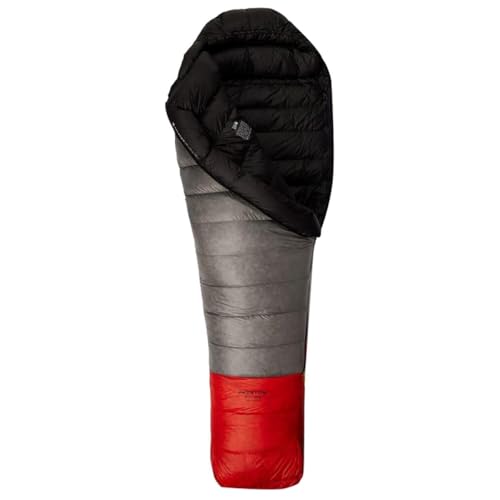
Designed for serious cold-weather expeditions, the Phantom 0 Degree bag uses premium 850-fill power down to achieve an exceptional warmth-to-weight ratio. This high-quality insulation provides maximum loft and thermal efficiency while compressing into a very small package for its temperature rating, a key advantage for winter backpackers counting every ounce.
The bag incorporates a lightweight recycled shell fabric, contributing to its overall minimal weight and packability. User-friendly details include an anti-snag zipper system that allows for easy ventilation adjustments without frustration. This bag is built for alpinists and backpackers who demand top-tier performance in freezing conditions.
Mountain Hardwear Yawn Patrol 30 Degree Down Sleeping Bag
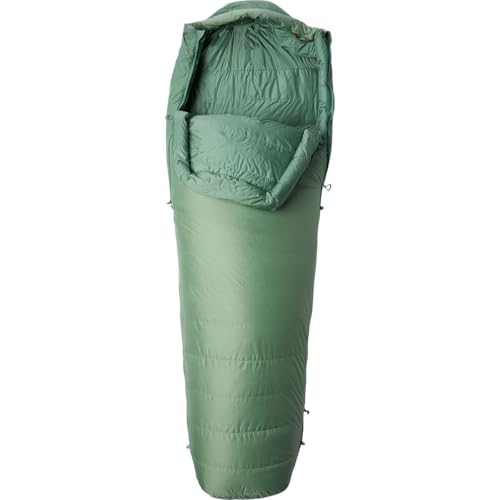
The Yawn Patrol is engineered for comfort and value, making it a great entry into down sleeping bags. Its 650-fill down insulation offers a solid balance of warmth and packability for summer and shoulder-season trips. The curved rectangular shaping provides more room to move than a traditional mummy bag, which can lead to a more relaxed night’s sleep for many users.
Durability is addressed with a 45D nylon large ripstop fabric on the bottom, offering extra protection against abrasion from tent floors. This focus on comfort and practical durability makes the Yawn Patrol an ideal choice for car campers, backpackers who prefer less constriction, and those looking for a reliable all-around bag.
Mountain Hardwear Bishop Pass 0F/-18C Down Sleeping Bag
The Bishop Pass 0F is a high-performance winter bag built for extreme conditions. Utilizing efficient down insulation, it is designed to keep you secure and warm well below freezing. This model typically features a streamlined mummy cut to minimize dead air space and maximize thermal efficiency, along with a insulated draft tube behind the zipper to seal in heat.
Expect features like a contoured hood and a draft collar around the shoulders, which are essential for trapping warmth in severe cold. This bag is suited for mountaineering, winter camping, and expeditions where reliable temperature performance is non-negotiable. It represents a serious investment in safety and comfort for the coldest nights.
Mountain Hardwear Ratio 32F/0C Down Sleeping Bag
Positioned as an ultralight option for warmer conditions, the Ratio bag emphasizes minimal weight and packability. Its design focuses on providing just enough warmth for cool summer nights or high-altitude trips where every gram in your pack matters. The down insulation and thin, lightweight shell fabrics contribute to its remarkably small packed size.
This bag is ideal for fast-and-light backpackers, thru-hikers, and anyone looking to reduce their base weight significantly. It often includes essential features like a simple hood and draft tube but foregoes extra ounces. The Ratio is a specialist tool for when conditions are mild and efficiency is the top priority.
Mountain Hardwear Bishop Pass 15F/-9C Down Sleeping Bag
This version of the Bishop Pass is tailored for cold three-season use, offering a versatile temperature rating for spring, fall, and winter camping in moderate climates. It shares the performance-oriented construction of its colder sibling but with a higher comfort limit, making it suitable for a wider range of adventures.
You benefit from the same attention to detail—such as a well-fitting hood, draft collar, and quality down insulation—in a slightly less specialized package. It’s an excellent choice for backpackers who encounter variable conditions and need a single bag that can handle near-freezing temperatures reliably.
Mountain Hardwear Lamina Eco AF Synthetic Sleeping Bag 30F/-1C
Part of the sustainable Lamina Eco AF line, this 30-degree synthetic bag is perfect for summer camping and backpacking where humidity or rain is a concern. Its synthetic insulation retains warmth even when damp, providing a safety margin that down cannot. The eco-friendly design uses recycled materials throughout its construction.
The welded Lamina construction ensures even loft without cold spots, and the bag remains highly packable for a synthetic model. This is a practical and responsible choice for beginners, scout troops, or any camper who values moisture resistance and environmental impact for warmer-weather outings.
Mountain Hardwear Phantom Gore-Tex 15F/-9C Sleeping Bag
The Phantom Gore-Tex represents the pinnacle of weather protection in the lineup. This bag integrates a Gore-Tex shell fabric, offering exceptional breathability while completely blocking wind and water. This technology is crucial for alpine environments where wet weather or condensation inside a tent could compromise insulation.
Paired with high-loft down insulation, this bag provides reliable warmth in harsh, unpredictable conditions where staying dry is as important as staying warm. It is a specialized tool for adventures in coastal ranges, damp climates, or any situation where exposure to the elements is a significant risk.
How to Choose the Best Mountain Hardwear Sleeping Bag for 2025
Picking the right Mountain Hardwear sleeping bag for 2025 isn’t just about grabbing the warmest one. It’s about matching the bag to your specific adventures. I’ve spent a lot of nights in these bags, and the first thing I always check is the temperature rating. This isn’t just a comfort suggestion; it’s a critical safety spec. Look for the EN/ISO rating, which is a standardized test. If you’re a cold sleeper, aim for a bag rated 10-15 degrees Fahrenheit colder than the lowest temperature you expect. For summer backpacking, a 30°F to 40°F bag is often perfect, while serious winter trips demand a 0°F or lower rating.
Next, consider the insulation. Mountain Hardwear uses high-quality down and synthetic fills, each with pros and cons. Down, like their 800-fill RDS-certified goose down, offers the best warmth-to-weight ratio and packability. It’s my go-to for trips where every ounce in my pack counts. However, it loses its insulating power when wet. Synthetic insulation, like Thermal.Q, is heavier and bulkier but retains warmth even when damp and dries faster. It’s the smarter choice for humid climates or trips where getting wet is a real possibility.
Fit is a personal but huge factor. A bag that’s too tight will compress the insulation, making you cold, while one that’s too roomy has excess air to heat. Mountain Hardwear often offers specific men’s and women’s cuts. Women’s bags are typically cut narrower at the shoulders and wider at the hips, with more insulation in core and foot areas. Also, look at the features that add real-world comfort. A well-designed hood that seals heat in, a draft collar to stop warm air from escaping your chest, and a quality zipper that won’t snag are non-negotiables for me. Finally, think about the total packed size and weight if you’re carrying it far. The perfect Mountain Hardwear sleeping bag 2025 for you is the one that balances warmth, weight, weather resistance, and comfort for the specific conditions you plan to face.
FAQ
How do I care for and wash my Mountain Hardwear sleeping bag?
Proper care extends your bag’s life dramatically. Always follow the specific care label instructions. Generally, use a front-loading washing machine (never a top-loader with an agitator) on a gentle cycle with a technical down or synthetic cleaner. Rinse thoroughly. To dry, use a large commercial dryer on low heat with clean tennis balls or dryer balls to break up clumps. This can take several hours. Never dry-clean or use regular detergent, as it strips the natural oils from down or coats synthetic fibers. Store your bag loosely in a large cotton sack, never compressed in its stuff sack for long periods.
What’s the difference between the “Limit,” “Comfort,” and “Extreme” ratings on sleeping bags?
These terms are part of the EN/ISO testing standard. The “Comfort” rating is the temperature at which a standard woman can sleep in a relaxed position without feeling cold. The “Limit” rating is the temperature at which a standard man can sleep curled up for eight hours without waking from the cold. The “Extreme” rating is a survival-only temperature, indicating the lowest temperature at which a standard woman can remain for six hours without risk of hypothermia (but likely not sleeping). You should choose a bag based on the “Comfort” rating if you tend to get cold easily.
Can I use a compression sack for my down sleeping bag?
Yes, but only for short-term transport during your trip. Compressing a down bag tightly for the duration of a hike is fine and necessary to fit it in your pack. However, as soon as you make camp, you should take it out and let it loft up. The big mistake is long-term storage. Never store your down (or synthetic) bag compressed in its small stuff sack for weeks or months at a time. This permanently damages the insulation’s loft and warmth. Always store it loosely in the large cotton storage bag it came with or hung in a closet.
Are Mountain Hardwear sleeping bags good for side sleepers?
Many of their bags can work well, but you need to pay attention to the cut. A “Spoon” shape, which Mountain Hardwear uses in several models, is specifically designed with extra room at the elbows and knees to accommodate a side-sleeping position without compressing the insulation. A standard mummy bag might feel too restrictive. I’d recommend looking at bags with this specific anatomical cut or, if possible, trying the bag in person to see if you have enough room to move comfortably.
How do I choose between a zippered footbox and a sewn-shut footbox?
This comes down to ventilation versus maximum warmth. A full-length zipper allows you to open the bag completely for use as a quilt on warm nights and provides great venting options for your feet. A sewn-shut, or “differential cut,” footbox is designed with no thermal weak points, offering the most efficient warmth for cold conditions as it eliminates any draft from a zipper. For three-season use where temperatures vary, I prefer a zippered footbox. For dedicated winter or alpine missions where every bit of heat retention counts, a sewn-shut design is the better performer.