When you’re responsible for providing clean water for a group on the trail, your choice of filter becomes critical. You need a system that balances speed, capacity, and reliability to keep everyone hydrated without constant maintenance. The right group water filter can turn a chore into a simple, quick task, letting you focus on the adventure instead of pump strokes.
From high-speed gravity setups for basecamp to versatile hand pumps for smaller teams, the options are varied. This roundup looks at nine reliable filters designed to handle the demands of multiple people. We’ve highlighted key features to help you select the ideal solution for your next group backpacking trip, ensuring safe and great-tasting water from any source.
Our Recommended Group Backpacking Water Filters
- Katadyn Hiker Pro Hand Pump Water Filter
- MSR MiniWorks EX Backountry Water Filter
- MSR Guardian Gravity Water Purifer
- LifeStraw Peak Series Compact Gravity Water Filter
- MSR AutoFlow XL 10-Liter Group Gravity Water Filter
- Katadyn Hiker PRO Replacement Cartridge
- HydroBlu Versa Flow Water Filter System Package
- Sawyer Squeeze Water Filtration System
- Katadyn Base Camp Pro Water Filter
Katadyn Hiker Pro Hand Pump Water Filter

For smaller groups or teams that prefer a direct-pump method, the Katadyn Hiker Pro is a top choice. Its ergonomic handle is designed to reduce effort, making it simpler to produce larger quantities of water. The system includes quick-connect hoses and a bottle adaptor for filling hydration bladders and most water bottles directly.
The 0.2-micron glass fiber filter effectively removes bacteria, protozoa, and sediment, while an integrated carbon core improves taste. A significant benefit is the ability to clean the filter in the field by swishing it in clean water, which helps maintain flow rate during extended trips without needing replacement parts immediately.
MSR MiniWorks EX Backountry Water Filter
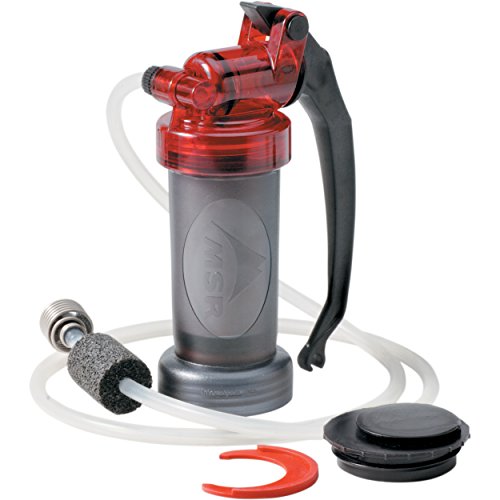
The MSR MiniWorks EX is a durable and reliable microfilter pump, known for its consistent performance in group settings. It uses a replaceable ceramic and carbon core filter that not only removes harmful organisms but also tackles organic compounds that cause bad tastes and odors. This results in clean, pleasant-tasting water everyone will appreciate.
With a pumping rate of about one liter per minute, it’s efficient for supplying several people. Its compatibility with a wide range of wide-mouth bottles and hydration systems adds to its versatility, making it a practical piece of gear that can adapt to different group hydration strategies.
MSR Guardian Gravity Water Purifer

When your group travels internationally or faces potentially contaminated water sources, the MSR Guardian provides complete protection. This advanced gravity purifier removes viruses, bacteria, and protozoa, making it safe for global travel. Its hollow-fiber technology is built to handle challenging, silty water conditions without clogging quickly.
As a gravity system, it requires no pumping; simply fill the reservoir and let it work. This makes it excellent for filtering large volumes at camp with minimal effort. The included activated carbon also reduces chemicals and unpleasant tastes, providing high-quality water for cooking and drinking.
LifeStraw Peak Series Compact Gravity Water Filter

The LifeStraw Peak Series offers a compact and highly effective 3-liter gravity solution. It provides exceptional protection against bacteria, parasites, and microplastics. The system is built with premium, durable materials designed to be leak-proof and withstand the rigors of group use in the backcountry.
This filter features a re-engineered membrane and includes a custom backwash accessory. This design helps maintain a strong flow rate over time, even when filtering water with high silt or sand content. Its balance of size, speed, and thorough filtration makes it a smart pick for groups of three to four people.
MSR AutoFlow XL 10-Liter Group Gravity Water Filter

Built specifically for larger groups and basecamps, the MSR AutoFlow XL is a high-capacity workhorse. Its 10-liter dirty water bag allows you to process large amounts of water in one go, with a fast flow rate of 1.75 liters per minute. This efficiency means less waiting time for everyone to fill their bottles and hydration reservoirs.
The system removes bacteria and protozoa effectively and includes a separate hang strap and bag clip for easy setup. By simply hanging the full bag, you can filter water hands-free, making it possible to prepare water for cooking, cleaning, and drinking simultaneously.
Katadyn Hiker PRO Replacement Cartridge

For groups that rely on the Katadyn Hiker or Hiker Pro systems, having a replacement cartridge is essential for longer trips. This cartridge provides up to 200 gallons of filtration capacity, ensuring your group’s primary filter can last through multiple adventures. Its performance matches the original, removing harmful microorganisms while improving water taste.
The cartridge includes a removable filter protector, which is particularly useful in challenging, silty conditions. This protector helps extend the functional life of the cartridge, providing better value and reliability when you’re far from replacements.
HydroBlu Versa Flow Water Filter System Package
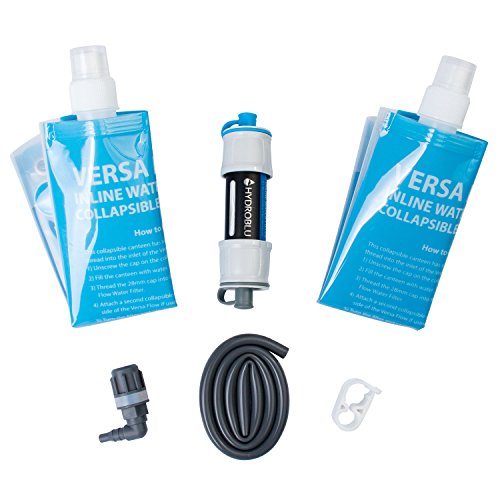
The HydroBlu Versa Flow stands out for its remarkable flexibility, which is ideal for groups with varied preferences. Its hollow fiber membrane filter can attach directly to a standard plastic bottle, be used as a straw, or be integrated into a gravity or bucket system. This adaptability allows each group member to use it in the way they find most convenient.
This multi-use design means one filter can serve as a personal straw, a group gravity filter, or an inline hydration pack filter. Its simplicity and range of applications make it a great supplemental or primary filter option for cost-conscious groups looking for versatile gear.
Sawyer Products SP129 Squeeze Water Filtration System

The Sawyer Squeeze is a lightweight and highly popular system that works well for small groups. The kit includes two 32-ounce squeeze pouches, a straw, and a hydration pack adapter, offering multiple ways to collect and drink water. Its 0.1-micron absolute filter removes bacteria, protozoa, and 100% of microplastics.
Weighing only 2 ounces for the filter itself, it’s easy to carry multiple units for a group. The squeeze method is straightforward, and the ability to attach it directly to a hydration bladder or use it as a straw provides quick, on-the-go hydration during hikes.
Katadyn Base Camp Pro Water Filter
Designed for stationary camp use, the Katadyn Base Camp Pro is a high-volume gravity filter perfect for group basecamps. It features a large capacity reservoir, allowing you to filter several liters of water at once with no effort required beyond the initial fill. The water then drips clean into a separate bag or directly into containers.
This system is ideal for situations where the group returns to a central camp and needs a substantial amount of water for cooking, cleaning, and drinking. Its simple, robust design focuses on volume and convenience, making water management for a larger team much more efficient.
How to Choose the Best Backpacking Water Filter for Groups
Picking a water filter for a solo trip is one thing, but when you’re responsible for keeping a whole crew hydrated, the stakes are higher. You need something that’s fast, reliable, and won’t have everyone standing in line for an hour at the creek. I’ve learned the hard way that a filter perfect for one person can be a major bottleneck for four. So, let’s talk about what really matters when you’re shopping for the 9 best backpacking water filters for groups.
First, think about flow rate. This is the king of specs for group travel. Measured in liters per minute (LPM), a higher flow rate means less pumping, squeezing, or waiting. For a group of three or more, I generally look for a filter that can push at least 2 liters per minute. Gravity filters excel here, as you can fill a big reservoir and let it work while you set up camp. Pump filters can also be fast, but someone has to do the work.
Next is capacity and convenience. How much water does your group go through between sources? A filter with a large dirty water bag (4 liters or more) is a game-changer. It means fewer trips back to the water’s edge. Also, consider how easy it is to use. Can one person manage filling and filtering, or does it require multiple hands? Systems with inline setups that feed directly into a hydration bladder or bottle are fantastic for efficiency.
Durability and maintenance are critical when a filter is seeing heavy, shared use. Look for robust construction and easy-to-clean elements. Ceramic and glass fiber elements can often be cleaned in the field to restore flow rate, which is vital on long trips. Also, check what the filter protects against. For most North American backcountry, a filter that handles bacteria and protozoa (like giardia and cryptosporidium) is the standard. If you’re traveling where viruses are a concern, you’ll need to add a chemical treatment like chlorine dioxide tablets to your process, as most mechanical filters don’t catch viruses.
Finally, weight versus utility. Yes, you’re carrying more, but it’s shared weight. A 1-pound gravity filter that hydrates four people effortlessly is often “lighter” per person than four individual straw filters. Distribute the components—someone carries the dirty bag, someone else gets the clean reservoir, and the filter itself can be shared. The right group filter isn’t about the absolute lightest gear; it’s about the smartest weight that makes the trip better and safer for everyone.
FAQ
How many liters per minute is a good flow rate for a group filter?
For a group of three or more people, I aim for a filter with a flow rate of at least 2 liters per minute. Gravity filters often advertise rates between 1.5 to 3+ LPM, but real-world speed depends on water clarity and how full the bag is. A fast pump filter can also hit this range. The goal is to fill a large pot or multiple bottles without it feeling like a major chore. When comparing the 9 best backpacking water filters for groups, flow rate is usually the first number I check.
Can one filter element handle water for an entire week-long group trip?
It depends on the filter type and water quality. Most quality filters are rated for hundreds of liters. However, sediment-heavy water will clog any element faster. For a week with, say, four people drinking and cooking, you might process 200+ liters. A cleanable element (like ceramic) is a huge advantage here, as you can scrub it mid-trip to maintain performance. Always check the manufacturer’s lifespan rating and consider carrying a backup cleaning tool or even a spare element for long, critical trips.
What’s better for groups: a gravity filter or a pump filter?
This is a classic trade-off. Gravity filters win on hands-off convenience and group volume. You can hang a 4-6 liter bag, filter directly into everyone’s bottles, and focus on other tasks. They are quieter and require no effort. Pump filters give you more control, can pull from shallow sources, and often have a slightly faster initial flow rate, but they require active labor. For most groups, especially at camp, a gravity system is less of a burden. Many seasoned group leaders even use both—a pump for quick midday refills and a gravity system for camp.
Do we need a virus-filtering purifier for our group backpacking trip?
In most backcountry areas in North America and Europe, viruses in water are not the primary concern; bacteria and protozoa are. Standard filters protect against these. You would need a purifier (which removes viruses) or a chemical post-treatment if you’re traveling in regions with poor sanitation or known viral contamination. Since purifiers can be slower or more complex, my group usually carries a simple chlorine dioxide tablet backup. This covers viruses and acts as a emergency backup if our main filter fails.
How do we fairly share the weight of a group water filter?
The classic method is to split the system. One person carries the filter unit and cleaning tools. Another carries the dirty water bag(s). A third might carry the clean water reservoir or the group’s shared cooking pot. This distributes the load and makes everyone invested in the system. On the trail, the person carrying the filter isn’t also stuck with all the filtering duties—rotate the task of filling the dirty bag and setting up the system at camp.