Field dressing is a critical task for any hunter, requiring a knife that is sharp, reliable, and comfortable to use for extended periods. The right blade can make the difference between a quick, clean process and a frustrating, messy one. With countless options on the market, choosing the perfect tool can be overwhelming.
This roundup focuses on ten exceptional knives, from timeless classics to modern innovations, all designed to handle the specific demands of field dressing. Whether you prioritize a traditional fixed blade, a replaceable blade system, or a versatile all-purpose design, there is an ideal option here to meet your needs and help you process your game efficiently.
Our Top Picks for Field Dressing Knives
- Buck Knives 0119 Special Fixed Blade Knife
- Benchmade Hidden Canyon Hunter Fixed Blade
- OUTDOOR EDGE 3.5″ RazorSafe Replacement Blades
- COLD STEEL Master Hunter Fixed Blade Knife
- Schrade SCHF36M Frontier Fixed Blade Knife
- Morakniv Companion Fixed Blade Outdoor Knife
- Benchmade Bushcrafter Outdoor Survival Knife
- Grohmann GR1-BRK Original Design
- Fallkniven F1 Fine Edge Fixed Blade Knife
- Gerber Gear Ultimate Pro Hunting Knife
Buck Knives 0119 Special Fixed Blade Knife

The Buck 0119 Special is a legendary American hunting knife with a proven track record. Its 6-inch clip point blade, made from 420HC steel, offers a fantastic combination of strength, corrosion resistance, and the ability to hold a very sharp edge. The design excels at detailed work and piercing, which is often needed during field dressing.
Balance and comfort are key during prolonged use, and this knife delivers with its traditional phenolic handle that features palm swells for a secure grip. The included genuine leather sheath with a snap fastener and belt loop provides safe and convenient carry, making this a complete, ready-to-use kit for any hunting trip.
Benchmade Hidden Canyon Hunter Fixed Blade

For hunters who prefer a compact but highly capable knife, the Benchmade Hidden Canyon Hunter is an outstanding choice. It packs a serious cutting performance into a smaller profile, making it easy to maneuver and control during precise tasks. The satin-finished CPM-S90V steel blade is exceptionally hard, providing superior edge retention that lasts through an entire field dressing session.
Ergonomics are a major focus of this design. The handle, constructed from Richlite and Orange G10, offers a comfortable and secure grip even when wet. The bright orange color is also a practical safety feature, making the knife easy to spot if set down in foliage.
OUTDOOR EDGE 3.5″ RazorSafe Replacement Blades

This product offers a modern solution to a common problem: a dull blade in the field. These replacement blades are designed for use with Outdoor Edge’s RazorSafe series knives, providing a fresh, surgically-sharp edge in seconds. Simply swap out the old blade for a new one, and you’re ready to continue with a perfect cutting tool.
Keeping a pack of these blades in your kit ensures you will never be slowed down by a blade that needs sharpening. This system is ideal for hunters who process multiple animals on a trip or who value maximum convenience and consistent cutting performance above all else.
COLD STEEL Master Hunter Fixed Blade Knife
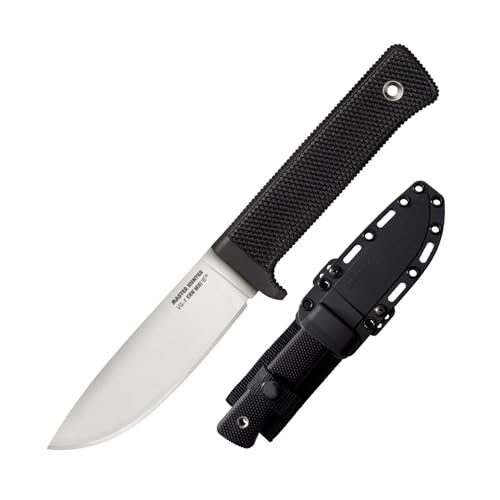
The Cold Steel Master Hunter is built for durability and performance. Its blade is crafted from Japanese VG-10 San Mai III steel, a laminated construction known for toughness and a keen edge. The flat-ground drop point design is excellent for slicing and provides a strong tip for controlled work.
With a thick spine for added strength, this knife can handle demanding tasks. The Kray-Ex handle material is engineered to absorb shock and provide a highly tactile grip that remains secure in wet, slippery conditions, preventing hand fatigue during extended use.
Schrade SCHF36M Frontier Fixed Blade Knife

The Schrade Frontier is a robust, full-tang knife built for heavy-duty outdoor use. Its 5-inch drop point blade made from 8Cr13MoV steel is coated for extra corrosion resistance, a helpful feature in all weather conditions. The design offers a solid feel in hand for tasks that require a bit more leverage.
The handle is constructed from micarta, a material known for its durability and good grip texture. It comes with a practical polyester belt sheath for easy access. This knife represents a strong value, providing reliable performance for hunters who need a tough, general-purpose blade.
Morakniv Companion Fixed Blade Outdoor Knife

The Morakniv Companion is renowned for offering exceptional quality at an accessible price point. Its Sandvik 12C27 stainless steel blade is easy to sharpen and maintains a good edge, while offering better corrosion resistance than many carbon steels. This makes it a very low-maintenance option for hunters.
Despite its simple appearance, the ergonomics are well-considered. The high-friction polymer handle provides a safe, comfortable grip in all conditions. For hunters looking for a reliable, no-fuss knife that performs admirably for field dressing and general camp tasks, the Companion is a top contender.
Benchmade Bushcrafter Outdoor Survival Knife
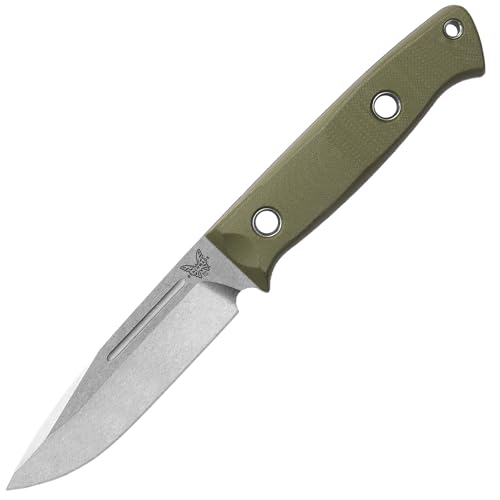
The Benchmade Bushcrafter is a heavy-duty tool designed for the most demanding outdoor scenarios. Its blade is made from premium CPM-S30V steel, which provides an excellent balance of edge retention, toughness, and corrosion resistance. The updated blade geometry is versatile enough for both fine work and more robust tasks.
Built to handle everything from shelter building to food preparation, its strength makes field dressing large game a straightforward process. The OD Green G10 handle scales are extremely durable and offer a solid, all-weather grip, ensuring control and comfort during extended use.
Grohmann GR1-BRK Original Design

The Grohmann #1 is a classic Canadian hunting knife with a distinctive and highly functional design. Its unique curved blade, often called a “Canadian Belt Knife” pattern, is engineered to work with a natural pulling motion, which can be very effective for skinning and general cutting tasks during field dressing.
Made in Canada, this knife has a reputation for quality craftsmanship and practical design. The handle shape fits comfortably in the hand, promoting control and reducing slippage. For hunters interested in a time-tested design with a loyal following, the Grohmann is a compelling choice.
Fallkniven F1 Fine Edge Fixed Blade Knife

The Fallkniven F1 is a Swedish-made knife originally designed for military pilots, which speaks to its reliability and robust construction. It features a laminated VG10 steel blade, known for a very hard core that holds an edge, surrounded by softer, tougher steel for durability and shock absorption.
This combination results in a blade that is both exceptionally sharp and resistant to chipping. The Thermorun handle provides an outstanding, secure grip in cold, wet, or slippery conditions. It’s a premium, over-built knife ready to handle field dressing and much more with ease.
Gerber Gear Ultimate Pro Hunting Knife
Gerber’s Ultimate Pro Hunting Knife is designed with input from professional hunters to meet real-world needs. It typically features a durable, sharp blade steel optimized for holding an edge through tough hide and connective tissue. The ergonomics are a key focus, ensuring the knife feels like an extension of your hand during detailed work.
Many models include thoughtful additions like a gut hook for opening the cavity cleanly or a non-slip handle for safety. As a tool developed with professional guidance, it aims to provide a balanced set of features that streamline the entire field dressing process from start to finish.
How to Choose the Best Hunting Knife for Field Dressing
Let’s be honest, picking a knife can feel overwhelming with all the options out there. I’ve been there, staring at a wall of blades. But for the specific job of field dressing, you don’t need a Rambo knife. You need a precise, reliable tool. Here’s what I always look for when I’m choosing a hunting knife for field dressing.
First, think about blade shape. A drop-point blade is my go-to. The spine curves down to a lowered point, which gives you great control for skinning and gutting without accidentally puncturing the intestines. It’s a safe, versatile shape. Some folks love a clip-point for its finer tip, but for me, the drop-point is the workhorse. Blade length is next. Bigger isn’t better here. A blade between 3 and 4 inches is the sweet spot. It’s long enough to open a deer’s abdomen cleanly but short enough for the detailed work around joints and organs. Anything longer just gets in the way.
Steel type is where things get technical, but it boils down to a trade-off: edge retention versus ease of sharpening. High-carbon stainless steels, like those from Buck or Benchmade, offer a great balance. They resist rust from blood and moisture better than plain carbon steel, and they hold an edge well. Speaking of the edge, a plain edge is far superior to a serrated one for field dressing. You need a clean, sharp slice to separate hide from meat and cut through tissue. A serrated edge will tear and make a mess. Keep it simple.
Finally, consider the handle and tang. The handle material should give you a secure, non-slip grip even when it’s wet. Rubberized composites or textured synthetics are excellent. As for the tang—the part of the blade inside the handle—a full tang is best. This means the steel runs the full length of the handle, making the knife incredibly strong and balanced. You might pay a bit more, but it’s worth it for a tool you’ll use for years. By focusing on these key features—drop-point blade, 3-4 inch length, quality steel, plain edge, and a solid handle—you’ll narrow down your search to find one of the best hunting knives for field dressing for your needs.
FAQ
What’s the most important feature in a field dressing knife?
For me, it’s control. That’s why blade shape and length are so critical. A 3 to 4-inch drop-point blade gives you the precision to navigate around the pelvis and sternum without damaging the meat or organs. A giant, unwieldy blade might look cool, but it’s a liability when you’re trying to make careful cuts inside the body cavity.
Can I use a folding knife, or do I need a fixed blade?
You can use a high-quality folding knife, and many hunters do for convenience. However, I strongly prefer a fixed blade for the main field dressing work. Fixed blades are easier to clean (no hinge to trap blood and bacteria), they’re generally stronger, and they’re faster to deploy. For a primary tool, a fixed blade is the more reliable choice.
How often should I sharpen my hunting knife during a field dressing?
With a quality, sharp knife, you should be able to completely field dress an animal like a deer without stopping to sharpen. That said, I always carry a small portable sharpener or a ceramic rod in my pack. If I feel the blade starting to drag or tear instead of slice, I’ll give it a few quick strokes. A sharp knife is a safe knife—it requires less force and is less likely to slip.
What’s the best way to clean my knife after field dressing?
As soon as possible! Blood and moisture are the enemies of steel. I carry a small bottle of water and a rag just for this. Rinse and wipe the blade and handle thoroughly. Once I’m back at camp or home, I wash it with warm, soapy water, dry it completely, and then give it a very light coat of oil on the blade. This routine prevents rust and keeps your knife ready for the next use.
Is a gut hook necessary on a hunting knife?
This is personal preference. A gut hook can make opening the belly hide from sternum to pelvis quicker and reduces the chance of puncturing the guts. I find them useful on bigger game. However, they add complexity, can be tricky to sharpen, and aren’t strictly necessary. A sharp, controlled tip can do the same job. If you’ve never used one, try a knife without one first.
What should my budget be for a good field dressing knife?
You can find a perfectly functional field dressing knife in the $30 to $80 range. These will serve most hunters well. If you hunt frequently or want premium materials (like top-tier steel or a full-tang construction), expect to spend $100 to $250. You’re paying for better edge retention, durability, and ergonomics. Don’t just buy the cheapest option; consider it a long-term investment in a tool that makes a critical job easier and more efficient.