Winter camping presents a unique set of challenges, with staying warm and comfortable at night being paramount. The right sleeping bag is not just a piece of gear; it’s your shelter from the cold, directly impacting your safety, recovery, and enjoyment. With so many options claiming to be the warmest or lightest, selecting the perfect bag for your needs can feel overwhelming.
This roundup focuses on ten top-rated sleeping bags designed for cold-weather conditions, from ultralight backpacking models to spacious base camp options. We’ve analyzed key features like temperature ratings, insulation type, weight, and construction to help you find a reliable bag that will keep you cozy on your next frosty adventure.
Our Top Picks for Winter Camping Sleeping Bags
- Summit Down Sleeping Bag 0 Degree by Outdoor Vitals
- Hyke & Byke Quandary 15°F Cold Weather Mummy Sleeping Bag
- MARMOT Ironwood Mummy Sleeping Bag – 650 Fill Down
- TETON Sports Celsius XXL, 0 Degree Sleeping Bag
- Coleman North Rim 0°F Big & Tall Sleeping Bag
- Teton LEEF Lightweight Mummy Sleeping Bag – 0F
- MEREZA 0 Degree Winter Sleeping Bag with Pillow
- Browning McKinley -30° Sleeping Bag
- Western Mountaineering Kodiak RZ Microfiber Sleeping Bag
- Outdoor Vitals Summit 0°F Down Sleeping Bag
Summit Down Sleeping Bag 0 Degree by Outdoor Vitals

For backpackers who prioritize every ounce, the Summit Down Sleeping Bag is a standout choice. It achieves an impressive sub-2-pound weight by using premium 800+ fill power down, making it one of the lightest options for its 0°F temperature rating. This focus on weight reduction helps minimize fatigue on long winter trails.
Beyond its lightness, the bag features HyperDry hydrophobic down, which resists moisture from snow, rain, or condensation better than untreated down. A thoughtful differential cut provides a generous fit that avoids compressing the insulation against your body, ensuring the down lofts fully to maximize warmth without unnecessary tightness.
Hyke & Byke Quandary 15°F Cold Weather Mummy Sleeping Bag
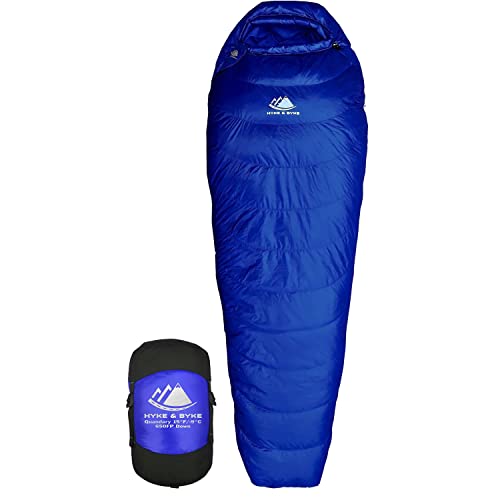
The Hyke & Byke Quandary is engineered for three-season adventures that dip into cold conditions, rated for temperatures as low as 15°F. It uses 650 fill power duck down, which is naturally hydrophobic, offering a strong balance of warmth, compressibility, and value. Its fully baffled construction is key, as it eliminates sewn-through seams that can create cold spots.
This bag is designed with the practical needs of hikers in mind. It features a water-repellent DWR coating on its ripstop nylon shell and uses YKK zippers known for their durability and water resistance. With a total weight under 3 pounds for the regular size, it provides a reliable warmth-to-weight ratio for fall and winter backpacking.
MARMOT Ironwood Mummy Sleeping Bag
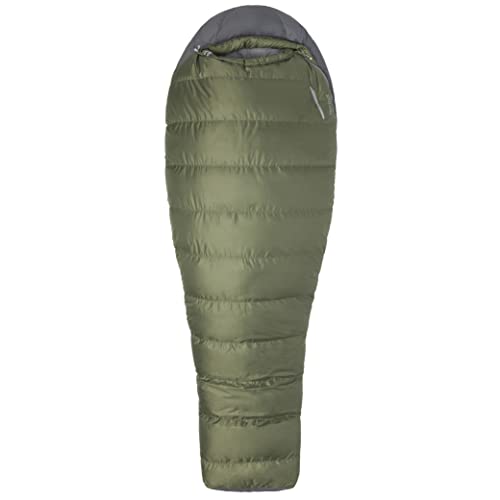
Marmot’s Ironwood sleeping bag focuses on delivering comfort and reliable performance for cool-weather camping. Its EN-tested 30°F rating gives you a standardized expectation of its limits. The 650-fill down is treated with Down Defender to improve water resistance, a useful feature for damp environments.
Comfort details include an anatomically shaped footbox for better toe room and a design with extra space to stretch your feet. It incorporates practical features like a snagless insulated draft tube, a full-length two-way YKK zipper with an anti-snag slider, and a zipper garage to protect your face from cold metal.
TETON Sports Celsius XXL, 0 Degree Sleeping Bag

If you prefer more room to move or need a bag for base camp comfort, the TETON Sports Celsius XXL is a strong contender. Its generous rectangular-mummy hybrid design and soft poly-flannel lining prioritize comfort, making it feel less restrictive than a traditional mummy bag.
Rated for 0°F, it uses a synthetic SuperLoft Elite fiber fill in a double-layer construction with draft tubes to seal in warmth. The included compression sack makes packing this larger bag more manageable, allowing you to reduce its volume significantly for transport.
Coleman North Rim 0°F Big & Tall Sleeping Bag

Coleman’s North Rim sleeping bag is built for larger campers, accommodating individuals up to 6’2″. Its straightforward, reliable design is centered on providing essential warmth down to 0°F in a mummy-style format that helps retain heat efficiently.
A key feature is the Thermolock draft tube that runs alongside the zipper, which is designed to prevent body heat from escaping through this potential weak point. The adjustable hood adds to the bag’s ability to seal in warmth and can be adjusted for ventilation if needed.
Teton LEEF Lightweight Mummy Sleeping Bag – 0F

The Teton LEEF model aims to balance a roomier mummy cut with a lightweight, packable design suitable for backpacking. Its 0°F rating makes it viable for winter trips, while the emphasis on a less restrictive fit appeals to those who find standard mummy bags too confining.
It includes a compression sack, which is essential for fitting the bag into a backpack. The design focuses on efficient insulation that provides necessary warmth without excessive bulk, making it a versatile choice for various cold-weather activities.
MEREZA 0 Degree Winter Sleeping Bag with Pillow

The MEREZA sleeping bag offers a very spacious rectangular design, reported to be 20% larger than many standard bags, fitting campers up to 7 feet tall. This makes it an excellent option for those who want maximum room or plan to use it as a blanket. The included integrated pillow adds a convenience factor.
Rated for winter conditions, it uses thick hollow cotton insulation and features a waterproof and windproof polyester shell. A unique separated bottom zipper allows for foot ventilation and temperature control, adding versatility to its design.
Browning McKinley -30° Sleeping Bag

For extreme cold weather camping, the Browning McKinley is rated for a frigid -30°F. It uses advanced synthetic TechLoft Silver insulation and features a two-layer offset construction. This method overlaps insulation layers to eliminate sewn-through seams and prevent cold spots.
It is designed for maximum coverage and comfort with a large hood, separating zippers, and a soft brushed polyester liner. This bag is built for situations where retaining heat is the absolute priority, such as winter hunting or camping in alpine environments.
Western Mountaineering Kodiak RZ Microfiber Sleeping Bag
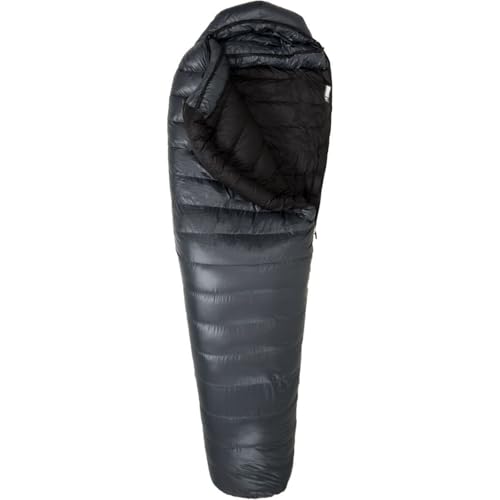
Western Mountaineering is renowned for high-end down bags, and the Kodiak model reflects this with its focus on premium materials and construction. It features continuous baffles, which allow you to shift the down insulation to customize warmth distribution based on the conditions.
The bag includes a full down collar for a secure seal around the neck and a generous girth through the shoulders and footbox. While specifications are listed succinctly, the brand’s reputation is for exceptional warmth, durability, and attention to detail for serious outdoor enthusiasts.
Outdoor Vitals Summit 0°F Down Sleeping Bag
This entry for the Outdoor Vitals Summit sleeping bag directs you to the current product listings. As a brand, Outdoor Vitals is known for creating gear that balances performance with weight savings, often utilizing high-quality hydrophobic down.
Their Summit series typically emphasizes features like water-resistant down treatment and differential cut designs that optimize loft and warmth. Checking the latest model details is recommended to confirm the exact fill power, weight, and contemporary features of this 0°F rated bag.
Buying Guide: How to Choose a Top-Rated Winter Sleeping Bag
Picking the right sleeping bag for winter camping isn’t just about comfort; it’s a safety decision. I’ve learned the hard way that a bag that’s perfect for summer will leave you miserable and cold when the temperature plummets. The key is understanding the specs and how they translate to real-world warmth. Let’s break down what actually matters when you’re looking at those 10 top-rated sleeping bags for winter camping.
First, ignore the “season” rating. The only number that counts is the EN/ISO temperature rating. This is a standardized test. Focus on the Lower Limit rating (for men) or the Comfort rating (for women). If you’re camping in 20°F weather, you need a bag with a Lower Limit rating at least 10 degrees lower, so around 10°F. I always go for a bag rated 10-15 degrees colder than the worst conditions I expect. It’s easier to vent a warm bag than to warm up a cold one.
Insulation type is the next big call. Down (goose or duck) is the king of warmth-to-weight and packability. It’s more expensive and loses all insulating power when wet. Look for high fill-power (600+), which indicates loft and efficiency. Synthetic insulation, like PrimaLoft, is heavier and bulkier but costs less and will still keep you warm if it gets damp. For wet climates or coastal winters, I often lean synthetic. For dry, cold mountain trips, down is my choice.
Fit and features are crucial. A mummy-shaped bag is most efficient for winter, minimizing dead air space your body has to heat. But it must fit you! If you’re broad-shouldered, a “regular” might be too tight. Look for a well-insulated draft collar and a snug-fitting hood—heat escapes fast from your neck and head. A two-way zipper lets you vent your feet, and a draft tube behind the zipper stops cold spots. Finally, consider the shell material: a durable, water-resistant fabric adds a lot of protection from frost and light moisture inside your tent.
FAQ
What temperature rating do I really need for winter camping?
This is the most common question. You need a bag rated for temperatures colder than the forecast. If the nightly low is 20°F, aim for a bag with an EN/ISO Lower Limit rating of 0°F to 10°F. Your metabolism, sleep setup (pad R-value!), and even what you eat before bed affect warmth. It’s always better to have too much bag. A good sleeping pad with an R-value of 5 or higher is non-negotiable; without it, the cold ground will suck heat right from you, no matter how good your bag is.
Is down or synthetic insulation better for winter?
Both have a place. Down is lighter, packs smaller, and lasts longer, making it ideal for dry, cold conditions where weight matters. High-quality down is phenomenal. However, synthetic insulation maintains its warmth when wet and dries faster, which can be a lifesaver in damp, slushy, or coastal winter conditions. For most people building their kit, a synthetic bag is a more forgiving and budget-friendly start for winter.
How do I keep moisture out of my sleeping bag?
Moisture is the enemy. Most comes from you—your breath and sweat. Always change into dry base layers before bed. Use the bag’s hood and vent the zipper to manage condensation from your breath. Never breathe directly into the bag. Store wet clothes outside the bag, maybe in the footbox. A tent with good ventilation is critical. For storage, never keep your bag compressed; hang it loose in a dry closet so the insulation doesn’t lose its loft.
Can I use a 3-season bag in winter with a liner?
I don’t recommend this as a primary strategy for true winter conditions. A liner might add 5-15 degrees of warmth, but it won’t transform a 35°F bag into a 0°F bag. It’s a great supplement for stretching the range of your winter bag on milder nights, or for adding cleanliness. For serious cold, you need a bag designed and insulated for it from the start. Relying on a liner as your main warmth boost is a risky move.
How important is the shape of the sleeping bag?
Very. For winter, a mummy shape is best. It’s tapered to reduce the volume of air your body must heat, conserving energy. The fitted hood is essential for trapping heat around your head. Rectangular bags create too much empty space. Some “semi-rectangular” bags offer a compromise for side sleepers, but they will always be less thermally efficient than a proper mummy bag designed for cold weather.