For the modern predator hunter, technology has become an indispensable ally. An electronic call with a remote allows you to place lifelike sounds exactly where you need them while you remain concealed downwind, dramatically increasing your chances of success. With so many models on the market, from feature-packed powerhouses to simple and effective units, choosing the right one is key to a productive hunt.
This roundup focuses on remote-operated electronic calls designed specifically for calling coyotes and other predators. We’ve compiled a list of eight top contenders, evaluating them on sound quality, remote range, programming capabilities, and overall value. Whether you’re a seasoned veteran or just starting out, there’s an option here to fit your hunting style and budget.
Our Top Picks for Remote Electronic Predator Calls
- FOXPRO Electronic Predator Call – Inferno
- FOXPRO X24 American Made Electronic Predator Call
- Icotec 350+ Electronic Predator Call
- Primos Hunting Dogg Catcher 2 Electronic Predator Call
- FOXPRO Hellcat American Made Electronic Predator Call
- Icotec GEN2 GC500 Electronic Predator Call with Remote
- MightyCaller MC-200 Electronic Predator Call with Remote Control
- FOXPRO Inferno Electronic Game Call with Remote
FOXPRO Electronic Predator Call – Inferno
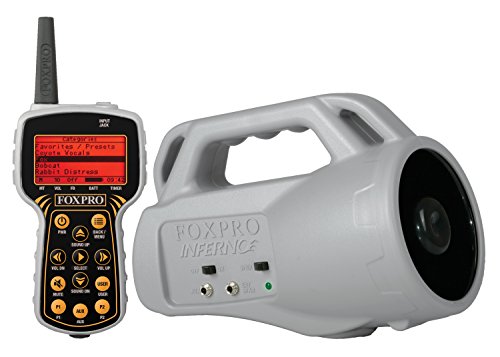
The FOXPRO Inferno is a robust and highly programmable caller that stands as a serious tool for dedicated hunters. It comes pre-loaded with 75 professional sounds and has a total storage capacity for 200, giving you an extensive library of distress calls, howls, and challenge vocals at your fingertips. The unit is designed for easy customization via its integrated USB port, allowing you to connect to a computer and manage your sound library with precision.
Operation is straightforward thanks to the Inferno remote, which features a large, easy-to-read screen. This lets you manage volume, select sounds, and control other functions without fumbling. As an American-made product, it is built to withstand the rigors of the field, offering reliability when you need it most. Its versatility makes it effective for coyotes, foxes, hogs, and more.
FOXPRO X24 American Made Electronic Predator Call

The FOXPRO X24 represents a high-tech approach to predator calling, integrating advanced features for the data-driven hunter. It includes 100 high-quality sounds and access to a vast free sound library. Unique features like FOXMOTION create a realistic illusion of moving prey by fading sound between the left and right speakers, adding a crucial layer of authenticity to your setup.
Perhaps its most innovative tool is FOXDATA. When activated, this function records environmental data from each hunting stand—including temperature, barometric pressure, moon phase, and shot time. Over a season, this information can help you identify patterns and predict animal activity, turning your experience into actionable intelligence. This caller is for the hunter who views success as a combination of skill and smart strategy.
Icotec 350+ Electronic Predator Call

The Icotec 350+ is built around two key strengths: exceptional remote range and modern connectivity. It boasts an industry-leading 300-yard remote range that requires no direct line of sight, giving you great flexibility in positioning your call. The sound quality is crystal clear, ensuring your calls carry with the necessary distress or attraction to bring in predators from a distance.
Adding to its convenience is Bluetooth connectivity, which allows you to control the unit from a smartphone or tablet up to 100 yards away. This can be useful for quick sound changes or adjustments. The included programmable SD card makes loading and organizing your preferred sounds a simple task. It’s a well-rounded call that performs reliably for coyote, fox, raccoon, and other game.
Primos Hunting Dogg Catcher 2 Electronic Predator Call

The Primos Dogg Catcher 2 is designed for hunters who want effectiveness without complexity. This compact unit is simple to operate and comes pre-loaded with 12 proven sounds from expert caller Randy Anderson. These sounds are selected specifically to call in wary predators like coyotes, bobcats, and foxes.
Despite its affordable price, it doesn’t skimp on useful features. The remote operates up to 100 yards away, and a notable capability is the option to play two sounds simultaneously, which can create more convincing and frantic scenarios. Its straightforward design makes it an excellent choice for beginners or as a reliable backup call for any hunter’s pack.
FOXPRO Hellcat American Made Electronic Predator Call

The FOXPRO Hellcat strikes a strong balance between portability, affordability, and performance. Proudly made in the USA, it is a favorite among hunters who need a capable caller that won’t weigh them down. It arrives ready to use with 175 sounds—75 premium sounds plus access to FOXPRO’s extensive free library—and can store up to 300 total.
Its digital design ensures reliable sound quality, and the remote provides full control over your hunt. The Hellcat is versatile enough for calling coyotes, foxes, crows, and hogs. For hunters seeking the reputable FOXPRO build quality and sound library in a more compact and budget-friendly package, the Hellcat is a compelling option.
Icotec GEN2 GC500 Electronic Predator Call with Remote
The Icotec GEN2 GC500 is part of a newer generation of calls from a brand known for value and performance. It is engineered to deliver clear, loud audio that carries well in the field, making it effective for a variety of predator species. The included remote offers solid operational range, allowing you to place the call strategically while you stay hidden.
This model typically features a user-friendly interface and durable construction suited for outdoor use. With programmable sound options and reliable performance, the GC500 is positioned as a strong mid-range choice for hunters who need dependable technology without an excessive number of complex features.
MightyCaller MC-200 Electronic Predator Call with Remote Control
The MightyCaller MC-200 is built to provide a powerful calling solution. It focuses on producing high-volume, realistic sounds to attract predators from longer distances. The remote control gives the hunter full command over the unit, enabling sound changes and volume adjustments from a concealed position.
This call is designed for simplicity and impact, often coming with a selection of pre-loaded essential sounds for immediate use in the field. Its rugged build aims to handle tough conditions, making it a practical tool for hunters who frequent diverse terrains and need a call they can count on.
FOXPRO Inferno Electronic Game Call with Remote
This model represents the core FOXPRO Inferno system, a trusted name in electronic calling. It combines a durable caller with a functional remote, providing access to FOXPRO’s renowned library of realistic game sounds. The system is built for hunters who require consistent performance and the ability to customize their sound selection for specific hunting situations.
Its design prioritizes clear audio projection and reliable remote operation. As a versatile tool, it can be used for a wide range of game beyond just predators, including crows and other species. For hunters looking for a proven platform from an industry leader, this Inferno call is a solid foundation.
Buying Guide: How to Choose the Best Electronic Coyote Call with Remote
Picking the right electronic coyote call with remote can feel overwhelming with all the options out there. I’ve spent a lot of time in the field testing these, and I can tell you that not all calls are created equal. The goal is to get a tool that works for you, not against you, when you’re trying to bring a coyote in close. Let’s break down what actually matters so you can make a smart choice.
First, think about sound quality and library size. A call with tinny, unrealistic sounds is worse than no call at all. Look for a unit that uses high-fidelity speakers and professionally recorded sounds. More sounds aren’t always better, but a solid variety of distress calls (like rabbit, fawn, or bird) and howls (location, challenge, female invitation) gives you flexibility for different seasons and situations. Some top models let you upload your own custom sounds, which is a huge plus if you have a specific sound you trust.
Next, the remote is everything. Range is the big one. You need a remote that works reliably at 100 yards minimum, but I personally aim for models with 200+ yard ranges. This lets you set the call downwind and get well away from it, keeping your scent and movement hidden. Check if the remote has a clear display and intuitive buttons you can operate with gloves on. There’s nothing more frustrating than fumbling with a tiny, complicated remote when a coyote is on its way in.
Durability and power are non-negotiable. These calls get knocked around in your pack, exposed to dust, moisture, and extreme temperatures. Look for a rugged, waterproof or highly water-resistant housing. For power, check if it uses standard alkaline batteries or rechargeable lithium packs. I prefer systems with a rechargeable battery pack for the main unit and standard AAs for the remote—you never want both to die at the same time. Finally, consider extra features like a decoy port, programmable sequences, or a built-in light for night hunting. Start by nailing down the sound quality and remote performance, then see which of these bonuses fit your style and budget.
FAQ
What is the effective range for a typical remote on these calls?
Most quality electronic coyote calls with a remote advertise a range between 100 and 300 yards in ideal, open-field conditions. In reality, terrain, vegetation, and weather can cut that distance significantly. I always plan for the effective range to be about half of what’s advertised in perfect conditions. For consistent performance, look for a model that uses a strong, dedicated frequency (like UHF) rather than a basic Bluetooth connection, which often has a much shorter and less reliable range.
Can I use these calls in rainy or wet conditions?
This depends entirely on the specific model’s build. Many are listed as “water-resistant,” which means they can handle light rain or dew. Few are fully waterproof. If you hunt in wet climates often, you must prioritize a call with a high IPX waterproof rating (like IPX6 or IPX7). Regardless of the rating, I always use a zip-top bag or a commercial call cover for extra protection. Moisture is the fastest way to ruin electronics, so it’s better to be overly cautious.
How many different sounds do I really need?
You don’t need a library of 1,000 sounds. In fact, that can be paralyzing. A well-rounded selection of 20-50 high-quality sounds is more than enough for most hunters. Focus on finding a call that includes a few proven rabbit distress variations, a couple of rodent sounds, a fawn distress, and a selection of howls (female invitation, male challenge, group howl). Mastering a handful of sounds is far more effective than cycling randomly through hundreds.
Are rechargeable battery systems better than ones that use disposable batteries?
Both have pros and cons. Rechargeable lithium packs (like those in the FoxPro X-Wave) are convenient, often last longer per charge, and save money over time. However, if the battery dies in the field, you’re done unless you carry a spare pack. Systems that use standard AA batteries offer ultimate flexibility—you can always find replacements at a gas station. Some hunters, myself included, prefer a hybrid approach: a rechargeable main unit but a remote that runs on AAs as a backup safety net.
Is it worth getting a call with a decoy port?
If you frequently use a motion decoy, then absolutely. A decoy port allows you to plug a flapping bird or tail-wagger directly into the call box and control its on/off cycles from your remote. This synchronizes sound and movement, creating a more convincing setup. It’s a cleaner solution than running separate batteries and switches for your decoy. If you don’t currently use a decoy, it’s a nice-to-have feature that gives you the option to add one later without needing a new call.