Choosing the right fish finder for your kayak is a critical decision that can dramatically improve your time on the water. Kayak anglers need a unit that is compact, power-efficient, and packed with features to locate fish and navigate effectively. Garmin’s Striker series offers a range of options perfect for the limited space and specific demands of kayak fishing.
From basic sonar to advanced mapping and vivid scanning, there is a model designed for every skill level and budget. This guide examines eight of the best Garmin fish finders available, highlighting their key features to help you select the ideal tool for your next fishing adventure.
The Best Garmin Fish Finders for Kayak Anglers
- Garmin STRIKER 5CV with Transducer, 5″ GPS Fishfinder
- Garmin Striker 4 with Transducer, 3.5″ GPS Fishfinder
- Garmin Striker 7SV with Transducer, 7″ GPS Fishfinder
- Garmin Striker Vivid 4cv, Easy-to-Use 4-inch Color Fishfinder
- Garmin Striker Plus 4 Ice Fishing Bundle
- Garmin Striker 4 with Transducer Bundle with Battery
- Garmin Striker Plus 4cv with Transducer, 4-inch CHIRP Fishfinder
- Garmin Striker Plus 5cv with Transducer, 5-inch CHIRP Fishfinder
Garmin STRIKER 5CV with Transducer
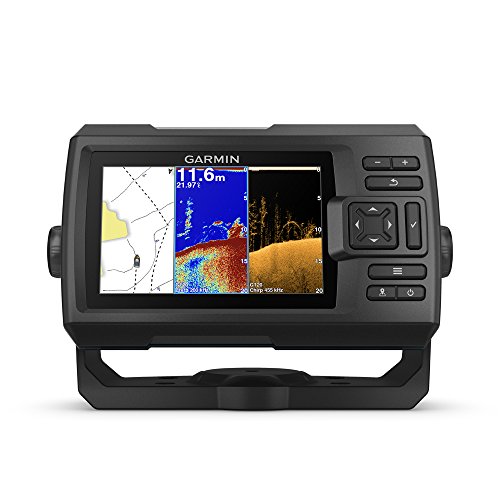
This 5-inch model strikes an excellent balance between screen size and functionality for a kayak. It provides CHIRP traditional sonar for superior fish arches and target separation, plus CHIRP ClearVü scanning sonar for a nearly photographic view beneath your kayak. This combination helps you distinguish between fish, structure, and the bottom with greater clarity.
The built-in GPS is essential for marking productive spots, while the Quickdraw Contours mapping software allows you to create detailed maps of the water you fish. You can store maps with 1-foot contours for up to 2 million acres, making it a powerful tool for building your personal chart library on frequently fished lakes and rivers.
Garmin Striker 4 with Transducer

The Garmin Striker 4 is a legendary entry-level unit, famous for offering premium features at an accessible point. Its 3.5-inch display is compact and ideal for kayaks with very limited deck space. Despite its size, it delivers ClearVü scanning sonar for detailed images and includes a built-in GPS for marking waypoints.
Its simple, button-controlled interface is easy to learn and use, even with wet hands. With a water rating of IPX7, it can withstand accidental splashes and rain. This fish finder is a reliable and straightforward choice for anglers who need effective sonar and GPS without complexity.
Garmin Striker 7SV with Transducer

For kayak anglers who want a large, detailed display and comprehensive sonar coverage, the Striker 7SV is a top choice. The 7-inch screen provides ample space to split between traditional sonar, ClearVü, and SideVü scanning, giving you a complete underwater picture around your kayak.
It includes all the mapping and GPS features of the smaller models but adds built-in Wi-Fi. This connection allows you to use the ActiveCaptain app to receive smart notifications, access the community-shared Quickdraw Contours maps, and easily transfer waypoints from your phone. It is a feature-rich system for the serious kayak angler.
Garmin Striker Vivid 4cv

The Striker Vivid 4cv introduces enhanced color palettes specifically for its scanning sonar. These vivid colors are designed to make it easier to differentiate fish from structure and the bottom, reducing interpretation time so you can focus on fishing. The included tilt-and-swivel mount offers optimal viewing angles from your kayak seat.
It comes with the GT20 transducer, providing both CHIRP traditional and ClearVü scanning sonar. Coupled with high-sensitivity GPS, this compact unit delivers modern, easy-to-interpret visuals in a package perfectly sized for small craft.
Garmin Striker Plus 4 Ice Fishing Bundle

This bundle is an outstanding value for anglers who fish from a kayak in warmer months and through the ice in winter. The core unit is a 4-inch Striker Plus with GPS and Quickdraw Contours mapping. The key addition is the specialized dual-beam ice fishing transducer.
The portable design, with its included carrying case and battery, makes it simple to transfer the unit from your kayak to the ice. You get a versatile, all-season fish finder system in one package, eliminating the need for separate devices for different types of fishing.
Garmin Striker 4 with Transducer Bundle with Battery
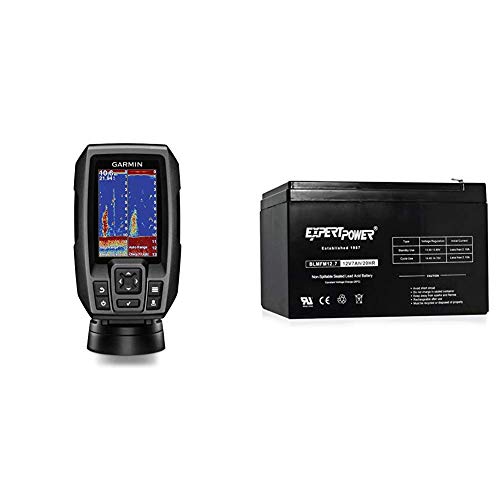
This package solves two needs at once: the fish finder and its power source. It includes the reliable Striker 4 unit along with a rechargeable 12V battery. This is exceptionally convenient for kayak anglers, as it ensures you have a compatible battery ready to go without needing to source one separately.
It is a complete, ready-to-fish kit that simplifies setup. You get all the benefits of the Striker 4—ClearVü sonar, waypoint mapping, and simple operation—with the essential component to make it run, ideal for those new to using electronics on their kayak.
Garmin Striker Plus 4cv with Transducer
The Striker Plus 4cv builds upon the popular 4-inch format by integrating the “Plus” features, primarily the built-in Quickdraw Contours mapping software. This allows you to create and store highly detailed maps directly on the device, a significant advantage for creating records of your kayak fishing locations.
It offers CHIRP traditional and ClearVü scanning sonar for clear imaging, along with standard GPS functions. This model is for the angler who wants the mapping capability of the larger STRIKER units in a more compact 4-inch display size.
Garmin Striker Plus 5cv with Transducer
This model is the “Plus” version of the STRIKER 5CV, meaning it includes the automated Quickdraw Contours mapping software. The 5-inch screen offers a great balance of size and detail for viewing split-screen sonar and maps from a kayak.
You benefit from CHIRP traditional and ClearVü scanning sonar, high-sensitivity GPS, and the ability to generate your own fishing maps. It is a comprehensive tool for the kayak angler who prioritizes detailed mapping and a midsize display for easier viewing.
How to Choose the Best Garmin Fish Finder for Your Kayak
Picking the right fish finder for a kayak is a different game than rigging one on a big boat. Space, power, and mounting are everything. I’ve spent a lot of time on the water with these units, and here’s what I think you should focus on when looking at the 8 best Garmin fish finders for kayaks.
First, consider the display. You’re sitting low, often in bright sun, and you need to glance quickly. Screen size and clarity are huge. A 5-inch screen is a great starting point, but if you can fit a 7-inch, the extra detail for side and down imaging is a game-changer. Look for a high-resolution, sunlight-readable display. You don’t want to be shading the screen with your hand just to see your sonar returns.
Next is the transducer and mounting. This is the most kayak-specific part. You need a transducer that can be easily mounted through a scupper hole, on a swing arm, or inside the hull with epoxy. Garmin’s GT series transducers are compact and perfect for this. Think about the sonar tech you need: basic CHIRP for depth and fish arches is solid, but adding ClearVu (down imaging) and SideVu (side imaging) lets you see structure and bait balls with incredible clarity, almost like an underwater map. For a kayak, a combo transducer that packs CHIRP and ClearVu is often the sweet spot.
Power is your big constraint. Most kayaks use a 12V battery, but size and weight matter. Larger, brighter screens and multiple sonar technologies draw more power. Check the unit’s max current draw. A unit that sips power can last a full day or even multiple trips on a small 8-10Ah battery, while a powerhouse unit might need a bigger pack. Also, think about the physical unit’s power cable—is it long enough to route from your battery to your mounting position?
Finally, don’t forget the mounting hardware and connectivity. You’ll need a sturdy, adjustable ram mount or track mount to position the screen where you can see and touch it easily. If you use other Garmin devices, like a GPS watch or inReach, finding a unit with NMEA 2000 or Bluetooth connectivity can tie your whole system together. For me, the perfect kayak fish finder is a balance of a capable, clear display, a kayak-friendly transducer, and efficient power use that doesn’t weigh me down.
Frequently Asked Questions
Can I use a regular boat fish finder on my kayak?
You can, but it’s often not ideal. Regular units are built for larger power systems and their transducers are designed for transom mounting at higher speeds. A kayak-specific model, like those in a roundup of the 8 best Garmin fish finders for kayaks, will have a lower power draw for small batteries and transducer options made for slow speeds and shallow hull mounting. It saves you a lot of hassle trying to adapt the wrong gear.
What’s more important for a kayak: screen size or battery life?
This is a constant trade-off. From my experience, I lean slightly toward protecting battery life. A smaller, efficient 5-inch unit that lasts 8 hours is more useful than a 9-inch screen that dies after 3. You can always add a second, larger battery, but that’s more weight and clutter. Prioritize a unit with good power management, and choose the largest screen you feel your typical trip’s power supply can reliably support.
Is side imaging worth it on a kayak?
Absolutely, if you fish lakes or reservoirs with lots of offshore structure. The beauty of side imaging from a kayak is your slow speed—you get incredibly detailed, wide-area scans of drop-offs, brush piles, and roadbeds. It helps you find spots you’d never see with traditional sonar. However, in very shallow rivers or creeks, its utility drops. For most anglers, starting with a strong down imaging (ClearVu) unit is great, and adding side imaging is a fantastic upgrade.
How do I mount the transducer on a plastic kayak?
You have three main options. First, a through-hull scupper mount installs the transducer directly into a drain hole, which is clean but depends on your kayak’s design. Second, a transducer arm that clamps to the side is fully adjustable and removable. Third, an in-hull glue-in mount uses marine epoxy to stick the transducer inside a dry compartment. This protects it completely, but you may lose a bit of sonar sensitivity, especially at higher frequencies. The arm is the most versatile for testing and switching between kayaks.
Do I need a mapping card with my Garmin kayak fish finder?
It depends on your water. Many Garmin units come with built-in base maps, but these are often very basic. If you fish a variety of lakes, a detailed LakeVu or BlueChart g2 card is incredibly valuable for seeing contours, depth ranges, and even underwater structure. For rivers or a single, familiar lake, you might be fine without one, especially since you can often create your own detailed maps using the unit’s built-in recording feature over time.