High winds can turn a secure outdoor setup into a dangerous, flying projectile in moments. Whether you’re anchoring a trampoline, securing a shed, or ensuring your canopy survives a sudden storm, the right ground anchor is a critical investment in safety and peace of mind. The market offers a variety of solutions, each designed for different soil types, load requirements, and installation methods.
Choosing the best anchor depends on your specific needs, from simple spiral stakes for temporary setups to heavy-duty auger systems for permanent installations. This roundup examines eight top-performing ground anchors, highlighting their key features and ideal applications to help you find the most reliable defense against strong gusts and severe weather conditions.
Top Ground Anchors for Wind Security
- CORQUE Heavy Duty Tent Stake with Folding Ring
- Pinnacle Mercantile 12 Pack Rebar Stakes J Hook
- Orange Screw Ultimate Ground Anchors
- Ashman Ground Anchor with 100 Feet of Galvanized Wire
- ABCCANOPY 10″ Spiral Ground Anchor with Straps
- Ciyivak Ground Anchors Screw in – Heavy Duty Trampoline Anchors
- The Original Pink Stakes 24″ Screw-In Ground Anchor Kit
- Master Lock 8417D Python Adjustable Locking Cable with Ground Anchor
CORQUE Heavy Duty Tent Stake with Folding Ring
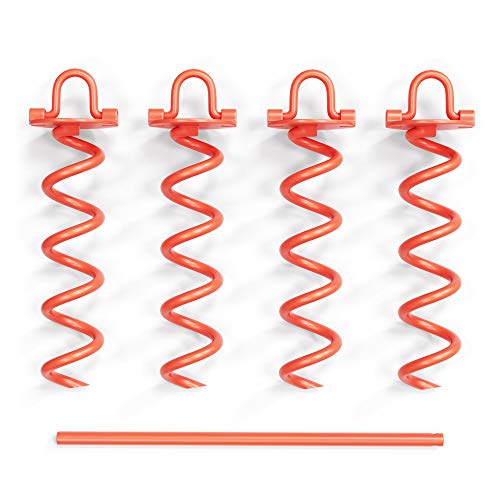
These 12-inch spiral anchors are built for versatility and strength. The orange powder-coated steel construction resists corrosion, while the spiral design and pointed tip allow for easy installation into various terrains. Once twisted into the ground, the folding ring provides a secure point to attach ropes, straps, or harnesses.
Ideal for a wide range of applications, they are marketed as a solution for swing sets, canopies, trampolines, and camping tarps. The set includes a straight handle that acts as a lever, making installation and removal straightforward. Their design aims to withstand significant pull forces, offering security in poor weather and high winds.
Pinnacle Mercantile 12 Pack Rebar Stakes J Hook

For a simple, no-frills anchoring solution, these J-hook rebar stakes offer reliable performance. Made from heavy-duty steel with a chisel-pointed end, they are specifically noted for penetrating hard clay or rocky soils where other stakes might fail. The J-hook design makes it easy to loop and secure ropes or bungee cords.
This pack of twelve provides excellent value for larger projects like securing full-size tarps, construction fencing, or multiple points on a single structure. It is important to note they are bare metal and may rust over time, but this also makes them a very economical and sturdy choice for many demanding jobs.
Orange Screw Ultimate Ground Anchors

The Orange Screw stands out with its unique, wide-thread design that functions like a large screw for the ground. This design creates exceptional holding power in sandy or loose soil where traditional stakes often pull out. Made in the USA, they are lightweight yet robust for their size.
Installation is user-friendly thanks to the included clear T-grip tool, which stores on the screw itself when not in use. This system provides good leverage for driving the anchor deep without strenuous effort. They are a popular choice for campers, beachgoers, and anyone needing a reliable hold in softer earth.
Ashman Ground Anchor with 100 Feet of Galvanized Wire
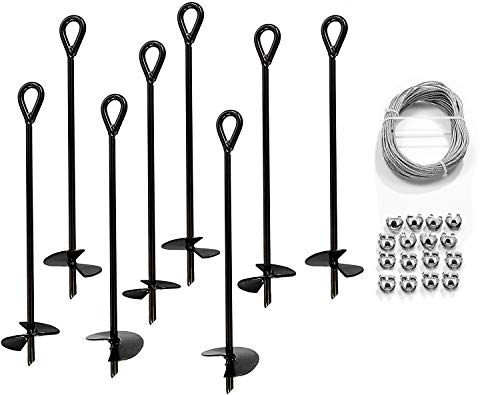
This is a comprehensive kit for serious anchoring projects. It includes eight 15-inch powder-coated steel auger anchors, a full 100 feet of galvanized wire, and 16 clamps. This all-in-one package is ready for securing large items like sheds, carports, animal pens, or swing sets.
The auger design requires an initial hammer strike on the top cap before being screwed into the ground, a method that provides very deep and secure placement. The substantial length and diameter of the anchors, combined with the provided wire, make this system suitable for permanent or long-term installations that must resist high wind loads.
ABCCANOPY 10″ Spiral Ground Anchor with Straps

This product combines a solid spiral anchor with a practical strap, creating a ready-to-use tie-down solution. The anchor itself features a cropped spiral tip for easier ground penetration and a small D-ring for attachment. The included strap adds immediate utility for securing objects directly.
With a stated working load limit of 500 pounds, these anchors are built to handle significant stress from items like trampolines, swings, or canopies. The powder-coated finish helps fight corrosion, and the entire system is noted as a safety precaution for severe weather conditions, aiming to keep property securely in place.
Ciyivak Ground Anchors Screw in – Heavy Duty Trampoline Anchors

Ciyivak’s anchors are engineered specifically for wind resistance, featuring a long, spiraled blade designed to screw deep into the soil for maximum grip. Made from coated solid steel, they are built to withstand harsh weather, including hurricane-force winds.
A key benefit is the inclusion of two installation tools: a T-socket wrench for manual driving and a power nut driver attachment for use with a drill, significantly reducing installation time and effort. Their upgraded length and design make them a strong candidate for securing high-wind-risk items like trampolines, mobile homes, and large sheds in various soil conditions.
The Original Pink Stakes 24″ Screw-In Ground Anchor Kit
While a specific image and ASIN are not provided, The Original Pink Stakes are known in the market for their substantial size and holding power. A 24-inch length allows these screw-in anchors to reach deep into the ground, bypassing loose topsoil to anchor firmly in more compact, stable layers below.
This extreme length is particularly advantageous for securing tall structures with high wind profiles, such as large shade sails, permanent canopies, or signage. Their distinctive color also makes them highly visible, which is a safety feature to prevent trips and falls in the area where they are installed.
Master Lock 8417D Python Adjustable Locking Cable with Ground Anchor
This product offers a dual-purpose solution: security against theft in addition to wind anchoring. The system includes a ground anchor that is driven into the soil, combined with Master Lock’s patented Python adjustable locking cable. The cable can be looped around an item and locked back to the anchor head.
It is an excellent choice for securing valuable outdoor items like grills, bicycles, lawn mowers, or generators from both strong winds and potential theft. The flexibility of the cable allows it to fit around a wide variety of object shapes and sizes, providing versatile security for your property.
Buying Guide: How to Choose the Best Ground Anchors for High Winds
When you live somewhere windy, or you’re prepping for storm season, picking the right ground anchor isn’t just a suggestion—it’s a necessity. I’ve learned the hard way that not all anchors are created equal. The goal is to keep your shed, RV, boat, or portable building firmly attached to the earth, no matter what the weather throws at it. So, how do you sort through the options? Let me walk you through the key things I always look for.
First, consider the anchor type and installation method. Screw-in anchors, often called auger or dogman anchors, are my go-to for permanent or semi-permanent setups. They twist deep into the soil and offer incredible holding power. Drive-in anchors are another solid choice; you hammer them in and they expand underground for a tight grip. For rocky or very hard soil, you might need a specialized anchor or even a concrete footing. Think about how much work you want to do and what your ground is like.
Next up is material and construction. This is non-negotiable. You want heavy-duty, galvanized steel. Galvanization is a zinc coating that fights off rust and corrosion for years. I always check the thickness of the steel, especially on the auger flights (the spiral part) or the shaft. Thin metal will bend or snap under serious tension. A well-built anchor feels substantial in your hands.
Then, you have to match the anchor to your soil type. This is probably the most common mistake I see. A wide, screw-style anchor is fantastic for loose, sandy, or loamy soil because it has a lot of surface area to grab. In clay or harder soil, a narrower, sharper auger might penetrate more easily. If you’re unsure, it’s worth getting a soil sample or asking neighbors what has worked for them.
Finally, look at the load rating and hardware. Reputable manufacturers will provide a working load limit (WLL) or ultimate holding capacity. This tells you how much force the anchor can handle. Always choose an anchor rated for well above what you think you’ll need—high winds create dynamic, shocking loads. Also, inspect the included hardware. The eye bolt, D-ring, or attachment point needs to be just as robust as the anchor itself. A weak link there makes the whole system pointless. Taking the time to choose the right ground anchors for high winds means you can sleep soundly when the next big storm rolls through.
FAQ
How deep should a ground anchor go for wind protection?
Deeper is almost always better when it comes to wind resistance. For most screw-in anchors designed for high-wind applications, I look for a minimum embedment depth of 24 to 36 inches. The goal is to get below the frost line and the top layer of soil that can easily shift. The installation instructions should specify a minimum depth; treat that as the absolute bare minimum and go deeper if you can. In sandy soil, you may need to go even deeper to reach stable, compacted earth.
Can I install ground anchors by myself?
You can install many types by yourself, but having a helper makes it much easier and safer. Smaller screw anchors might be manageable with a digging bar or a long pipe for leverage. For larger auger-style anchors, I strongly recommend using a drive tool attachment with a power drill or, better yet, a dedicated anchor drive tool. These tools save an immense amount of time and physical strain. For the biggest projects or in very tough soil, renting a mechanical post driver might be the smartest move.
What’s the difference between temporary and permanent ground anchors?
The main differences are the installation depth, material quality, and removal method. Temporary anchors, like some corkscrew styles for tents, are shorter, often made of lighter steel, and are designed to be easily removed. Permanent anchors are built from heavy-gauge, galvanized steel, are installed much deeper (often 3+ feet), and aren’t meant to be taken out regularly. For securing structures against high winds, you want a permanent-grade anchor. Trying to use a temporary anchor for a permanent job is asking for trouble.
How do I maintain my ground anchors?
Good news: if you bought quality galvanized anchors, maintenance is pretty low. Once a year, I do a visual inspection. I check for any signs of significant rust, especially at the connection point where the cable or strap attaches. Make sure the anchor hasn’t loosened or shifted in the ground. Tighten any nuts or bolts on the attachment hardware. If you’re in a coastal area with salt spray, you might need to inspect more frequently. Keeping the moving parts (like a swivel eye) lightly lubricated can also prevent seizing.
Are ground anchors universal for all soil types?
No, they are not. This is a critical point. Using the wrong anchor for your soil is the fastest way to have a failure. Auger-style anchors with wide, deep flights are excellent for soft, sandy, or loose soils. For hard clay or rocky soil, you might need a drive-style anchor with a pointed tip or even a specialized anchor designed for penetration through rock. Before you buy anything, know your soil. If you hit solid rock a few inches down, a standard screw anchor simply won’t work.