Selecting the right rope is the most critical gear decision a spelunker can make. The underground environment demands a rope that is strong, abrasion-resistant, and suited for the specific techniques of vertical caving, such as rappelling and ascending on fixed lines. Unlike general climbing, caving often prioritizes static ropes for their minimal stretch and precise handling in wet, muddy conditions. This roundup focuses on ropes built for durability and performance in the demanding world beneath the surface.
With many options on the market, from trusted heritage brands to specialized static lines, knowing the key features can guide your choice. Factors like diameter, construction, certification, and length all play a role in matching a rope to your caving objectives. The following products represent some of the best options available for cavers seeking reliability and safety for their 2025 expeditions.
Our Recommended Spelunking Ropes for 2025
- Singing Rock R44 NFPA Static Rope (10.5-mm x 150-Feet)
- Sterling HTP Static Canyoneering Rope – 9mm, 61m (200ft)
- PETZL Parallel 10.5 mm x 50meter Black Static Rope NFPA
- EDELRID Boa 9.8mm Dynamic Climbing Rope – Blue 60m
- NewDoar 14KN Static Climbing Rope 8mm Accessory Cord Equipment
- BlueWater Assaultline II Static Rope
- Yale Cordage 11mm Braided Static Rope
- Teufelberger Rescue Static Rope
Singing Rock R44 NFPA Static Rope (10.5-mm x 150-Feet)

This Czech-made static rope from Singing Rock is engineered for professional rescue and industrial use, making it exceptionally tough for caving. Its NFPA certification ensures it meets rigorous standards for strength and performance, providing a high level of trust in challenging underground environments. The 10.5mm diameter offers a solid balance between handling comfort and durability against abrasive cave surfaces.
The static construction provides minimal elongation, which is ideal for smooth, controlled rappels and efficient ascents with mechanical devices. The 150-foot length is suitable for many common vertical cave pitches, and the robust build from a specialized European manufacturer promises reliability. This rope is a serious tool for cavers who need a proven, no-nonsense static line.
Sterling HTP Static Canyoneering Rope – 9mm, 61m (200ft)

Sterling’s HTP rope is specifically designed for the wet, abrasive conditions of canyoneering, which translates perfectly to the caving environment. Its 9mm diameter and 200-foot length make it a lighter, more packable option for longer trips where reducing weight and bulk is important. The very low static elongation of 0.80% ensures maximum control during descents.
The HTP (High Tenacity Polyester) sheath is known for its excellent abrasion resistance and quick-drying properties, a crucial feature for caves with water. This rope handles well when wet and is built to withstand repeated pulls over rough rock edges. For cavers looking for a thin, technical static line that performs in soggy conditions, this Sterling rope is a top contender.
PETZL Parallel 10.5 mm x 50meter Black Static Rope NFPA

Petzl brings its renowned expertise in vertical gear to this high-performance static rope. Certified to both NFPA and CE EN1891 standards, it is designed for rescue and work-at-height, guaranteeing exceptional strength and safety margins for caving. The 10.5mm diameter minimizes weight without sacrificing the durability needed for contact with rock.
With a static elongation of 3%, it offers a slight cushion compared to ultra-static ropes, which some users prefer for comfort. The rope is constructed to withstand a high number of falls, indicating outstanding durability in its core construction. For cavers who trust the Petzl brand and require a rope that meets the highest international certifications, the Parallel is a premium choice.
EDELRID Boa 9.8mm Dynamic Climbing Rope – Blue 60m

While primarily a dynamic climbing rope, the EDELRID Boa is included for specific caving scenarios where rope movement and potential fall absorption are considerations, such as in exploratory climbing within caves. Its 9.8mm diameter and 60-meter length offer a versatile, manageable option. As a Bluesign product, it is made with strict environmental and safety standards.
Made in Germany with 150 years of rope-making heritage, this rope promises quality and reliable performance. The dynamic stretch is essential for safely catching falls during climbing maneuvers. Cavers who engage in technical climbing sections as part of their exploration may consider a dynamic rope like the Boa for that specific application, while using static ropes for pure vertical ascent and descent.
NewDoar 14KN Static Climbing Rope 8mm Accessory Cord Equipment
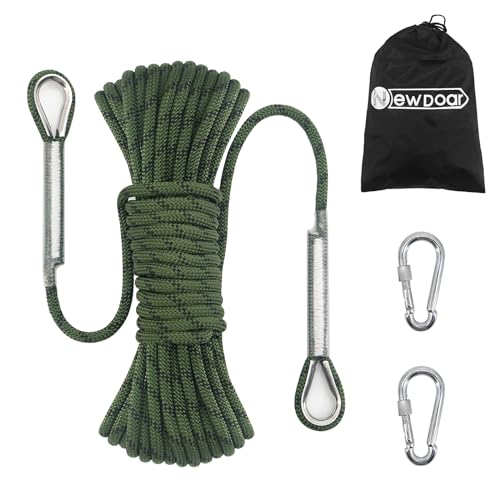
This polyester static rope from NewDoar is presented as a durable and cost-effective option for various uses. The double braid construction with a protective sheath aims to provide high abrasion resistance, which is beneficial for contact with rock. It is available in shorter, practical lengths like 10, 20, and 30 meters, which could be suitable for short drops or as a utility cord.
The included carabiners add value for beginners assembling a basic kit. With a stated breaking force of 14kN, it is rated for significant load. This rope may appeal to those seeking an affordable static line for practice, shorter pitches, or as a backup utility cord, though its specifications and intended use should be carefully evaluated for serious vertical caving.
BlueWater Assaultline II Static Rope
BlueWater is a respected name in ropes, and their Assaultline II is a static kernmantle rope built for demanding applications. Known for its durability and smooth handling, this rope is designed to withstand the abrasion and harsh conditions encountered in tactical, rescue, and industrial settings. This ruggedness directly benefits cavers who need a rope that can endure repeated use in gritty environments.
The rope typically features a tight, abrasion-resistant sheath that protects a strong, low-stretch core. This combination allows for predictable performance during rappels and efficient use with ascenders. For cavers familiar with the BlueWater brand and looking for a reliable, general-purpose static line with a proven track record, the Assaultline II is a model to consider.
Yale Cordage 11mm Braided Static Rope
Yale Cordage specializes in high-performance ropes for arborist, rescue, and rigging markets. Their 11mm braided static rope offers a different construction from typical kernmantle caving ropes. A braided design often provides excellent strength-to-diameter ratio and can be very resistant to abrasion and twisting.
This type of rope is extremely durable and handles well under load, making it a potential choice for fixed ropes in caves or for hauling gear. The 11mm diameter provides a substantial feel that is easy to grip and manage. Cavers involved in expedition-style caving that requires heavy rigging or who prefer the characteristics of a braided static rope should examine the offerings from Yale Cordage.
Teufelberger Rescue Static Rope
Teufelberger is an Austrian company with a long history of producing top-quality ropes for life-critical applications. Their rescue static ropes are engineered to the highest standards, offering exceptional reliability, low elongation, and high abrasion resistance. These ropes are trusted by professional rescue teams worldwide, a testament to their performance in the worst conditions.
For the serious caver, a Teufelberger rescue rope represents a premium investment in safety and longevity. The construction is focused on consistent handling, durability against sharp edges, and maintaining integrity when wet and dirty. Choosing a Teufelberger rope is about selecting a tool with an outstanding reputation for engineering and reliability in the vertical world.
Buying Guide: How to Choose the Best Rope for Spelunking in 2025
Choosing the right rope isn’t just a gear decision; it’s a safety decision. I’ve spent a lot of time underground, and the wrong rope can turn a fun trip into a miserable or dangerous one. For vertical caving, you need a rope built for the unique punishment of a cave environment. Let’s break down what makes a rope good for this job.
First, you need to understand the two main types: static and dynamic. For vertical caving, you almost always want a static rope. Dynamic ropes are designed to stretch to absorb the energy of a falling climber, which is great for rock climbing. In caving, that stretch is a problem. It makes ascending with mechanical devices like a ropewalker system inefficient and bouncy. A true static rope has minimal stretch (typically under 5%), giving you a solid, predictable feel on ascents and rappels.
Material and construction are next. Look for ropes made from high-tenacity nylon. The sheath should be tightly woven for excellent abrasion resistance against rough rock. A high sheath-to-core ratio (like 50/50) generally means better durability. For most caving, a diameter between 9mm and 11mm is the sweet spot. Thinner ropes (9-9.5mm) are lighter and pack smaller but wear out faster. Thicker ropes (10-11mm) are more durable and easier to grip, especially with wet or muddy gloves, but are heavier.
Don’t ignore the finish. A dry treatment isn’t just for ice climbing; it’s a game-changer in caves. This coating repels water, mud, and grit. A dry-treated rope absorbs less water, so it stays lighter, is easier to handle, and freezes less in cold caves. The treatment also helps the grit rinse off more easily, extending the rope’s life.
Finally, consider length and certification. Get a rope long enough for the deepest drops you plan to tackle, plus extra for rigging and tie-offs. Common lengths are 150m or 200m. Always check for the UIAA (International Climbing and Mountaineering Federation) certification and the CE mark, which guarantee it meets specific safety standards for strength and construction. Your life literally hangs on this piece of gear, so investing in a quality, purpose-built rope from a reputable brand is non-negotiable. Taking the time to understand these factors is the first step to finding the 8 best rope to use while spelunking in 2025 for your specific needs.
FAQ
Can I use my old rock climbing rope for caving?
I strongly advise against it. Your dynamic climbing rope is engineered to stretch. That stretch makes ascending with caving gear physically exhausting and unstable. It also tends to saw back and forth over edges more, increasing wear. Caving ropes are static, abrasion-resistant, and often dry-treated to handle mud and water. They’re tools for different jobs.
How often should I retire my caving rope?
There’s no simple calendar date. Retirement depends on use. I inspect my rope before and after every trip. Look for cuts, flat spots, significant sheath wear exposing the core, or any changes in texture (like stiff, crunchy sections from embedded grit). Any major fall, severe abrasion over a sharp edge, or exposure to harsh chemicals means it’s time to retire it. With moderate use, a good rope might last several years, but your eyes and hands are the best judges.
What’s the benefit of a bi-pattern or marked middle on a rope?
This is a huge time-saver and safety feature. In a dark cave, finding the exact middle of a long, muddy rope to rig a rappel is frustrating. A bi-pattern rope changes the weave pattern at the midpoint. A marked middle has a clearly different color section. It lets you rig quickly and accurately, ensuring your rope is centered over the anchor, which is crucial for a safe retrieval (pull-down) later.
Is a thicker rope always safer for spelunking?
Not necessarily. Thicker ropes (10.5-11mm) are more abrasion-resistant and easier to grip, which is great. But they are also heavier, bulkier, and may not work as smoothly with some smaller descending devices. A high-quality 9-10mm static rope from a reputable brand has more than enough strength for caving. The choice often comes down to a balance between durability, weight, and compatibility with your other gear.
How do I properly clean and store my caving rope?
Never store it wet or muddy. After a trip, I rinse it with clean, lukewarm water (no high-pressure sprays) to remove grit. You can use a mild, rope-specific detergent for a deeper clean, but avoid harsh chemicals. Air dry it completely away from direct sunlight and heat sources. Store it loosely coiled in a cool, dry, dark place—not stuffed in a tight bag. Proper care massively extends its life.