Starting your journey into wilderness survival can feel overwhelming. The right book acts as both a trusted guide and a confidence builder, translating complex skills into actionable knowledge. For beginners, a good survival manual provides clear priorities, practical techniques, and the foundational mindset needed to stay safe.
This roundup features eight essential books that cover everything from basic bushcraft and emergency medicine to ingenious survival hacks. Whether you’re planning a weekend camping trip or preparing a more comprehensive emergency kit, these titles offer the critical wisdom to help you navigate the unexpected with greater skill and assurance.
Essential Survival Guides for New Adventurers
- The Bushcraft Boxed Set: Bushcraft 101; Advanced Bushcraft; The Bushcraft Field Guide to Trapping, Gathering, & Cooking in the Wild; Bushcraft First Aid
- Survival Wisdom & Know-How: Everything You Need to Know to Subsist in the Wilderness
- Survival Hacks: Over 200 Ways to Use Everyday Items for Wilderness Survival
- How to Stay Alive in the Woods: A Complete Guide to Food, Shelter and Self-Preservation Anywhere
- SAS Survival Handbook, Third Edition: The Ultimate Guide to Surviving Anywhere
- Bushcraft 101: A Field Guide to the Art of Wilderness Survival by Dave Canterbury
- The Survival Medicine Handbook: A Guide for When Help is Not on the Way by Joseph Alton MD & Amy Alton ARNP
- Survival Hacks: Over 200 Ways to Use Everyday Items for Wilderness Survival by Creek Stewart
The Bushcraft Boxed Set

This comprehensive collection is an excellent starting point for anyone serious about learning wilderness skills. The set includes four focused volumes that progress logically from fundamental concepts to more advanced techniques and specialized knowledge. You receive instruction on core principles, advanced shelter and tool creation, finding and preparing food, and crucial first-aid procedures.
Having these guides together ensures you have a well-rounded library in one purchase. The material is presented in a clear, methodical way that builds confidence as your skills improve. It’s a foundational resource that covers the majority of scenarios a beginner might encounter in the outdoors.
Survival Wisdom & Know-How

This book functions as a massive encyclopedia of survival knowledge, compiled from the archives of Country Wisdom Bulletins. Its strength lies in its sheer breadth of information, covering thousands of tips, techniques, and illustrations on topics from building shelters and finding water to identifying edible plants and handling emergencies.
For the beginner who prefers a single, extensive reference volume, this is a perfect choice. The information is presented in an accessible, straightforward manner with numerous diagrams and photos. It’s the kind of book you can consult for quick answers or read through to gain a wide understanding of self-reliance.
Survival Hacks: Over 200 Ways to Use Everyday Items
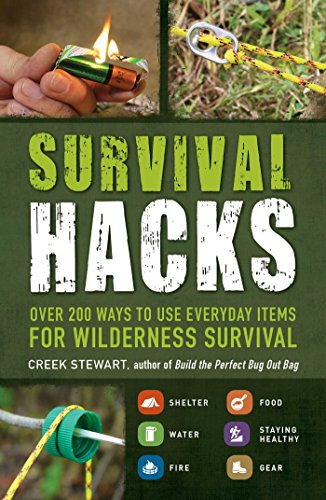
This guide takes a creative and practical approach to survival by focusing on improvisation. It teaches you how to repurpose common items like soda cans, shoelaces, and gum wrappers into useful survival tools. This mindset is invaluable, as it means you can often create solutions with what you already have on hand.
The hacks are broken down into clear categories such as fire, water, shelter, and tools, making it easy to find relevant information. For beginners, this book makes survival skills feel less intimidating and more inventive, encouraging a problem-solving attitude that is critical in any emergency situation.
How to Stay Alive in the Woods

A timeless classic by Bradford Angier, this book has been a trusted resource for decades. It is celebrated for its clear, no-nonsense writing and its effective prioritization of survival needs. The guide systematically addresses the essentials: finding food and water, building adequate shelter, navigating, and signaling for help.
Its enduring popularity with beginners is due to its authoritative yet approachable tone. The book imparts not just skills, but also the calm, rational mindset required to assess a situation and take correct action. It remains one of the most recommended first books on wilderness survival.
SAS Survival Handbook, Third Edition
Written by a former SAS soldier, this handbook is renowned for its thorough and authoritative advice on surviving in any environment on Earth. It covers extreme situations from deserts to arctic conditions, and includes a waterproof portable guide for your pack. The information is detailed, well-illustrated, and based on proven military survival techniques.
For the beginner looking for the most comprehensive single volume on the market, this is often considered the gold standard. It teaches a systematic approach to survival, emphasizing preparation, the will to live, and adapting core skills to any circumstance. It is an invaluable reference for building a deep and resilient knowledge base.
Bushcraft 101: A Field Guide by Dave Canterbury
Dave Canterbury’s Bushcraft 101 is a modern staple that focuses on using the right tools and knowledge to thrive in the wilderness, not just survive. It introduces the “5 Cs of Survivability” – cutting tools, combustion, cover, containers, and cordage – which provides a brilliant and easy-to-remember framework for beginners to prioritize their gear and actions.
The book is packed with clear, practical instructions on skills like firecraft, navigation, and crafting useful items from natural materials. Canterbury’s approach is highly systematic, making it ideal for someone who wants to build their skills from a solid, logical foundation and develop a deeper connection with the natural environment.
The Survival Medicine Handbook by Joseph Alton MD & Amy Alton ARNP
This guide addresses a critical and often overlooked aspect of survival: medical care when professional help is unavailable. Written by medical professionals, it provides clear instructions for diagnosing and treating a wide range of injuries and illnesses in austere conditions. It goes beyond basic first aid to cover long-term care and sanitation.
For any beginner building a survival library, this book is an essential companion to more general field guides. It provides the knowledge needed to handle health emergencies confidently, from minor cuts and infections to more serious trauma, making it a vital component of true preparedness.
Survival Hacks by Creek Stewart
Creek Stewart’s book on survival hacks emphasizes ingenuity and resourcefulness. It contains a large collection of practical, field-tested tricks for modifying and using ordinary objects in survival scenarios. Stewart’s engaging teaching style makes the content accessible and memorable for beginners.
This book excels at fostering a “make-it-work” mentality. By learning how to create fishing kits from cans or signals from mirrors, you develop adaptive thinking skills that are just as important as knowing specific techniques. It’s a highly engaging and useful addition that complements more traditional survival manuals.
How to Choose the Best Survival Books for Beginners
When I first started looking into survival skills, the number of books out there was overwhelming. I ended up with a few that were way too technical and not helpful for someone just starting. To save you that trouble, here’s what I learned to look for when picking your first survival guides.
First, consider the foundational focus. A good beginner book should cover the absolute essentials: the Rule of Threes (your priorities for air, shelter, water, food), how to signal for help, basic first aid, and finding water. It should build a strong mental framework for staying alive, not just list exotic skills. Look for a book that explains the why behind an action, not just the how. Understanding why you build a shelter a certain way helps you adapt when conditions aren’t perfect.
Next, clarity and visuals are non-negotiable. In a stressful situation, or when you’re just learning, dense paragraphs of text are hard to use. The best books for beginners have clear, step-by-step diagrams for things like tying knots, setting snares, or building fires. Photos of edible plants are far more useful than detailed botanical descriptions when you’re starting out. I always flip through a book to see if the instructions are broken into simple, manageable steps with good illustrations.
You also want to think about your likely environment. Are you mostly preparing for camping trips in the woods, or do you live in an urban area? A book focused on wilderness trapping won’t be as useful for city preparedness. Many great beginner books are region-agnostic for core skills, but some will specify if they’re for arid, cold, or coastal climates. Start with a general book, then get more specific ones later.
Finally, check the author’s background. Look for writers with verifiable, real-world experience—military survival instructors, long-time wilderness guides, or emergency medical professionals. Their advice tends to be tested and practical. I avoid books that feel more like dramatic stories than instruction manuals. Your first book should be a reliable reference you can trust. By keeping these points in mind—foundations, clear visuals, environment, and credible authorship—you’ll be well on your way to building a solid library. Finding the right 8 best survival books for beginners is about getting quality knowledge that sticks with you when it matters most.
FAQ
Are these survival books useful for complete novices with no outdoor experience?
Absolutely. That’s exactly who they’re for. A proper beginner book assumes you know little to nothing and starts with the most basic, critical concepts. It will walk you through things like how to properly dress for the weather, the contents of a basic survival kit, and how to stay calm. The goal is to build confidence and fundamental knowledge from the ground up, not to turn you into an expert on day one.
Should I get a physical book or an e-book?
I always recommend a physical, printed book for a survival guide. Batteries die, screens can break, and devices can get wet. A sturdy paperback or hardcover can be thrown in your backpack, get a little dirty, and will always work. It’s also much easier to quickly flip through pages to find a specific diagram or section in a physical book when you’re in a hurry or practicing a skill outside.
How many survival books do I really need to start?
You only need one or two good ones to begin. The idea isn’t to collect them all at once, but to get one comprehensive guide that covers the core principles. Read it thoroughly, practice the skills in your backyard or on a casual hike, and get comfortable with that knowledge. Once you’ve mastered the basics from your first book, you can then branch out into more specific topics like advanced first aid, foraging in your region, or long-term wilderness living.
Can I learn survival skills just from reading?
Reading gives you the knowledge, but practice builds the skill. A book will teach you the steps to start a fire with a ferro rod, but only going outside and trying it (multiple times, in different conditions) will make you competent. Use the book as your textbook, then take it outside and follow the instructions. Practice building shelters, purifying water, and using a compass. The book is the map; you still have to take the journey.
What’s the most important skill a beginner survival book should teach?
In my opinion, it’s the mindset and priorities, often summed up by the “Rule of Threes.” You can survive 3 minutes without air, 3 hours without shelter in harsh conditions, 3 days without water, and 3 weeks without food. A great beginner book drills this priority list into you, so you don’t waste energy building a trap when you should be finding water or building a shelter. It teaches you to stop, think, and act on the most immediate threat to your life first.