Family camping trips create lasting memories, but a cramped or complicated tent can quickly turn an adventure into an ordeal. The right tunnel tent offers the perfect blend of spacious living areas, straightforward setup, and reliable weather protection for groups. These designs prioritize headroom and organized space, allowing everyone to sleep comfortably and store gear without feeling on top of each other.
When selecting a family tunnel tent, key considerations include capacity, durability, and extra features like screened rooms for bug-free lounging. From quick-pitch models for easy arrivals to robust shelters built for extended stays, the following roundup highlights eight excellent options. Each tent is designed to make your family’s outdoor experience more comfortable and enjoyable, letting you focus on the fun around the campfire.
Our Top Picks for Family Tunnel Tents
- Snow Peak Amenity Dome for 5 Person Camping & Hiking
- Coleman Skydome Dark Room Tent with Screen Room & 5-Minute Setup
- CORE 9 Person Extended Dome Tent – 16′ x 9′
- Coleman 4-Person Cabin Camping Tent with Screen Room Evergreen
- NTK Indy GT 8 to 9 Person Sport Camping Tent
- Wenzel Klondike 8 Person Tent with Screened Porch
- Browning Camping Big Horn 8 Person Family Tent
- Caddis Rapid 6 Person Camping Tent with Fast Pitch Technology
Snow Peak Amenity Dome for 5 Person Camping & Hiking

The Snow Peak Amenity Dome is a high-quality shelter designed for families who appreciate durable materials and thoughtful design. Its construction uses robust 75D polyester for the flysheet and a heavy-duty 210D polyester oxford floor, both with high waterproof ratings to keep you dry. The tent includes UV protection and Teflon water-repellent treatments, enhancing its longevity and performance in various conditions.
Organization is a strong point, with the tent coming complete with separate carrying bags for the frame, pegs, and main body. The duralumin A7001 frame provides a sturdy structure that balances strength with a reasonable packed weight. This tent is suited for campers looking for a reliable, well-made home base that can handle multiple seasons of family use.
Coleman Skydome Dark Room Tent with Screen Room & 5-Minute Setup

Coleman’s Skydome Dark Room Tent addresses two common camping complaints: bright early mornings and complicated setups. Its Dark Room Technology is engineered to block 90% of sunlight, creating a darker interior that makes it easier for the whole family to sleep in. This feature also helps reduce heat buildup inside the tent during sunny days.
Setup is simplified with pre-attached poles and color-coded corners, allowing the tent to be ready in about five minutes. The addition of a 10×4 foot weatherproof screen room is a major benefit, providing a versatile space for lounging, dining, or storing gear without bugs. This screened area can even convert to an extra sleeping space if needed, adding to the tent’s overall capacity and functionality.
CORE 9 Person Extended Dome Tent – 16′ x 9′
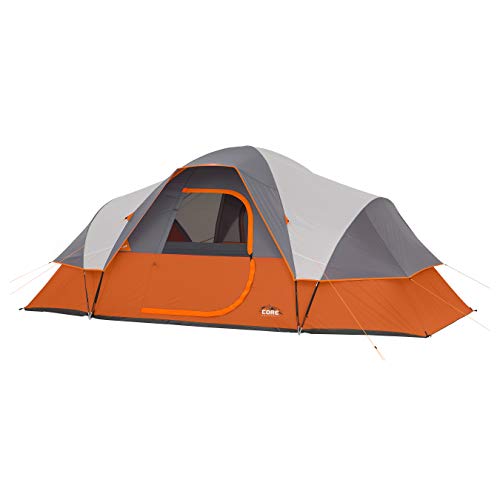
For large families or groups, the CORE 9 Person Extended Dome Tent offers an impressive amount of space. With a 16 by 9 foot footprint and a 72-inch center height, it can comfortably fit three queen-sized air mattresses, allowing ample room for sleeping and moving around. The tall ceiling is a welcome feature for most adults to stand upright.
This tent incorporates CORE H20 Block Technology and an adjustable ground vent to help manage interior climate and resist moisture. Inside, thoughtful details include a gear loft with a lantern hook and multiple pockets to keep small items organized and off the floor. The traditional fiberglass pole structure provides a familiar and reliable setup for a shelter of this size.
Coleman 4-Person Cabin Camping Tent with Screen Room Evergreen

The Coleman 4-Person Cabin Tent with Screen Room is ideal for smaller families who value extra living space. The screened porch adds approximately 35% more area compared to standard dome tents, creating a perfect spot for bug-free relaxation or storing muddy boots and gear. This design effectively separates living and sleeping areas.
Built to withstand challenging weather, this tent features a strong frame rated for winds up to 35 mph. The detachable rainfly offers adjustable ventilation and extra protection when needed. Its cabin-style shape typically offers more vertical wall space than traditional dome designs, making the interior feel larger and more livable for its rated capacity.
NTK Indy GT 8 to 9 Person Sport Camping Tent
The NTK Indy GT is a spacious sport camping tent designed to accommodate larger groups of eight to nine people. It is built with outdoor enthusiasts in mind, likely featuring durable materials suited for various camping conditions. The tunnel design typically provides good wind resistance and efficient use of interior space for sleeping and storage.
Families will appreciate the room to spread out, with separate zones possible for sleeping and communal activities. Details often found in tents of this type include multiple doors for easy access, large windows for ventilation, and a robust waterproof rating. It is a solid choice for car campers or those planning longer stays at a campground where space and comfort are priorities.
Wenzel Klondike 8 Person Tent with Screened Porch
Wenzel’s Klondike tent offers a classic screened porch design that families love. The full front screen room acts as a sunroom or bug-free patio, significantly expanding your usable living area. This space is perfect for sitting in chairs, playing games, or enjoying meals protected from insects.
With a capacity for eight people, the interior provides substantial sleeping quarters separate from the porch area. The design often includes a removable divider curtain to create two private rooms inside. Durable weather-resistant fabrics and a straightforward pole structure make this a practical and popular choice for family campground vacations.
Browning Camping Big Horn 8 Person Family Tent
The Browning Big Horn is a family tent known for its sturdy construction and reliable weather protection. It is designed to comfortably sleep eight campers, with a tunnel design that promotes good airflow and provides ample headroom throughout. The materials are typically chosen for their durability and ability to shed rain.
Features often include large mesh roof panels for stargazing and ventilation, along with multiple storage pockets to keep the interior organized. Its design emphasizes a balance between living space and packability, making it a dependable option for families who camp regularly and need a tent that will perform season after season.
Caddis Rapid 6 Person Camping Tent with Fast Pitch Technology
The Caddis Rapid 6 Person Tent is built for families who want to minimize setup time. Its Fast Pitch Technology likely involves a system of pre-connected poles or a hub design that allows the main structure to be raised quickly and with minimal effort. This is a major advantage when arriving at camp late or with tired children.
Despite the quick setup, it doesn’t sacrifice space, offering comfortable room for six people. The design probably includes essential family-friendly features like good ventilation, waterproof protection, and interior organization. It represents an excellent choice for weekend warriors and families who prioritize a fast, hassle-free start to their camping trip.
Buying Guide: How to Choose the Best Tunnel Tent for Family Camping
So you’re thinking about getting a tunnel tent for your family adventures. Good call. I’ve found they often give you the best mix of space, stability, and value. But not all tunnel tents are created equal, and picking the wrong one can turn a weekend getaway into a stressful ordeal. Let me walk you through what I always look for when I’m sizing up the best tunnel tent for family camping.
First up, size. This is the big one, literally. Manufacturers list a “berth” like “6-person,” but treat that as a cozy sleeping capacity. For actual comfort with gear, air beds, and room to move, I always subtract at least two people. So, for a family of four, I’d be looking at a 6-person tent minimum. Think about the layout: does it have multiple rooms or a large single living area? Blackout bedrooms are a game-changer for getting the kids to sleep past sunrise.
Next, weatherworthiness. A tunnel’s strength comes from its shape and how well it’s pitched. Look for a strong pole structure—fiberglass is okay for fair weather, but I prefer aluminum for its strength and durability in wind. The hydrostatic head (HH) rating tells you how waterproof the fabric is. For family camping where you might get caught in a downpour, aim for a minimum of 3000mm on the flysheet and 5000mm on the groundsheet. Taped seams are non-negotiable.
Then, consider the practical stuff. How long does it take to pitch? After a long drive, you don’t want a two-hour puzzle. Color-coded poles and sleeves or clips make life easier. Ventilation is critical to avoid condensation; look for plenty of mesh panels and adjustable vents. Inside, pockets and gear lofts are small features that make a huge difference in keeping the space organized. Finally, check the packed size and weight. Will it fit in your car with all your other stuff?
My final piece of advice is to think about your specific needs. Are you a summer-only camper, or do you venture into spring and fall? Do you need a massive porch for muddy boots and wet dogs? Answering these questions will steer you toward the perfect shelter for your crew.
FAQ
Are tunnel tents good for windy conditions?
Yes, when pitched correctly, they can be very good. Their aerodynamic shape allows wind to flow over them, and they are typically anchored by multiple guy lines at the ends. The key is to always orient the tent so the lowest, most rounded end faces the prevailing wind, and to use all the guylines provided. A well-designed tunnel tent with strong aluminum poles can handle strong gusts better than many cabin-style tents.
How many people do I really need a tunnel tent to sleep?
This is the most common mistake. If a tent says it sleeps 6, it means 6 sleeping bags side-by-side with no extra gear. For actual family camping with air mattresses, bags, and a bit of floor space, I use the “minus two” rule. So, for a family of four, you should be looking at a 6-person tent. This gives you room to dress, store your bags, and not feel like you’re on top of each other if you’re stuck inside on a rainy day.
What’s the difference between a tunnel tent and a dome tent?
The main difference is the structure. A dome tent uses crossing poles to create a rounded shape, while a tunnel tent uses a series of parallel, curved poles that create a long, tube-like space. Tunnel tents generally offer more usable interior volume for their weight and pack size. They often feel more like a small room you can stand up in, whereas domes can have more sloped walls. Domes can be quicker to pitch, but a modern tunnel with a clip system is also very fast.
Can one person pitch a large family tunnel tent?
It’s possible, but it can be a challenge, especially if it’s breezy. Most larger family tunnel tents are designed to be pitched by two adults. The process usually involves laying out the tent, threading or clipping several long poles, and then raising and securing each arch section. Having a second person makes this much smoother and safer for the tent poles. I always recommend a practice run in the backyard before your first trip.
How important is a sewn-in groundsheet?
For family camping, I think it’s very important. A sewn-in or “bathtub” style groundsheet means the waterproof floor material extends up the sides of the inner tent by several inches. This is your best defense against water seeping in during heavy rain or if you accidentally pitch on a slight dip. It also keeps bugs and drafts from getting in through a gap between the inner tent and a separate footprint.