When every ounce counts and the weather can turn on a dime, a reliable bivy sack is a backpacker’s best friend. More than just an emergency blanket, a good bivy provides a critical layer of waterproof, windproof protection for your sleeping bag, boosting warmth and offering a minimalist shelter for fast-and-light missions. From ultralight emergency reflectors to fully featured bivy tents, the right choice depends on your trip’s demands and your personal safety philosophy.
Selecting the best bivy involves balancing weight, durability, breathability, and intended use. An emergency bivy is a vital, packable safety net, while a dedicated bivy tent is a shelter system built for regular use. This roundup covers the spectrum, helping you find the perfect balance of security and comfort for your next adventure.
The Best Bivy Sacks for Backpacking and Emergencies
- Esky Emergency Sleeping Bag, 2 Pack Survival Bag
- Portable Emergency Blanket & Bivvy Sack Thermal Sleeping Bag
- Go Time Gear Life Lightweight Emergency Bivvy Sack
- Tact Bivvy 2.0 HeatEcho Emergency Sleeping Bag
- OUTDOOR RESEARCH Helium Bivy
- SOL Escape Bivvy with Hood
- Snugpak Stratosphere 1 Person Bivvi Tent
- ALPS Mountaineering Stealth 1-Person Bivy Tent
- Akmax.cn Bivy Cover Sack for Military Army System
- Black Diamond Twilight Bivy
Esky Emergency Sleeping Bag, 2 Pack Survival Bag

This two-pack of emergency bivy sacks is a fundamental safety item for any pack. Constructed from durable Mylar material, it reflects a high percentage of body heat back to you, which is vital in preventing hypothermia during unexpected situations. Its bright orange color and reflective surface are designed for high visibility, aiding rescue efforts in low-light conditions.
Beyond its primary function as a sleeping bag, the material is waterproof, windproof, and tear-resistant, making it a versatile tool. It can serve as an emergency ground cover, rain tarp, or distress signal. Packing down to a minimal size, these sacks add crucial safety without burdening your load, suitable for keeping in a car, backpack, or dedicated emergency kit.
Portable Emergency Blanket & Bivvy Sack Thermal Sleeping Bag

The Leberna Emergency Sleeping Bag offers reliable thermal protection in a simple, effective package. Using the same NASA-inspired Mylar technology, it focuses on retaining body heat to increase survival chances in harsh weather. Its generous dimensions provide ample coverage for most users, and the included drawstring carry bag makes organization and storage straightforward.
Weighing only a few ounces, this bivy is the definition of lightweight preparedness. It is designed for reusability, offering better value for scenarios where you might need to deploy it more than once. The high-visibility black strip on the edge adds a practical touch for signaling, making it a smart choice for a basic, no-frills emergency shelter.
Go Time Gear Life Lightweight Emergency Bivvy Sack

Go Time Gear’s Life Bivy is built with durability and added functionality in mind. Made from resilient polyethylene, it is designed to withstand the rigors of an emergency situation while effectively preserving body heat. The inclusion of a survival whistle and paracord directly with the product enhances its utility right out of the package.
This bivy sack balances robust construction with a portable form factor, weighing just over four ounces. It is an ideal component for a dedicated go-bag or winter storm preparedness kit. The bright orange color ensures visibility, and its thoughtful design makes it more than just a disposable blanket, positioning it as a key piece of tactical survival gear.
Tact Bivvy 2.0 HeatEcho Emergency Sleeping Bag
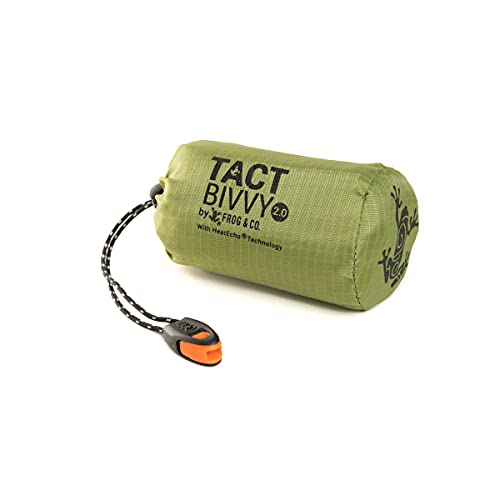
The Tact Bivvy 2.0 uses specialized HeatEcho material to create a highly efficient thermal barrier. It is engineered to reflect a significant amount of body heat, with the added benefit of being reusable and more durable than standard Mylar blankets. Its compact stuff sack, complete with a carabiner, makes it easy to attach to any pack.
This model stands out for its reinforced taped seams, which provide a reliable waterproof seal—a critical feature in wet conditions. The package includes practical survival extras like a whistle and fire-starting ParaTinder, offering comprehensive value. It’s a strong option for those seeking a step up in performance from basic emergency bivies.
OUTDOOR RESEARCH Helium Bivy

The OUTDOOR RESEARCH Helium Bivy is a serious shelter designed for backpackers who prioritize minimal weight without sacrificing protection. It functions as a waterproof and insect-proof shell for your sleeping bag, utilizing advanced breathable fabrics to manage condensation, a common issue in traditional bivies.
This bivy is built for regular use on the trail, not just for emergencies. Its durable construction can handle abrasion from rocks and soil, while the integrated bug netting allows for ventilation on warm nights. For the ultralight hiker looking to shed tent weight, the Helium Bivy offers a reliable, weather-ready shelter solution.
SOL Escape Bivvy with Hood
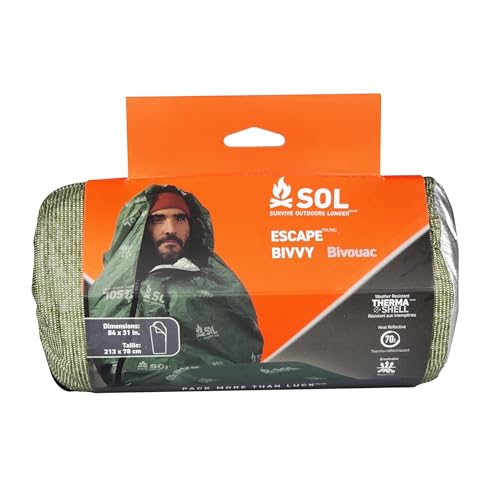
The SOL Escape Bivvy bridges the gap between a disposable emergency blanket and a durable sleeping bag cover. Made from a proprietary ThermaShell fabric, it is water-resistant, breathable, and designed to reflect body heat while reducing the clammy feel associated with non-breathable materials.
Weighing less than eight ounces, it includes a fitted hood for added warmth and protection. The material is quiet and tear-resistant, making it suitable for everything from emergency preparedness to use as a sleeping bag liner in cold conditions. It’s a versatile choice for those who want a reusable bivy that offers more comfort and functionality.
Snugpak Stratosphere 1 Person Bivvi Tent
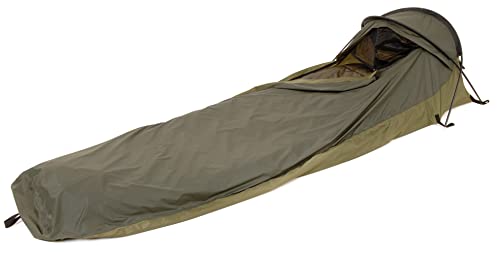
The Snugpak Stratosphere is a bivy tent, offering more structure and living space than a simple sack. It features a hoop-pole design that creates 20 inches of headroom, making it easier to sit up and manage gear inside. The full-length side zip simplifies entry and exit compared to top-entry bivies.
With a robust 5000mm and 8000mm waterproof polyurethane coating on its fabrics, it is built to stand up to severe weather. While heavier than emergency bivies at 2.5 pounds, it provides a substantial shelter for one person, blending the protective security of a bivy with a bit more comfort and space of a small tent.
ALPS Mountaineering Stealth 1-Person Bivy Tent

ALPS Mountaineering’s Stealth Bivy Tent focuses on user-friendly design and ventilation. Its two one-piece fiberglass poles allow for a quick and intuitive setup. A significant advantage is the large, step-in opening, which makes accessing the shelter much easier than crawling into a traditional mummy-style bivy.
Strategic no-see-um mesh panels over the head and foot vents promote airflow to minimize condensation while keeping insects out. This design makes it a comfortable option for warmer conditions or humid environments where ventilation is a priority. It’s a solid choice for backpackers who want a simple, quick-to-pitch shelter with more room to move.
Akmax.cn Bivy Cover Sack for Military Army System
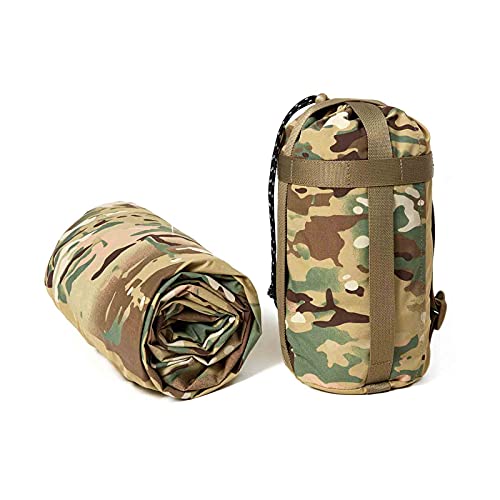
Inspired by the U.S. Army’s Modular Sleep System, this bivy cover is a no-nonsense, waterproof and breathable shell. Its primary function is to envelop your existing sleeping bag and pad, providing an extra layer of protection from wind, rain, and moisture from the ground.
Constructed from 3-layer laminated nylon fabric, it emphasizes durability and weather resistance. Weighing 1.9 pounds, it is a minimalist shelter option that works well for hunters, tactical users, or backpackers who prefer a rugged, straightforward bivy that focuses on core protection over additional features.
Black Diamond Twilight Bivy
The Black Diamond Twilight Bivy is a high-performance shelter designed for alpine climbers and serious backpackers. It uses premium waterproof-breathable fabrics to protect against the elements while managing internal moisture, a critical feature for multi-day trips in variable conditions.
Known for its thoughtful design, it typically includes features like a supportive hoop pole at the head to increase livable space and strategic mesh panels for ventilation. The Twilight Bivy is built for those who need reliable, stormworthy shelter where saving weight is crucial but compromising on protection is not an option.
Buying Guide: How to Pick Your Bivy Sack
Choosing the right bivy sack for backpacking can feel tricky, but it really comes down to balancing a few key factors: weather protection, breathability, weight, and how much space you need. I’ve spent plenty of nights in these minimalist shelters, and getting this balance right makes all the difference between a damp, miserable night and a surprisingly cozy one.
First, consider the fabric. Most modern bivy sacks use a waterproof and breathable membrane, like Gore-Tex or a proprietary laminate. This is the magic that keeps rain and ground moisture out while letting your body’s vapor escape. A fully waterproof but non-breathable sack (like a simple emergency bivy) will trap condensation and leave you wet from the inside. For regular backpacking, a breathable model is non-negotiable. Look at the hydrostatic head rating (a measure of waterproofness, with 10,000mm+ being great for serious weather) and the breathability rating (often in grams per square meter per 24 hours; higher is better).
Next, think about the design features. Do you want a simple sack you slide into, or one with a hooped pole or a short ridge line to keep fabric off your face? That small bit of structure is a game-changer for claustrophobia and makes a huge difference in comfort if you’re stuck waiting out a rainstorm inside. Also, check the zipper. A full-length, two-way zipper is my personal favorite for easy entry, exit, and ventilation. Some models have a bug net panel over the face, which is essential in mosquito season.
Weight and packed size are critical for backpacking. The lightest bivy sacks can be under 8 ounces, while more robust, feature-rich models hover around 1 to 2 pounds. Compare this to the weight of your tent. Finally, consider how you’ll use it. Are you an ultralight fastpacker who needs the absolute minimum? Or are you a mountaineer who needs bomber storm protection above the treeline? Your specific needs will point you toward the right model. For most backpackers looking for a versatile shelter, a mid-weight, breathable bivy with a bug net and some headroom is the sweet spot. Finding one of the 10 best bivy sacks for backpacking means matching these features to your personal trips and priorities.
Frequently Asked Questions
Is a bivy sack warmer than a tent?
A bivy sack can feel warmer because it’s a smaller space for your body heat to warm up, and it blocks wind completely. However, the real warmth comes from your sleeping bag and sleeping pad. The bivy’s main job is to protect your bag from moisture and wind, which helps it perform at its best temperature rating. In very cold, dry conditions, that sealed environment can add a noticeable amount of warmth. But in wetter conditions, managing condensation is key to staying dry and warm.
How do I deal with condensation in a bivy?
Condensation is the main challenge with any single-wall shelter. To minimize it, I always try to position myself so my head is slightly uphill, and I leave the zipper cracked open if weather allows, especially near my face. Using the bivy with a small tarp or under a tree canopy gives you the option to leave the top fully open for amazing star-gazing while still having quick cover from dew or a surprise shower. Also, make sure your sleeping bag’s outer fabric is breathable, not a waterproof shell, as that can trap moisture between the bag and bivy.
Can I use a bivy sack with a hammock?
You can, but it’s not common or usually ideal. A bivy is designed for ground use. In a hammock, it would be compressed underneath you, negating its breathability and potentially damaging the laminate. For hammock camping, a dedicated top quilt and underquilt are the standard, paired with a rainfly. Some people use a waterproof bivy as an emergency over-cover in extreme weather, but for regular use, the systems are best kept separate.
Are bivy sacks waterproof?
Quality backpacking bivy sacks are made with waterproof and breathable fabrics, so yes, they are designed to be waterproof. The seams should be taped or sealed. It’s important to distinguish these from “emergency bivy sacks,” which are often just a sheet of plastic or metallic laminate. Those are waterproof but not breathable and will soak you with condensation if used for more than a short survival situation. For a multi-day trip, a breathable waterproof model is what you want.
What’s the main advantage over a lightweight tent?
The biggest advantages are weight, packed size, and speed of setup. A bivy is often significantly lighter and smaller than even the lightest solo tent. You can literally roll it out, throw your pad and bag in, and be “camped.” This is perfect for minimalist trips, fastpacking, or as an emergency shelter. It also allows you to sleep in very tight spaces where a tent won’t fit, like on a small ledge or in thick brush. The trade-off is living space and weather livability; in a prolonged storm, a tent with vestibule space is much more comfortable.