The iconic kukri, with its distinctive forward-curving blade, is a legendary tool born in the Himalayas. Far more than just a knife, its unique geometry delivers exceptional chopping power and versatile cutting performance, making it a favorite among outdoorsmen, survivalists, and tactical users. Whether you’re clearing brush on a trail, processing firewood at camp, or seeking a reliable fixed blade for demanding tasks, a quality kukri is an invaluable piece of gear.
Selecting the right one depends on your specific needs, balancing factors like blade steel, handle ergonomics, and overall size. From compact folding designs to heavy-duty machetes, the modern market offers a kukri for every purpose. This roundup examines ten of the best options available, highlighting their key features and strengths to help you find the perfect outdoor companion.
Our Top Picks for Kukri Knives
- Cold Steel Rajah II Folding Kukri Knife
- CRKT KUK Fixed Blade Kukri Knife
- Schrade Delta Class Decimate Kukri Machete
- Kershaw Camp 10 Tan Machete
- Condor Tool & Knife K-tact Kukri Knife
- Ka-Bar Becker BK9 Combat Bowie Knife
- DRACHENADER Survival Knife with Fire Starter
- Smith & Wesson M&P Extraction Tactical Axe
- ESEE Knives 6P Fixed Blade Knife
- Cold Steel Kukri Machete with Sheath
Cold Steel Rajah II Folding Kukri Knife

For those who need a kukri’s capability in a portable, everyday-carry format, the Cold Steel Rajah II is a standout choice. This folding knife captures the traditional kukri profile in a robust package, featuring a Japanese AUS10A steel blade with a stonewash finish. The thin, flat-ground edge is designed to bite deep, making it effective for a wide range of cutting tasks from slicing to chopping.
The handle is constructed from Griv-Ex, molded with aesthetic lines and ergonomic curves that provide an optimum grip reminiscent of a traditional kukri handle. Security is ensured by Cold Steel’s renowned Tri-Ad lock, one of the strongest locking mechanisms available. With its ambidextrous pocket clip, this knife offers tactical utility and reliable performance in a compact, foldable design.
CRKT KUK Fixed Blade Kukri Knife

The CRKT KUK is a no-nonsense, full-tang fixed blade that brings the power of a kukri to outdoor tasks at an accessible point. Its recurved blade is crafted from 65Mn carbon steel, a material known for being tough and holding a working edge well through demanding use. This makes it a reliable tool for processing wood and clearing vegetation.
Designed for secure and comfortable handling, the KUK features an injection-molded handle with a pronounced texture pattern. This ensures a firm grip even in wet conditions. Paired with its simple polyester sheath, this knife is a straightforward, durable option for anyone seeking the functional benefits of a kukri blade without unnecessary complexity.
Schrade Delta Class Decimate Kukri Machete

When you need to cover ground and clear heavy brush, the Schrade Decimate offers substantial reach and chopping power. With an overall length of nearly 20 inches and a 13.3-inch blade, this machete is built for larger outdoor projects. The blade is made from 3Cr13 stainless steel with a powder-coated finish for added protection against the elements.
A significant advantage of this tool is its comprehensive sheath system. The polyester sheath includes a removable shoulder pouch, shoulder strap, leg strap, and belt loop, providing multiple carry options for different activities. The black safety grip handle completes a package designed for dependable performance during extended outdoor work or survival scenarios.
Kershaw Camp 10 Tan Machete

The Kershaw Camp 10 strikes an excellent balance between a compact knife and a full-sized machete. Its 10-inch recurve blade, made from durable 65Mn carbon tool steel, provides substantial hacking power in a more manageable size. The full-tang construction and basic black powder coat finish ensure resilience and easier maintenance during outdoor use.
User control and safety are prioritized through its ergonomic handle. The glass-filled nylon handle features a rubberized overmold for a sure-grip in all conditions, along with a built-in hand guard to protect your fingers during powerful swings. The tan and black color scheme offers a distinct look, making this a practical and visually appealing tool for camping and survival.
Condor Tool & Knife K-tact Kukri Knife

Built for serious hard use, the Condor K-tact is a robust kukri designed to withstand punishing tasks. Its most notable feature is a thick 6mm high-carbon steel blade, which provides impressive durability and remarkable edge retention. This convex-ground knife is made to be resilient in challenging outdoor environments, suitable for everything from gardening to survival.
The handle is crafted from Micarta, a material known for its excellent grip that improves with use and its durability. This ergonomic handle, combined with the full-tang construction, offers a secure and comfortable hold. It comes with a high-quality kydex sheath that includes a leather belt loop, providing secure carry and quick access while protecting the blade.
Ka-Bar Becker BK9 Combat Bowie Knife
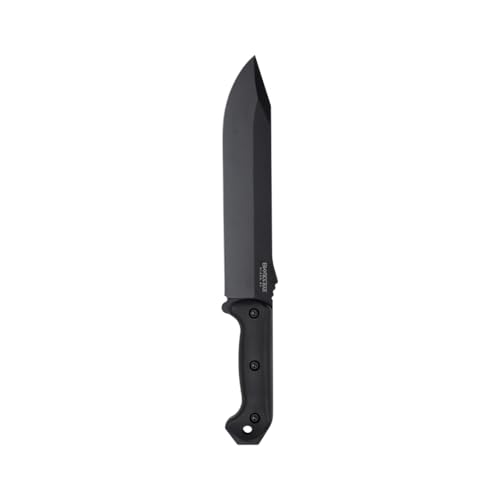
While technically a Bowie-style knife, the Ka-Bar BK9 earns its place here due to its exceptional chopping and outdoor utility that rivals many kukris. The 9.25-inch clip-point blade is made from 1095 Cro-Van carbon steel, prized for superior edge retention and toughness. A black epoxy powder coat adds corrosion resistance and a non-reflective finish.
The flat saber grind provides a strong edge geometry capable of handling wood processing and camp chores effectively. Paired with its durable handle, the BK9 has earned a legendary reputation as a “do anything” outdoor knife. Its size and blade shape make it a powerful and versatile alternative for users who appreciate a more traditional American design with kukri-like performance.
DRACHENADER Survival Knife with Fire Starter

This compact fixed blade from DRACHENADER is a feature-rich survival tool centered around a kukri-inspired blade shape. The 7.68-inch full-tang blade is made from 8Cr13MoV stainless steel, offering a good balance of sharpness and corrosion resistance for outdoor situations. Its smaller size makes it highly manageable for detailed tasks while retaining chopping capability.
The knife is designed as a complete survival kit. It includes an ergonomic ABS handle for a secure grip, a durable sheath with multiple carry options including a belt clip, and a built-in fire starter. This combination of a practical kukri-style blade with essential survival accessories makes it a ready-to-go companion for camping, hiking, and emergency preparedness.
Smith & Wesson M&P Extraction Tactical Axe

Blurring the line between a kukri and a tactical axe, the Smith & Wesson Extraction & Evasion tool offers unique versatility. Its 10-inch blade, made from 420 stainless steel, features a pronounced recurve and a spearpoint spine, allowing for chopping, cutting, and piercing tasks. The full-tang construction ensures strength and durability.
The overmolded rubber handle provides a comfortable and secure grip during use, reducing hand fatigue. Included with the tool is a sheath for safe storage and transport. This design is intended for outdoor, survival, and EDC use where a multi-functional tool that combines axe and knife characteristics is required.
ESEE Knives 6P Fixed Blade Knife

ESEE is synonymous with bombproof reliability, and the Model 6P is a robust fixed blade built for serious outdoor survival. Its 6.5-inch blade is crafted from 1095 carbon steel, known for its toughness and ease of sharpening in the field. While not a classic kukri curve, its blade shape is designed for heavy-duty tasks including chopping and batoning.
The handle is designed for a solid, comfortable grip under hard use. It comes with a molded polymer sheath that includes a clip plate for secure attachment to gear. Backed by ESEE’s legendary lifetime warranty, the 6P is a tool chosen by professionals for its no-fail performance in demanding conditions.
Cold Steel Kukri Machete with Sheath
A staple in the machete world, Cold Steel’s dedicated Kukri Machete is a purpose-built tool for clearing vegetation and outdoor work. It typically features a long, sweeping blade made from durable steel, optimized to transfer maximum force into each chop. The design stays true to the traditional kukri form factor at a machete scale.
Handling is managed through an ergonomic handle designed to reduce shock and improve control. It includes a Secure-Ex sheath, which is known for its durability and secure retention, allowing for safe and convenient carry on your belt. This machete is an excellent choice for landowners, campers, or anyone who needs an effective tool for managing trails and brush.
Buying Guide: What to Look For in the Best Kukri Knives for Outdoor Tasks
Choosing the right kukri knife isn’t just about picking the coolest-looking one. I’ve learned that the wrong choice can turn a simple camp chore into a real struggle. To find a tool that truly works with you, you need to look at a few key things. Let’s break down what actually matters when you’re hunting for one of the best kukri knives for outdoor tasks.
First, consider the blade steel. This is the heart of the knife. For hard use, you want a good balance. High-carbon steels like 1095 or 5160 are classics for a reason—they’re tough, easy to sharpen in the field, and hold a decent edge. The trade-off is they can rust if you don’t keep them dry and oiled. Stainless steels like 440C or 8Cr13MoV offer much better corrosion resistance, which is great for wet environments, but they can be a bit harder to get razor-sharp without the right tools. Think about where you’ll be and how much maintenance you’re willing to do.
Next, look at the blade geometry and weight. A real kukri isn’t a lightweight slicer; it’s a powerful chopper. The distinctive curved blade and forward-heavy balance are designed to put maximum force behind each swing. The blade should have a thick spine, often around 1/4 inch near the handle, that tapers toward the edge. This provides the strength needed for splitting wood or processing game. The overall weight is personal, but I find a blade in the 10 to 15-inch range, with a total weight of 1 to 2 pounds, is the sweet spot for control and power.
Finally, don’t ignore the handle and sheath. The handle needs to fill your hand comfortably and provide a secure, non-slip grip even when wet. Traditional hardwood is beautiful, but modern synthetics like Micarta or textured rubber often offer better durability and grip in all conditions. The sheath is just as critical as the knife itself. A good sheath will securely hold your kukri, often with a retention strap, and be made of durable material like leather or Kydex. Look for one with a belt loop or MOLLE compatibility so you can carry it safely and access it easily. Getting these elements right means you get a tool that feels like an extension of your arm, not a liability.
FAQ
What makes a kukri different from a regular machete?
The main differences are in the blade shape and balance. A kukri has a distinct, forward-curving blade that’s much thicker and heavier near the handle (the spine can be over 1/4 inch thick). This creates a forward-heavy balance point, like an axe, which makes it excel at powerful chopping and splitting. A machete is typically thinner, lighter, and more evenly balanced, making it better for clearing light vegetation. The kukri is a powerhouse tool built for heavier-duty work.
Can I use a kukri knife for fine camp tasks like food preparation?
You can, but it’s not ideal. The belly of the blade and the sharp tip (the karda) can be used for slicing and detail work. However, a kukri is a large, heavy chopping tool. For finer tasks like filleting fish or dicing vegetables, you’re much better off pairing it with a smaller, dedicated camp knife. Think of the kukri as your main workhorse for processing firewood and shelter building, and carry a smaller blade for precision jobs.
How do I properly sharpen a kukri’s curved blade?
Sharpening the curve takes a little practice. I recommend using a round sharpening rod or the curved section of a sharpening stone. Follow the existing angle of the edge (usually around 20-25 degrees per side) and use smooth, consistent strokes along the entire curve, from the base to the tip. The key is to maintain the same angle as you follow the blade’s contour. Avoid using pull-through sharpeners, as they can ruin the blade’s geometry. Taking your time with a rod or stone is the best method.
Are modern tactical kukris as good as traditional ones?
They serve different purposes. A traditional kukri, often made from 5160 spring steel by Nepalese kami (smiths), is a time-tested design focused on durability and chopping efficiency. Modern “tactical” versions might use different steels (like powder metallurgy steels), have skeletonized handles, or feature black coatings. These can offer superior corrosion resistance or a different aesthetic. For pure outdoor survival and bushcraft, many purists prefer the traditional build, but a well-made modern kukri from a reputable brand is a fantastic and capable tool for outdoor tasks.
What maintenance does a carbon steel kukri require?
Carbon steel requires more attentive care than stainless to prevent rust. After every use, especially in wet conditions, dry the blade thoroughly with a cloth. I then apply a very light coat of food-safe mineral oil or a dedicated blade protectant. This is especially important before storing it for a long period. If you see any orange spots (surface rust), you can usually remove them with a bit of fine steel wool and oil. Regular maintenance becomes a quick and easy habit that keeps your tool in top condition.