An anchor buoy is a simple yet essential piece of safety gear. It marks your anchor’s position for you and other boaters, preventing tangled lines and accidental trips over your rode. In crowded anchorages or low-visibility conditions, a highly visible buoy is not just convenient—it’s a critical tool for preventing collisions and protecting your gear.
Choosing the right buoy involves considering size, durability, and visibility. The best models are built from tough, UV-resistant materials and come in bright, high-visibility colors. They should be easy to deploy and include a secure attachment point for your anchor line. This roundup highlights eight top-performing anchor buoys designed to offer clear visibility and reliable performance on the water.
8 Best Anchor Buoys for Clear Visibility
- Taylor Made Tuff End Buoy, White (12″)
- Attwood 12955B-7 Triple Threat Anchor Buoy with Rope
- Taylor Made Products Anchor Buoy with Rope (Orange)
- Extreme Max 3006.6548 BoatTector Anchor Buoy
- Extreme Max 3006.6550 BoatTector Buoy with 1/2″ Rope
- Attwood Triple Threat Anchor Buoy (Yellow)
- SeaSense Anchor Buoy with Rope and Steel Clip
- Extreme Max 3006.6549 BoatTector Buoy with 3/8″ Rope
Taylor Made Tuff End Buoy, White (12″)
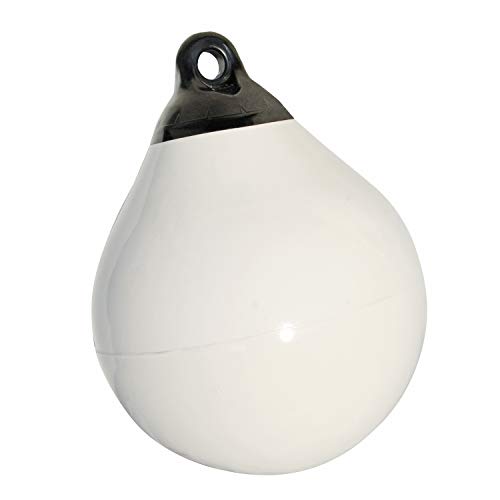
Built for demanding conditions, the Taylor Made Tuff End Buoy is a professional-grade option. Its marine-grade vinyl body is flexible and strong, while the injection-molded ends are tested to an impressive 2000 psi tensile strength. This construction ensures it can handle the strain of larger vessels, with a recommendation for boats up to 50 feet.
The buoy features large line holes designed to accommodate most ropes and shackles, making setup straightforward. Its bright white color provides excellent visibility against dark water. As a product made in the USA for heavy-duty marine applications, it represents a reliable, long-term investment for serious boaters who need equipment they can trust.
Attwood 12955B-7 Triple Threat Anchor Buoy with Rope
The Attwood Triple Threat buoy stands out with its three-chamber design for added safety. If one chamber is punctured, the remaining two provide sufficient buoyancy to keep the marker afloat. This redundant design offers peace of mind, especially in rocky areas or busy anchorages where accidental damage is possible.
It comes pre-rigged with a substantial 7/16-inch diameter rope, saving you time and effort. The high-visibility color scheme is easy to spot from a distance. Constructed from durable, UV-stabilized polyethylene, this buoy is built to resist fading and cracking from prolonged sun exposure, ensuring it remains a visible part of your gear for seasons to come.
Taylor Made Products Anchor Buoy with Rope (Orange)
This Taylor Made buoy provides a classic, reliable solution for marking your anchor. Its vibrant orange color is internationally recognized for high visibility on the water, making it an effective warning to other vessels. The simple, robust design focuses on core functionality without unnecessary complexity.
Included with the buoy is a 7/16-inch rope, ready for immediate use. The durable plastic construction can withstand typical marine conditions. It’s a straightforward, no-fuss option that performs its essential job well, making it a suitable choice for recreational boaters who need a dependable and easily seen anchor marker.
Extreme Max 3006.6548 BoatTector Anchor Buoy
Extreme Max’s BoatTector buoy is engineered for toughness and long-term visibility. It is made from a rotationally molded, UV-protected polyethylene that resists impacts, cracks, and color fading. This manufacturing process creates a single-piece, hollow buoy that is exceptionally durable and watertight.
The buoy comes equipped with a 7/16-inch floating polypropylene rope that is easy to handle and won’t sink. Its bright color ensures it stays visible, aiding in both locating your own anchor and alerting others. This model represents a solid balance of robust construction and practical, ready-to-use features for everyday boaters.
Extreme Max 3006.6550 BoatTector Buoy with 1/2″ Rope
This is a heavy-duty version of the BoatTector anchor buoy, distinguished by its thicker 1/2-inch diameter rope. The larger rope is easier to grip and provides increased strength, which can be beneficial for larger boats, in strong currents, or when added security is preferred.
Like its sibling models, it is rotationally molded from UV-stabilized polyethylene for maximum durability against the elements. The substantial rope paired with the resilient buoy body creates a complete, robust anchor marking system. This setup is ideal for boaters who prioritize a stronger connection and a highly visible, ruggedly built buoy.
Attwood Triple Threat Anchor Buoy (Yellow)
This yellow variant of the Attwood Triple Threat offers the same reliable three-chamber safety design in a different high-visibility color. The bright yellow is excellent for visibility, particularly in hazy conditions or against dark backgrounds. The redundant air chambers ensure the buoy remains operational even after minor damage.
It includes a 7/16-inch rope for immediate deployment. The UV-inhibited polyethylene construction prevents brittleness and color loss. Choosing between colors like yellow or orange often comes down to personal preference or which hue provides the best contrast in your typical boating environment.
SeaSense Anchor Buoy with Rope and Steel Clip
The SeaSense Anchor Buoy provides a convenient all-in-one package. Beyond the buoy and standard 7/16-inch rope, it includes a stainless steel spring clip. This clip allows for quick and secure attachment to your anchor line, simplifying the process of deploying and retrieving the marker.
The stainless steel hardware resists corrosion in saltwater environments, adding to the kit’s longevity. The buoy itself is designed for clear visibility and durability. This combination of buoy, rope, and secure clip makes for a very user-friendly and complete solution right out of the package.
Extreme Max 3006.6549 BoatTector Buoy with 3/8″ Rope
This BoatTector model offers a slightly different configuration with a 3/8-inch diameter rope. The thinner rope is lightweight and sufficient for smaller to mid-sized boats, making the entire package easy to handle and store. It maintains the core durability of the rotationally molded, UV-protected construction.
It’s an excellent choice for boaters who want the proven toughness of the BoatTector line but with a lighter-duty rope that meets their specific needs. The high-visibility color ensures the buoy performs its primary function effectively. This option demonstrates how having choices in rope thickness allows you to match the gear precisely to your vessel.
Buying Guide: How to Choose the Best Anchor Buoy for Clear Visibility
Let’s be honest, picking the right anchor buoy isn’t about fancy features; it’s about making sure other boaters can see your gear from a distance to avoid a tangled mess. I’ve snagged my own anchor line more times than I care to admit, and a good, visible buoy is the simplest fix. When you’re looking for the best anchor buoy for clear visibility, you need to think like someone who’s trying to spot it in choppy water with the sun in their eyes. Here’s what I always check for.
First, color is king. Fluorescent colors are your best friend. Think neon orange, hot pink, or bright yellow. These shades scream for attention against the blue of the water and the sky. White or blue buoys might look nice on the deck, but they practically disappear on the water. Many of the best buoys use a two-tone design, like a bright main body with a contrasting colored top, to stand out from every angle.
Next, consider size and shape. A bigger buoy is easier to see, but you don’t want a monster that’s hard to store. I find a buoy around 10 to 12 inches in diameter is a great sweet spot. The shape matters too. A spherical buoy is classic, but a cylindrical or “torpedo” shape sits higher in the water, presenting a more visible profile. Some even have a tall, fin-like mast that adds extra height.
Material and construction are about durability. You want a buoy made from tough, UV-resistant polyethylene that can take a beating from the sun and an occasional bump from the boat. Check that the mooring eye is robust and molded right into the body, not just glued on. A weak point here means you’ll be watching your buoy sail away. For the line, I always look for a solid, spliced nylon rope that floats. It saves you from dragging and keeps the whole setup visible.
Finally, think about the extras. A reflective strip or tape is a game-changer for low-light conditions, catching a spotlight instantly. An internal whistle that sounds when waves hit it is a brilliant safety feature. And if you anchor in deep water, make sure the buoy has enough buoyancy to support the weight of your anchor rope without sinking. It sounds basic, but a half-submerged buoy is a hazard. By focusing on these points—vibrant color, sensible size, tough build, and smart features—you’ll get a marker that does its one job perfectly: being seen.
Frequently Asked Questions
What color anchor buoy is the most visible?
From my experience on the water, fluorescent (neon) orange is consistently the easiest to spot in most conditions. It creates a stark contrast against blue and green water and gray skies. Fluorescent pink and lime green are also excellent choices. The key is to avoid colors that blend in, like white, blue, or dark green. Many boaters, including myself, prefer a two-color buoy for maximum contrast from all directions.
How big should my anchor buoy be?
Size is a balance between visibility and storage. A buoy between 8 and 12 inches in diameter is usually sufficient for recreational boats. A smaller buoy might get lost in waves, while a very large one can be cumbersome. I lean toward the 10-12 inch range because it offers a great visual footprint without taking up my entire locker. Remember, the shape affects visibility too; a taller, cylindrical buoy can be more visible than a wider, flatter one of the same volume.
Do I need a buoy with a light or reflector?
If you ever leave your boat anchored at dusk, overnight, or in fog, then absolutely. A reflective tape strip is a low-cost essential—it makes your buoy shine when hit with a spotlight. For overnight use, a proper marine-grade light is required by navigation rules. For daytime use, choosing the best anchor buoy for clear visibility is about color and size, but adding reflectors prepares you for when conditions change unexpectedly, which they always do.
What’s the difference between a buoy and a float?
People use the terms interchangeably, but there’s a practical difference I’ve noticed. A “float” is often a smaller, simpler poly ball used to mark a pot line or keep a rope at the surface. An “anchor buoy” is typically more heavy-duty, with a molded, high-visibility body, a integrated, robust mooring eye, and features like reflectors. It’s built to handle the constant strain and exposure of marking an anchor line in open water.
Can I make my own anchor buoy?
You can, but I don’t recommend it for primary use. While a jug or bottle might work in a pinch, a homemade version often lacks the durability, high-visibility colors, and proper UV resistance of a commercial product. It’s a critical safety item, and a failure means a lost anchor or a fouled prop for another boater. Investing in a purpose-built, highly visible buoy is cheap insurance for your much more expensive anchor and rode.
How do I attach the buoy to my anchor line?
I use a simple and reliable method: a dedicated buoy line. I take a few feet of floating poly rope and attach one end to the buoy’s eye. The other end gets a sturdy stainless steel snap hook or a carabiner. When I anchor, I lower the anchor, let out the scope I need, and then clip the buoy line onto the anchor rode. This keeps the buoy itself away from the boat’s hull and makes retrieval easy—just pull the buoy line to bring the anchor rode up.