A good night’s sleep is non-negotiable on the trail, and the right sleeping pad is the key. It’s the barrier between you and the cold, hard ground, transforming a restless night into restorative rest. With so many options, from ultralight air pads to plush self-inflators, finding the perfect balance of comfort, weight, and warmth is essential for any backpacking trip.
Your comfort directly impacts your energy, mood, and overall enjoyment of the wilderness. The ideal pad supports your body, insulates from the chill, and packs down small. This roundup features eight top-rated sleeping pads designed for superior comfort, helping you wake up refreshed and ready for adventure, no matter where you lay your head.
Our Top Picks for Backpacking Sleeping Pads
- TNH Outdoors Premium Self Inflating Sleeping Pad
- Outdoorsman Lab Sleeping Pad for Camping
- WELLAX Ultralight Air Sleeping Pad
- Therm-a-Rest NeoAir Xlite NXT Sleeping Pad
- NEMO Equipment Tensor All-Season Sleeping Pad
- Exped MegaMat Auto Self Inflating Soft Car Sleeping Mat
- Sea to Summit Ether Light XT Insulated Air Sleeping Mat
- Big Agnes Q-Core Deluxe Insulated Air Sleeping Pad
TNH Outdoors Premium Self Inflating Sleeping Pad
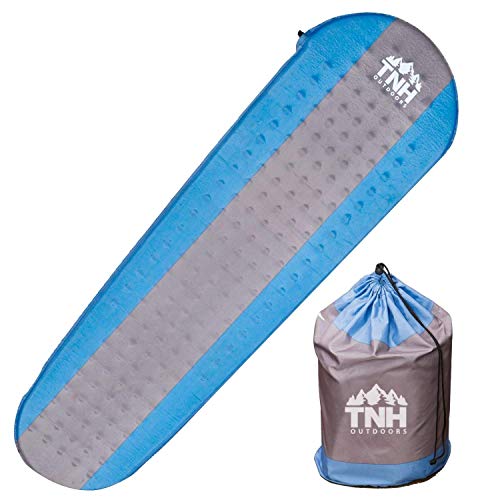
For those who value simplicity and proven reliability, the TNH Outdoors pad is a standout choice. Its 1.5-inch thick, self-inflating design combines foam padding with air for a comfortable sleep surface that effectively smooths out rough ground. You can wake up feeling ready for the day instead of sore and stiff.
This pad emphasizes durability and value, featuring a thick outer skin for protection. It comes from a seller with a strong track record, offering a lifetime warranty for long-term peace of mind. It’s a straightforward solution for campers and hikers seeking consistent comfort without a complicated setup.
Outdoorsman Lab Sleeping Pad
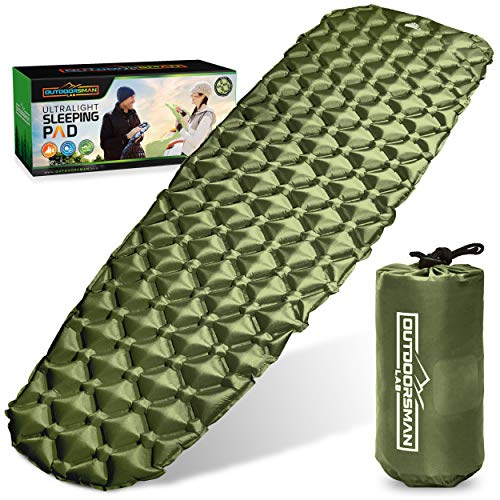
The Outdoorsman Lab pad uses a unique interconnected air cell design that adjusts to your body’s contours. This system provides targeted support and can help minimize pressure points, leading to a more restful sleep. The 2-inch thickness offers a generous buffer between you and the terrain.
Weighing approximately 16 ounces and packing down very small, this pad successfully balances comfort with backpack-friendly portability. Its design aims to deliver a supportive sleep experience reminiscent of your mattress at home, making it a strong option for weekend trips and travel.
WELLAX Ultralight Air Sleeping Pad
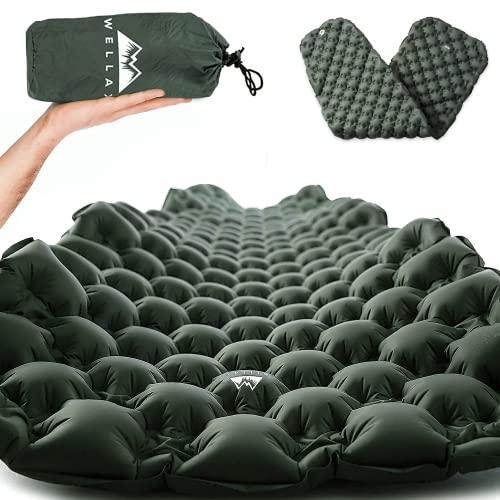
The WELLAX pad merges the ease of an air pad with structural elements of a foam mattress. Its design includes dozens of individual air cells surrounded by a supportive foam frame, intended to provide stability and comfort. Inflation is quick, requiring just a few breaths.
With a packed size of 10×3.5 inches and a weight of 14.5 ounces, it is a compact companion for your gear. The use of 20D Nylon and TPU materials contributes to its durability and tear resistance, while the R-value of approximately 2.1 offers basic thermal insulation for three-season use.
Therm-a-Rest NeoAir Xlite NXT

The Therm-a-Rest NeoAir Xlite NXT is a leader in the ultralight category, offering exceptional warmth for its minimal weight. Its foam-free, baffled internal structure creates a 3-inch thick profile that provides stable support, helping to prevent that feeling of rolling off the pad.
It sets a high standard for packability, rolling down to the size of a one-liter water bottle. For gram-conscious backpackers who refuse to compromise on sleep quality or insulation, this pad represents a top-tier investment in backcountry comfort.
NEMO Equipment Tensor All-Season

NEMO’s Tensor All-Season pad is engineered for quiet, stable, and insulated sleep. Its Spaceframe baffles use low-stretch trusses to distribute weight evenly and eliminate the springy, noisy feel common in some air pads. This results in a steady sleeping surface.
The insulation comes from two layers of floating Thermal Mirror film, which provides efficient warmth without significant weight penalty. If you are a light sleeper bothered by crinkly sounds or need reliable insulation for cooler conditions, this pad is worth considering.
Exped MegaMat Auto

The Exped MegaMat Auto redefines comfort for vehicle-based adventures. With a full 4 inches of polyurethane foam, it delivers a sleep experience close to a traditional bed. The asymmetrical wheel well cutouts are a smart design for fitting in the back of SUVs and trucks.
This is a self-inflating mat with an advanced valve system and includes a pump for fine-tuning firmness. While it is not for long-distance backpacking, it is the ultimate choice for car camping, overlanding, or turning any vehicle into a comfortable sleeping quarters.
Sea to Summit Ether Light XT Insulated Air Sleeping Mat
The Sea to Summit Ether Light XT focuses on providing exceptional comfort through its “Air Sprung Cells.” These vertical sidewalls allow the top surface to stretch and adapt independently, aiming to reduce tension and create a flat, hammock-like sleeping feel that many find very comfortable.
It is an insulated air pad designed for three-season use, balancing a reasonable packed size with a plush sleep surface. The design prioritizes comfort and stability for side sleepers and those who move around during the night, making it a strong contender for luxury on the trail.
Big Agnes Q-Core Deluxe Insulated Air Sleeping Pad
Big Agnes designed the Q-Core Deluxe with a focus on stable, uniform support. Its offset “I-Beam” construction is intended to keep the pad’s surface flat and prevent air from shifting to the sides, which can create a feeling of rolling off. This design promotes a secure and comfortable night’s rest.
As an insulated model, it provides warmth for cooler nights, and the fabric is chosen for its quiet performance. It’s a well-regarded option for backpackers who want a reliable, supportive pad with a proven track record for comfort across various sleeping positions.
Buying Guide: How to Choose the Best Backpacking Sleeping Pad for Comfort
Let’s be honest, a good night’s sleep can make or break a backpacking trip. After a long day on the trail, your shelter is your sanctuary, and the foundation of that comfort is your sleeping pad. It’s not just about cushioning; it’s about insulation, support, and packing down small enough to carry. I’ve spent many nights on the ground figuring out what works, and I’m here to help you find the right balance for your needs.
First, consider the type. There are three main kinds: air pads, self-inflating pads, and closed-cell foam pads. Air pads are the most popular for a reason. They offer the best comfort-to-weight ratio, packing down incredibly small. The downside? They can puncture and often require you to blow them up, which can be a chore at altitude. Self-inflating pads have open-cell foam inside that expands and sucks in air when you open the valve. They’re very comfortable and insulate well, but they’re heavier and bulkier than pure air pads. Closed-cell foam pads, like the classic blue Z-Rest, are the simple, bombproof option. They’re lightweight, can’t pop, and provide consistent insulation. The trade-off is they are bulky to carry and offer the least cushioning.
Next, look at the R-value. This is the industry standard for measuring thermal resistance. A higher R-value means better insulation from the cold ground. For summer camping, an R-value of 2 to 4 is usually sufficient. For three-season use, aim for an R-value of 4 or higher. If you’re a winter warrior, you’ll want an R-value of 5 or more. Don’t underestimate this number; sleeping cold is miserable.
Size and weight are critical for backpacking. You’ll see pads in regular, long, and wide sizes. I always recommend getting a pad that matches your height and sleeping style. If you toss and turn, a wide version can be a game-changer. Weight is a direct trade-off with comfort and warmth. The most comfortable pads often have more features and materials, which adds ounces. You have to decide where your personal comfort line is on the trail versus at camp.
Finally, think about the features. Look for things like a textured surface to keep your sleeping bag from sliding off, built-in pumps to keep moisture out of the pad, and reliable, easy-to-use valves. Some of the best backpacking sleeping pads for comfort also use specific internal structures, like horizontal or vertical baffles, or even “3D” shaping, to better support your body and prevent that rolling-off feeling. Your budget will play a role here, but remember, this is a piece of gear you’ll use every single night, so it’s worth investing in quality sleep.
Frequently Asked Questions
Is a higher R-value always better for a sleeping pad?
Not necessarily. A higher R-value means better insulation, which is crucial for cold weather. However, if you only camp in warm summer conditions, a high R-value pad can actually be too warm and less breathable. It’s also typically heavier and more expensive. Match the R-value to the coldest temperatures you expect to face. For most three-season backpackers, a pad with an R-value between 4 and 6 offers a great balance.
How important is the thickness of a sleeping pad?
Thickness is a major factor in comfort, especially for side sleepers. A thicker pad (2.5 to 4 inches) does a better job of cushioning your hips and shoulders from the hard ground. Thinner pads (1 to 2 inches) are often lighter and pack smaller but might leave you feeling every rock and root. When looking for the best backpacking sleeping pads for comfort, prioritize thickness if you’re a restless or side sleeper.
Can I just use a foam pad instead of an inflatable one?
You absolutely can, and many ultralight purists do. Closed-cell foam pads are reliable, lightweight, and never fail. The comfort difference is significant, though. They provide less cushion and can be bulky to strap to the outside of your pack. I often recommend them as a dependable backup or for summer trips where weight and simplicity are the top priorities over plush sleep.
What’s the best way to repair a punctured air pad in the field?
Almost every inflatable pad comes with a repair kit. The process is straightforward: find the leak by listening or submerging the pad in water, clean and dry the area around it, apply the adhesive from the patch kit, and let it cure completely before inflating again. I always carry a small tube of seam grip and a piece of Tyvek as a more robust field repair option. Practice at home before your trip!
Are wider or longer sleeping pads worth the extra weight?
This is a personal comfort call. If you constantly feel like you’re falling off a standard 20-inch wide pad, the extra few ounces for a 25-inch wide version can be the difference between sleepless nights and great rest. The same goes for length; if your feet hang off, a long pad is worth it. Your sleep quality directly impacts your energy and enjoyment on the trail, so don’t automatically dismiss a larger size.