Finding the right underwater fishing camera can change how you see the water below. These devices let you scout structure, identify species, and observe fish behavior directly, turning guesswork into strategy. For anglers on a budget, there are excellent options that deliver clear visuals and reliable performance without a high cost.
This roundup focuses on eight capable underwater cameras priced under $300. From traditional cabled systems with dedicated monitors to innovative wireless models, each offers unique advantages for ice fishing, boat use, or kayak adventures. We’ve evaluated key features like screen size, lighting, cable length, and video quality to help you find the perfect tool for your fishing style.
Our Top Picks for Affordable Underwater Fishing Cameras
- Aqua-Vu AV715c Underwater Camera 7-Inch Color LCD Screen
- Eyoyo Underwater Fishing Video Camera Fish Finder w/ 7 inch Monitor
- Eyoyo Underwater Fishing Camera Portable Video Fish Finder 9 inch LCD
- Anysun Portable Underwater Video Camera with 7” HD Monitor
- GoFish Cam- Full HD 1080p Wireless Underwater Fishing Camera
- AKASO EK7000 4K30FPS 20MP WiFi Action Camera
- GoFish Cam Underwater Fishing Camera with 100ft Cable
- Aqua-Vu Micro Revolution 5.0 Underwater Fishing Camera
Aqua-Vu AV715c Underwater Camera 7-Inch Color LCD Screen
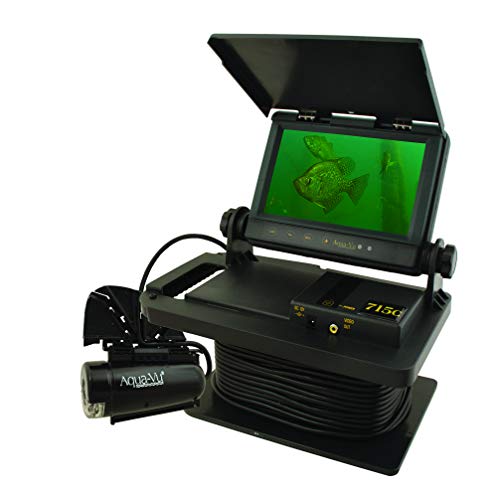
This Aqua-Vu model is a solid entry from a trusted brand in fishing electronics. It features a 7-inch full-color, high-resolution LCD screen that provides a clear window into the underwater world. The monitor includes an RCA video out port, allowing for potential recording or viewing on a larger screen.
The system comes with 50 feet of cable and the adjustable Quick Attachment Fin System, which helps stabilize the camera in current. The Opti-RX lab-quality lens is designed for ultimate clarity, making it easier to identify fish and structure. Its IP67 waterproof rating and durable XD camera housing make it a reliable choice for various fishing conditions.
Eyoyo Underwater Fishing Video Camera Fish Finder w/ 7 inch Monitor

This Eyoyo package offers a balance of performance and value. The 1000 TVL camera sends a high-definition signal to the 7-inch TFT color monitor, resulting in a sharp image for identifying fish and underwater details. The 15-meter cable is suitable for many fishing scenarios from a boat or through the ice.
A key feature is its dual lighting system. The camera is equipped with 12 white LED lights, providing clear illumination in dark or murky water. The built-in rechargeable battery supports up to 8 hours of continuous use, which is sufficient for a full day on the water without needing a recharge.
Eyoyo Underwater Fishing Camera Portable Video Fish Finder 9 inch LCD

For anglers who prefer a larger display, this Eyoyo model features a spacious 9-inch TFT color monitor. The bigger screen makes it easier to see details and share the view with others. It includes a removable sun visor to reduce glare, a practical addition for bright days on open water or ice.
This unit is built for extended trips with a robust 4500mAh battery offering 6-8 hours of runtime. The camera uses 12 infrared lights for night vision, allowing for observation in low-light conditions without spooking fish with a bright white light. The included 30-meter cable provides excellent reach for deeper water exploration.
Anysun Portable Underwater Video Camera with 7” HD Monitor
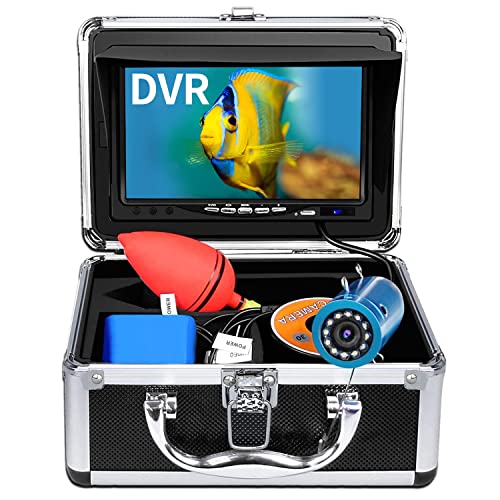
The Anysun camera system stands out with its built-in DVR recording capability. It comes with an 8GB SD card, allowing you to capture video and photos directly during your fishing session. This feature is perfect for documenting catches, analyzing structure, or sharing your underwater findings online.
Its 7-inch monitor also has a removable sun visor for better visibility. The camera itself has a fish-shaped design intended to be less intrusive to aquatic life. With 12 white LED lights, a 120-degree wide-view lens, and an IP68 waterproof rating, it is a versatile tool for seeing more of the underwater environment.
GoFish Cam- Full HD 1080p Wireless Underwater Fishing Camera

This GoFish Cam offers a modern, wireless approach. Instead of a cable and dedicated monitor, it connects via WiFi to your iOS or Android smartphone or tablet. You can view the live feed, record Full HD 1080p video at 60fps, and take photos directly through the companion app.
Its compact, hydrodynamic shape is designed for in-line rigging, allowing you to attach it directly to your fishing line. Despite its small size, it’s built to be strong, with a casing rated for depths up to 500 feet and resistance to 1000 lbs of tension. This design provides a unique, first-person perspective of your lure and strikes.
AKASO EK7000 4K30FPS 20MP WiFi Action Camera

The AKASO EK7000 is a versatile action camera that can double as a high-quality fishing camera. Its primary advantage is video resolution, capable of recording in 4K Ultra HD. This captures exceptional detail, useful for reviewing underwater structure or fish behavior in clear water.
It includes Electronic Image Stabilization (EIS) to smooth out footage, which is helpful when used on a moving boat or in currents. With the included waterproof case, it is safe to depths of 131 feet. As a WiFi-enabled camera, it can stream live video to your phone, though it requires creative mounting for traditional fishing camera use.
GoFish Cam Underwater Fishing Camera with 100ft Cable
This cabled version of the GoFish Cam provides a more traditional setup with the benefit of a long 100-foot cable. This extensive reach is ideal for deep-water fishing, allowing you to explore structures far below the surface that would be out of range for shorter systems.
It maintains the brand’s focus on providing clear video feedback to improve fishing strategy. By using a cable, it ensures a stable, real-time connection without relying on wireless signals that can be inconsistent. This model is suited for anglers who want the direct viewing method of a cable but appreciate the modern camera technology GoFish Cam employs.
Aqua-Vu Micro Revolution 5.0 Underwater Fishing Camera
The Aqua-Vu Micro Revolution 5.0 represents a compact and portable design from a leading industry name. These micro systems are known for their small, lightweight form factor, making them exceptionally easy to transport and deploy, especially for ice anglers or kayak fishermen.
While specific features of the 5.0 model should be confirmed, Aqua-Vu’s Micro series typically includes a high-resolution camera, built-in DVR capabilities, and a compact color monitor. This approach combines essential viewing functions in a minimal package, prioritizing convenience and simplicity for the angler on the move.
How to Choose an Underwater Fishing Camera Under $300
Finding a good underwater fishing camera without spending a fortune is totally doable. I’ve tested a bunch, and the key is knowing which features matter most for your style of fishing. You don’t need every bell and whistle, but you do need reliability where it counts. Let’s break down what you should look for when picking from the 8 best underwater fishing cameras under $300.
First, think about how you’ll use it. Are you dropping it straight down off the side of the boat to scope out structure? Or are you casting it out to see what’s happening farther away? This decides the camera type. For vertical viewing, a simple drop or submersible camera on a cable works great. If you want to cast it, you’ll need a floating or towable model. The lens angle is huge here, too. A wider field of view (like 120 degrees or more) lets you see more of the underwater scene, which helps when you’re trying to locate fish or figure out the bottom composition.
Next, let’s talk about the view itself. Resolution is a big deal. Aim for at least 1080p Full HD video quality. Some models in this price range now even offer 2K or 4K, but remember, higher resolution files are bigger. The camera’s low-light performance is arguably more important than ultra-high resolution. Water gets dark fast, and many fish are most active at dawn, dusk, or in deeper, shaded areas. Look for features like infrared (IR) LEDs for night vision or strong supplemental LED lights that can be adjusted. A camera with a decent Sony or OmniVision sensor often handles murky conditions better.
Durability and ease of use are non-negotiable. The housing needs to be tough enough to handle bumps against rocks, wood, and the boat. A good depth rating of at least 50 feet is standard, but many go to 100 feet or more. Check the cable if it’s a wired model—it should be strong, kink-resistant, and long enough for your needs (35 to 100 feet is common). For the monitor or your smartphone connection, a bright, anti-glare screen is a lifesaver on sunny days. Finally, consider the power source. A camera with a long-lasting, rechargeable lithium-ion battery saves you from constantly buying AAAs. Extra mounts or a carrying case are nice bonuses that add value.
FAQ
Can these cameras really see fish in murky water?
It’s a challenge, but a good camera helps a lot. Murkiness is usually caused by particles like algae or silt. Cameras with adjustable, bright LED lights can sometimes cut through the haze by illuminating particles closer to the lens, but they can also create a “snowstorm” effect if turned up too high. I find that in stained or lightly murky water, cameras with good contrast and color correction work best. In heavy mud, visibility will be very low no matter what. For the 8 best underwater fishing cameras under $300, look for models specifically noted for low-light or turbid water performance.
Do I need a separate screen, or can I use my phone?
This is a major split in the market. Many newer, budget-friendly cameras are “Wi-Fi enabled,” meaning they create their own network for your smartphone to connect to. This is super convenient and saves you from carrying another device. However, the connection can sometimes be laggy or have a limited range. Dedicated monitors are often more reliable in real-time, have brighter screens for direct sun, and don’t drain your phone’s battery. It comes down to personal preference for convenience versus dedicated performance.
How deep can these $300 cameras typically go?
Most underwater fishing cameras in this price range have a depth rating between 50 feet (about 15 meters) and 100 feet (about 30 meters). Some specialized or more rugged models might go to 150 feet. This is almost always more than enough for freshwater lake and river fishing. The rating is for the waterproof housing’s integrity. It’s crucial you don’t exceed it, as water pressure can cause leaks and destroy the electronics.
What’s the battery life like on a typical model?
Battery life varies wildly based on usage. With the screen/monitor on and lights off, you might get 4-8 hours on a charge. Using the LED lights constantly will cut that time significantly, sometimes in half. Many models now use built-in, rechargeable lithium-polymer batteries (like a big power bank), which I prefer. Others use standard alkaline AA or AAA batteries, which are easy to replace on long trips but add ongoing cost. Always check the manufacturer’s estimates and plan to have a backup power source if you’re out for a full day.
Are they easy to set up and use for a beginner?
Absolutely. Modern designs are very plug-and-play. A wired system usually involves connecting the camera cable to the monitor, turning both on, and dropping it in the water. A Wi-Fi system requires you to power on the camera, connect your phone to its Wi-Fi signal, and open the corresponding app. The learning curve is minimal. The bigger challenge is learning to interpret what you’re seeing—identifying fish species, understanding how they’re reacting to your bait, and recognizing different bottom structures.