Choosing the right sleeping bag is a critical decision for any camping trip, impacting your warmth, comfort, and overall enjoyment of the outdoors. The North Face has built a reputation for reliable, high-performance gear that stands up to the elements. Their sleeping bag lineup offers a solution for every type of camper, from ultralight backpackers to car-camping families.
This roundup examines nine of the best North Face sleeping bags, highlighting their key features and intended uses. Whether you need a bag for frigid winter nights, a versatile system for changing conditions, or a spacious option for two, you’ll find a detailed overview to help guide your selection.
The Best North Face Sleeping Bags for Your Next Adventure
- The North Face ECO Trail Synthetic 0 Sleeping Bag
- The North Face Cat’s Meow 20F Backpacking Sleeping Bag
- The North Face Wawona Bed Double 20 Sleeping Bag
- THE NORTH FACE Cat’s Meow 20F Sleeping Bag
- The North Face Teen Wasatch Pro 20 Sleeping Bag
- The North Face Dolomite One 15F, 3-in-1 Insulated Sleeping Bag
- The North Face Cozy One Bag 15F Insulated Sleeping Bag
- The North Face Snowshoe 0F/-18C Sleeping Bag
- The North Face Gold Kazoo 0F/-18C Sleeping Bag
The North Face ECO Trail Synthetic 0 Sleeping Bag

Built for cold-weather campers who prioritize sustainability, the ECO Trail Synthetic 0 sleeping bag uses 100% recycled materials in both its shell and insulation. This synthetic insulation is a key advantage, as it maintains warmth even if the bag becomes damp, making it a reliable choice for humid or wet conditions. The embossed lining adds a touch of visual appeal while the extended width in the knees provides extra room for side sleepers to move comfortably during the night.
This bag is designed for situations where maximum warmth and environmental responsibility are both important. Its robust synthetic fill and thoughtful cut balance performance with a reduced ecological footprint, ideal for extended trips in cooler climates.
The North Face Cat’s Meow 20F Backpacking Sleeping Bag
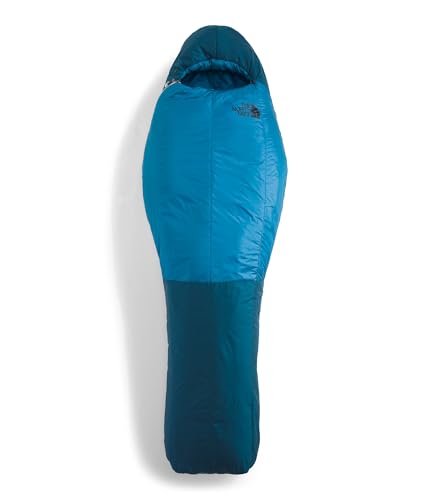
A long-standing favorite among backpackers, the Cat’s Meow 20F bag offers an excellent balance of warmth, weight, and compressibility. Its recycled synthetic insulation is wrapped using Cyclone construction to efficiently trap heat, while features like the fully insulated hood and cinch collar are designed to seal out drafts. The bag includes a non-PFC DWR finish for water repellency and shockcords to secure it to your sleeping pad.
This model is built for three-season backpacking where reliability is essential. The 2/3-length zipper simplifies entry and exit, and the included compression stuff sack helps minimize its pack size, making it a practical and high-performance choice for the trail.
The North Face Wawona Bed Double 20 Sleeping Bag

The Wawona Bed Double reimagines the camping sleeping bag as a spacious, rectangular bed built for two. Its generous design provides ample room to stretch out and change positions, a significant comfort upgrade over traditional mummy bags. It uses recycled polyester insulation and a soft taffeta lining for warmth, with a durable water-repellent finish on the ripstop shell fabric.
This is the ideal solution for car campers or anyone who values space and comfort. The wraparound footbox zipper allows the bag to lie completely flat, and the durable YKK zipper ensures long-term use. It’s perfect for sharing or for solo campers who simply want maximum sleeping space.
THE NORTH FACE Cat’s Meow 20F Sleeping Bag

This version of the Cat’s Meow delivers the same trusted 20-degree performance with a focus on essential backpacking features. The recycled synthetic insulation is effectively distributed via Cyclone construction to prevent cold spots. Key thermal efficiency features include a cinch hood, draft collar, and vertical baffles that work together to minimize heat loss.
Designed for practicality, this bag includes pad loops to keep it securely attached to your sleeping pad throughout the night. It represents a straightforward, effective approach to three-season insulation, built from recycled materials for a lighter environmental impact.
The North Face Teen Wasatch Pro 20 Sleeping Bag

Specifically designed for younger campers, the Teen Wasatch Pro 20 offers a roomy mummy cut that is easy to use. It provides dependable warmth through recycled polyester insulation and a soft nylon lining, with a DWR finish on the outer shell for light moisture protection. Thoughtful features like an internal phone pocket add convenience for its users.
The bag includes a full draft tube and collar to lock in warmth, and the side-zip opening with a wraparound foot zipper makes it simple to get in and out. It comes with a compression stuff sack, making it a great introductory sleeping bag for camping trips and sleepovers.
The North Face Dolomite One 15F, 3-in-1 Insulated Sleeping Bag

The Dolomite One Bag is a versatile 3-in-1 sleep system designed for campers who face a variety of weather conditions. Its modular design includes three separate layers: a 50-degree top layer, a fleece-lined 30-degree mid-layer, and a waterproof bottom layer. These can be used individually or combined to achieve a 15-degree rating for maximum flexibility.
This rectangular bag is perfect for those who want a single solution for different trips throughout the year. Whether you need a light sheet for summer or a combined system for chilly spring nights, it adapts to your needs, simplifying gear choices.
The North Face Cozy One Bag 15F Insulated Sleeping Bag

Focused on supreme comfort, the Cozy One Bag features a soft-to-the-touch fabric and high-loft Thermoball Eco insulation, which is made from 100% recycled materials. This innovative insulation is known for its warmth-to-weight ratio and ability to retain heat even when damp. The bag also uses a 3-in-1 modular system for adjustable warmth from 50 down to 15 degrees.
This model is for campers who refuse to compromise on comfort. It brings a plush, home-like feel to the outdoors while providing serious thermal performance and adaptability through its layered design.
The North Face Snowshoe 0F/-18C Sleeping Bag
Engineered for severe cold, The North Face Snowshoe 0F sleeping bag is built to handle winter camping and mountaineering conditions. It typically features high-performance insulation, a contoured mummy shape to maximize heat retention, and a robust weather-resistant shell. Details like a insulated hood, draft tube along the zipper, and a snug draft collar are essential for sub-freezing temperatures.
This bag is a specialist piece of gear for adventures where extreme warmth is the primary concern. It is designed for minimal heat loss, providing security and comfort in the harshest environments.
The North Face Gold Kazoo 0F/-18C Sleeping Bag
The Gold Kazoo represents a high-end option for extreme cold weather camping. It often incorporates premium down insulation for an exceptional warmth-to-weight ratio, along with a streamlined, efficient mummy cut. High-quality materials and construction focus on minimizing weight while maximizing thermal efficiency, making it suitable for demanding alpine or polar expeditions.
This sleeping bag is for the serious adventurer who needs top-tier performance in the coldest scenarios. Its design prioritizes lightweight packability without sacrificing the critical warmth needed for survival in deep cold.
Buying Guide: How to Pick Your North Face Sleeping Bag
Choosing the right sleeping bag can make or break your camping trip. I’ve spent plenty of cold nights wishing I’d paid more attention to the details before buying. When you’re looking at the 9 best North Face sleeping bag for camping options, there are a few key things to keep in mind to find your perfect match.
First, think about temperature. This is the big one. Every quality sleeping bag, including those from The North Face, comes with an EN/ISO temperature rating. The Lower Limit rating is the one to watch—it tells you the lowest temperature at which a standard man can sleep comfortably. I always add a 10-degree buffer to this number for safety. If I expect nights around 30°F, I look for a bag rated to 20°F or lower. Your own metabolism matters too; if you sleep cold like I do, you’ll want that extra warmth.
Next, consider the insulation type. The North Face uses high-quality down and synthetic fills. Down (like their proprietary ProDown) is fantastic for its warmth-to-weight ratio and packability, perfect for backpacking. But it loses its insulating power when wet. Synthetic fill (like their Heatseeker™ Pro) is bulkier but retains warmth even in damp conditions and is often more affordable. I go for down in dry, cold climates and synthetic if I expect rain or humidity.
Fit and shape are super personal. Mummy bags are snug and thermally efficient, great for serious cold. Rectangular bags offer room to move but are heavier. The North Face’s “Semi-Rectangular” shapes are a nice middle ground I often prefer. Also, check the length and shoulder girth. A bag that’s too tight is miserable, and one that’s too large has dead air space your body has to heat up.
Finally, don’t overlook the features. A well-designed hood that cinches down is a heat-saver. A draft collar behind the zipper stops cold air from sneaking in. Look for a zipper that doesn’t snag and, if you plan on sharing a tent, consider if you want a left- or right-hand zip to connect to a partner’s bag. By weighing these factors—temperature, insulation, fit, and features—against where and how you camp, you can zero in on the best North Face sleeping bag for your adventures.
Frequently Asked Questions
How do I clean and care for my North Face sleeping bag?
Proper care extends the life of your bag dramatically. For down bags, use a technical down wash in a front-loading washer on a gentle cycle, then tumble dry on low with clean tennis balls to break up clumps. For synthetic bags, a mild detergent in a gentle cycle works. Always, always check the specific care label first. I never use regular detergent or fabric softener, as they can strip the insulation’s coatings. Store your bag loosely in a large cotton sack, never compressed in its stuff sack for long periods.
Can I use a North Face sleeping bag for backpacking and car camping?
You can, but you might not want to. It’s a trade-off between weight and comfort. A lightweight mummy bag from their “Summit Series” or “Flight Series” is ideal for backpacking where every ounce counts. For car camping, where weight doesn’t matter, you can opt for a heavier, roomier rectangular bag with more comfort features. If you only want one bag for both, I’d look at a versatile 3-season synthetic or down mummy bag—it’ll be fine at the campground and manageable in your pack.
What’s the difference between men’s and women’s specific sleeping bags?
North Face designs women’s bags with different fit and insulation patterns. They are typically cut shorter in length, with a narrower shoulder and wider hip area. More importantly, they often have extra insulation in the torso and foot box, as women tend to sleep colder in these areas. If you find a standard bag is too long or you constantly have cold feet, a women’s specific model could be a game-changer for comfort.
Are North Face sleeping bags good for very cold weather?
Absolutely. Their high-end “Summit Series” bags are built for mountaineering and extreme conditions, with temperature ratings well below 0°F. These bags use premium down, advanced shell fabrics, and meticulous construction to provide serious warmth. For most campers, one of the 9 best North Face sleeping bag for camping options in the 15°F to 30°F range will handle typical three-season conditions, but they definitely make expedition-grade gear for when the mercury really drops.
What does the “EN/ISO” temperature rating mean?
It’s a standardized testing method that allows you to compare bags from different brands fairly. It gives you three numbers: Comfort (for a standard woman), Lower Limit (for a standard man), and Extreme (a survival rating only). I focus on the Lower Limit rating as my main guide, but I know I might need to wear a layer if I hit that temperature. It’s a reliable starting point, but your personal experience, pad, and shelter all affect real-world performance.