Watching an ant colony work is a fascinating window into nature’s most organized societies. An ant farm brings this incredible world into your home or classroom, offering endless opportunities for observation and learning. From classic sand habitats to modern gel ecosystems with LED lighting, there’s a perfect ant farm for every curious mind.
Choosing the right one depends on what you want to observe. Some focus on clear, expansive tunnel views, while others offer a complete science kit experience. This roundup highlights nine of the best ant farms available, detailing their unique features to help you find the ideal habitat for your budding entomologist.
Our Top Picks for the Best Ant Farms
- Evviva Ant Habitat W/LED Light
- Uncle Milton Giant Ant Farm
- Educational Insights GeoSafari Ant Factory
- Dan&Darci Light-up Ant Farm Terrarium Kit
- Educational Insights GeoSafari Ant Factory with Sand
- Uncle Milton Ant Farm Antopia Rainforest Habitat
- Insect Lore Ant Hill Habitat Kit with Live Ants Voucher
- National Geographic Ant Habitat Kit
- Thames & Kosmos Ant Factory
Evviva Ant Habitat W/LED Light

This habitat combines observation with a striking visual display. The cool blue LED light base does more than just look impressive; it encourages ants to dig deeper, resulting in more intricate and extensive tunnel networks for you to watch. The enhanced blue gel is nutrient-rich, supporting ant health and longevity.
The kit is designed for ease and engagement. It comes with a magnifying glass, a digging stick, and a discount code for live harvester ants. The self-contained gel ecosystem means no messy sand is required, and the LED base provides ambient lighting that makes the tunnels visible day or night.
Uncle Milton Giant Ant Farm

This classic, large-format ant farm offers a generous viewing area to watch an entire colony at work. Its educational design is perfect for teaching children about cooperation and nature, as they can clearly see ants communicating and building their tunnel networks together.
Functionality is a key strength. The farm features a removable lid and a tip-proof stand for safe, easy access. Its standout feature is expandability; the modular design allows you to connect multiple units with included tubing, letting you create a custom, sprawling ant metropolis for extended observation projects.
Educational Insights GeoSafari Ant Factory

This escape-free habitat is a trusted choice for hands-on learning. It provides a secure environment to observe live ants at work, making it an excellent tool for young students interested in entomology and biology. The setup process is part of the educational experience.
The kit includes essential tools like a water dropper and a canal starter, along with a detailed 24-page guide book. A major benefit is the included certificate to obtain ants by mail, simplifying the process of starting your colony. Please note, it requires two cups of sand, which are not included.
Dan&Darci Light-up Ant Farm Terrarium Kit

This terrarium kit uses a nutrient-rich gel that serves as both food and tunneling medium for the ants. The LED lighting illuminates the entire habitat, providing a clear view of the ants as they dig their own intricate pathways. It’s a clean, all-in-one observation system.
Designed as a learning science toy, it encourages independent observation and study. The light-up feature adds an element of excitement, making the ants’ underground world visible even in a dark room. It’s a straightforward option that focuses on the mesmerizing process of tunnel creation.
Educational Insights GeoSafari Ant Factory with Sand

This is a complete starter kit that includes everything you need except the ants. The escape-proof habitat comes with special ant sand pre-mixed to the ideal consistency for tunneling, removing the guesswork and mess of sourcing your own.
The large viewing area and magnification spots allow for detailed observation of ant behavior. It includes a feeding tool, an activity guide, and a certificate for live ants. This all-inclusive package is ideal for a first-time ant farmer seeking a convenient and educational STEM experience.
Uncle Milton Ant Farm Antopia Rainforest Habitat
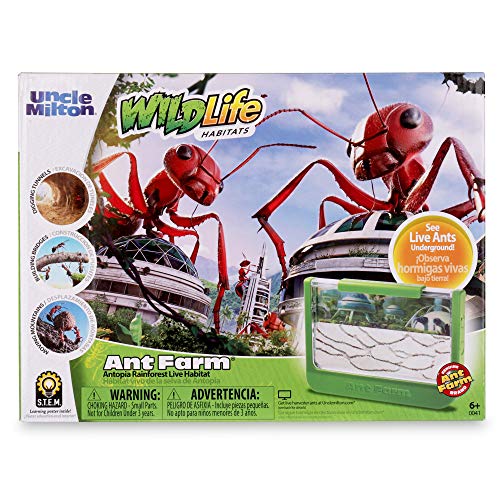
Built for durability and connectivity, this habitat is both break-resistant and escape-proof. Its sturdy construction and tip-proof stand make it a reliable choice for active households or classroom settings where safety is a priority.
A key feature is its four “Antports,” which allow you to connect this habitat to other compatible ant farms. This modularity encourages expansion, letting you build a complex network for your colony. It’s designed for long-term observation projects that can grow over time.
Insect Lore Ant Hill Habitat Kit with Live Ants Voucher
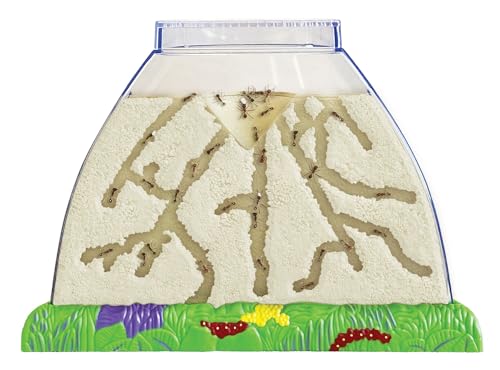
This STEM-accredited kit simplifies the process of starting your ant colony. It comes with a pre-paid voucher to order live harvester ants directly, so you don’t have to find ants yourself. Everything is provided for an immediate, hands-on science project.
The translucent ant hill design offers excellent visibility of tunnel construction and colony activity. It’s an interactive tool that demonstrates teamwork and insect biology clearly, making it a strong choice for curious kids, homeschool lessons, or classroom demonstrations.
National Geographic Ant Habitat Kit

This habitat offers multiple ways to observe. It lights up when plugged in, providing a spectacular view of ant activities at any hour. The ultra-stable design houses a nutrient-rich gel that the ants both tunnel through and eat.
Built-in magnifying glasses on the lid, plus an additional handheld magnifier, allow for extremely close-up study. The kit encourages scientific experimentation by suggesting changes to lighting, location, and temperature to see how ants respond, promoting a deeper understanding of their biology.
Thames & Kosmos Ant Factory
While specific image and feature details are limited for this model, Thames & Kosmos is renowned for producing high-quality, educational science kits. Their Ant Factory is likely designed with a focus on the scientific method and detailed observation.
You can expect a well-constructed habitat accompanied by informative guides that explain ant society, anatomy, and behavior. It’s a brand often chosen by those who want a serious, curriculum-supporting learning tool alongside the engaging activity of maintaining an ant colony.
How to Choose the Best Ant Farms for Observation
Picking the right ant farm isn’t just about grabbing the coolest-looking one off the shelf. I’ve learned that the best choice depends heavily on what you, or the person you’re getting it for, actually want to see and how much effort you want to put in. The main goal is clear, uninterrupted observation of these fascinating little engineers, so that’s what we need to optimize for.
First, think about the viewing area. Traditional thin, flat sand farms are classic, but they can limit your view to just one plane. For a truly immersive experience, I prefer 3D viewing habitats. These are often made of clear gel or have transparent walls on multiple sides, letting you watch tunnels being carved in three dimensions. It feels like you have a direct window into the underground. The material matters too. Acrylic is durable and crystal clear, while glass is even more scratch-resistant but heavier. Gel farms are an all-in-one option—they provide both the habitat and the nutrition for the ants, which is super convenient for beginners.
Next, consider size and accessibility. A larger farm supports a bigger colony, which means more activity to watch. But it also needs more space in your home. Look for features that make maintenance easier, like a secure, easy-to-open portal for feeding and watering without risking an escape. Some advanced farms have modular designs, allowing you to connect additional chambers as the colony grows. This is a fantastic feature for long-term observation.
Finally, don’t forget the ants themselves! Most farms don’t come with ants. You’ll usually need to order a colony of a suitable species, like harvester ants, separately. Make sure the farm you choose is appropriate for the species you plan to house. A good vendor will offer guidance on this. My last piece of advice? Start simple. A well-made, escape-proof basic farm can provide endless hours of observation. You can always upgrade to a more complex ecosystem later once you’re hooked on watching their world.
Frequently Asked Questions
What’s the difference between a sand farm and a gel farm?
This is the most common question I get. Sand farms are the classic style, where you provide sand or soil and then feed the ants food and water separately. It requires a bit more maintenance but allows for natural tunneling behavior. Gel farms use a special, nutrient-rich gel as both the digging medium and the ants’ food/water source. They are incredibly low-maintenance and offer stunning clarity for observation, making them a top pick for many looking at the best ant farms for observation, especially for kids or classrooms.
Can I just use ants from my backyard?
I strongly advise against this. First, many local species are aggressive, difficult to contain, or may not thrive in a captive environment. Second, and most importantly, capturing queen ants can harm local ecosystems. It’s best, and often legally required, to purchase your ants from a reputable supplier. They provide species known to do well in captivity, like harvester ants, and usually include a healthy queen to ensure your colony grows.
How do I keep the ants from escaping?
Escape-proofing is the number one priority for a peaceful experience. Always choose a farm with a proven, secure design. Look for features like a locking lid, a moat that can be filled with water (a simple but effective barrier), or specially designed ports that use physics to keep ants in. Before introducing your ants, do a thorough check of all seams and openings. Placing the farm on a small tray or plate can also provide a secondary safety catch just in case.
How long does an ant colony typically live in a farm?
With proper care, a colony with a healthy queen can live for several years. The queen is the key; she can lay eggs for a long time, constantly replenishing the worker population. Individual worker ants may only live for a few months to a year, but the colony itself can be a long-term project. This is why choosing a quality, expandable farm from the start is a good idea if you’re committed.
Do I need to hibernate my ants?
It depends on the species. Some common pet ants, like many harvester ants, do not require a hibernation period. Others, especially temperate climate species, do need a controlled cool-down period to mimic winter and regulate their life cycle. Your ant supplier will give you specific care sheets for the species they send you. Always follow their guidance for the health of your colony.