For campers seeking a unique blend of comfort and versatility, hammock tents offer an exceptional alternative to traditional ground shelters. Suspended above uneven, rocky, or wet terrain, they provide a comfortable night’s sleep and a memorable outdoor experience. Whether you’re a backpacker counting every ounce or a car camper looking for luxury in the trees, there’s a model designed for your adventure.
The right hammock tent combines security, weather protection, and ease of setup. Key considerations include weight capacity, included accessories like bug nets and rainflies, and the overall durability of materials. From minimalist single-person setups to elaborate multi-person tree tents, the following roundup highlights the best options available to help you find your perfect aerial retreat.
Our Top Picks for Hammock Camping Tents
- COVACURE Camping Hammock with Net
- Oak Creek Lost Valley Camping Hammock Bundle
- Double Hammock – Everest Bug Free Camping Tent
- Lawson Hammock Blue Ridge Camping Hammock and Tent
- Hennessy Hammock Explorer Deluxe Zip XL
- CROSSHIP Camping Hammock Set with Net & Underquilt
- Tentsile Stingray V3 Tree Tent for 3 People
- Kammok Mantis All-in-One Ultralight Hammock Tent
- Grand Trunk Skeeter Beeter Pro Hammock
COVACURE Camping Hammock with Net
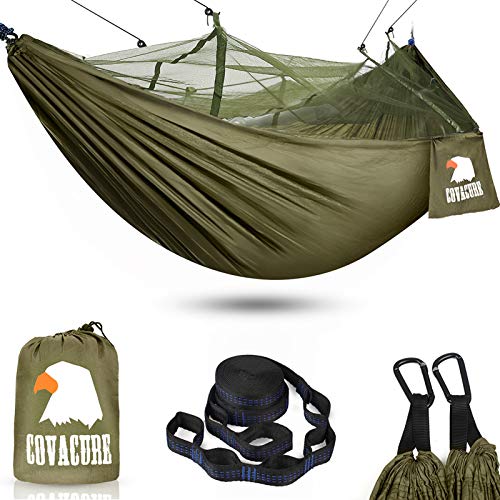
This double hammock presents a strong value with its all-in-one design. It is constructed from durable 210T parachute nylon that is both tear-resistant and quick-drying, promising reliability on many trips. The integrated mosquito net features a higher density than many comparable models, offering improved protection from insects.
Convenience is a major benefit, as the net can be removed by detaching a string and flipping the hammock over when not needed. A built-in storage bag adds a practical touch for keeping small items secure. With a generous weight capacity of 440 pounds and a total weight under two pounds, it balances strength with portability for two campers.
Oak Creek Lost Valley Camping Hammock Bundle
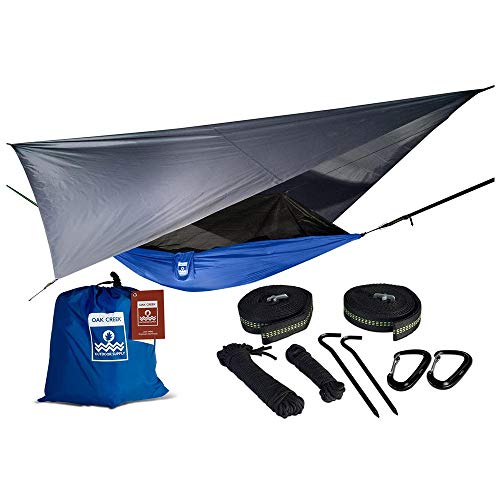
This bundle is ideal for the camper who wants a complete shelter system ready right out of the bag. It includes not only the single hammock and mosquito net but also a rain fly, tree straps, stakes, and guy lines. This comprehensive package means you are prepared for both bugs and rain without needing to purchase additional components.
The hammock is made from strong parachute nylon with reinforced stitching, supporting up to 350 pounds. A thoughtful addition is the interior accessory pouch, perfect for securing a phone or flashlight within easy reach. Weighing four pounds total, it remains a manageable load for most camping scenarios where full weather protection is required.
Double Hammock – Everest Bug Free Camping Tent

This model focuses on creating a secure, bug-free environment for two people. It features a reversible integrated bug net with YKK zippers, known for their durability and smooth operation. The use of ripstop diamond weave nylon adds to the overall strength and longevity of the hammock body.
The design simplifies setup by integrating the net directly into the hammock, eliminating the hassle of a separate net that needs to be hung. Included carabiners and tree saver straps contribute to a complete and user-friendly system. It is a solid choice for couples or friends who prioritize straightforward bug protection in a double hammock format.
Lawson Hammock Blue Ridge Camping Hammock and Tent

The Lawson Hammock stands out with its patented design that truly functions as both a hammock and a tent. A unique arch pole and spreader bar system provides structure, allowing it to be used suspended between trees or set up on the ground as a traditional bivy tent. This versatility is unmatched, making it perfect for locations where suitable trees are not guaranteed.
It has earned top ratings from major outdoor publications for its innovative approach. The system includes a rainfly and bug net, offering full protection in either configuration. For campers who frequent varied terrain or simply want the ultimate flexibility in their shelter choice, this model is a leading option.
Hennessy Hammock Explorer Deluxe Zip XL

Hennessy Hammock is a pioneer in the category, and the Explorer Deluxe Zip XL represents decades of refined engineering. Designed for taller individuals up to 7 feet, it uses robust materials like a 140d nylon bottom and a polyester ripstop rainfly. The side entry system features a full-length YKK zipper for easy access.
This is a complete, professional-grade system favored by serious backpackers and outdoor organizations. Details like the gear loft on the ridgeline and elastic “hold opens” for the mosquito net demonstrate thoughtful design. It is built for uncompromising performance and long-term reliability in the backcountry.
CROSSHIP Camping Hammock Set with Net & Underquilt
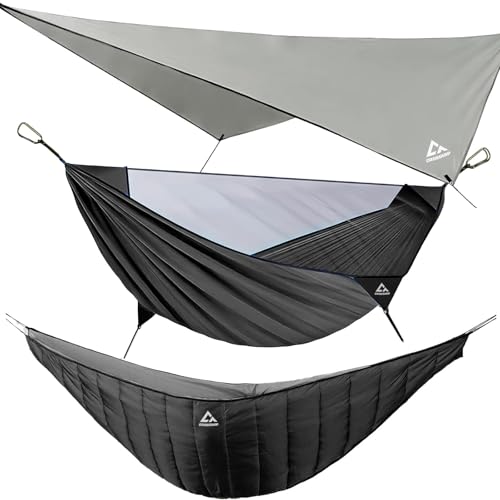
This comprehensive set is notable for including an underquilt, a key accessory for cooler weather hammock camping. The underquilt hangs beneath the hammock to provide insulation from convective heat loss, greatly extending your comfortable camping season. Along with the mosquito net and rain fly, it creates a full four-season capable system.
The hammock itself is made from strong parachute nylon and supports an impressive 500 pounds. The inclusion of all these core components in one package offers significant value and convenience. It is an excellent choice for campers who face variable weather conditions and want a single purchase to cover all their needs.
Tentsile Stingray V3 Tree Tent

The Tentsile Stingray is in a category of its own—a true suspended tent rather than a traditional gathered-end hammock. Its unique three-point anchoring system creates a taut, flat floor that can comfortably accommodate three adults. This design feels more like a treehouse or a portable tent platform.
It uses super strong, durable fabrics and includes a high-quality rainfly rated for heavy rain. The spacious interior and stable sleeping surface are ideal for group camping or families. For those looking for a social, ground-like sleeping experience high in the trees, the Stingray is a remarkable and innovative shelter.
Kammok Mantis All-in-One Ultralight Hammock Tent
The Kammok Mantis is engineered for backpackers who prioritize a fast, simple setup without sacrificing protection. Its all-in-one design integrates the hammock, bug net, rainfly, and suspension into a single, cohesive unit that stuffs down compactly. The focus on streamlined efficiency reduces setup time and complexity in the field.
Built with lightweight yet strong materials, it is intended for the weight-conscious adventurer. The design includes thoughtful touches like color-coded straps for easy identification. It represents a premium, ultralight solution for backpackers who want a reliable and complete hammock shelter system that is quick to deploy.
Grand Trunk Skeeter Beeter Pro Hammock
This hammock is a well-regarded option that focuses on effective insect protection and comfort. The attached mosquito net is designed for full coverage and easy entry, providing peace of mind in bug-heavy environments. The hammock body is made from a soft, breathable polyester blend that is comfortable for extended lounging or sleeping.
It strikes a balance between the simplicity of a basic hammock and the necessary utility for camping. The netting stows away neatly when not in use. Known for its reliability and user-friendly design, it is a popular choice for campers who want a dedicated bug-proof hammock without an overly complex system.
Buying Guide: How to Pick the Best Hammock Tents for Camping
Choosing the right hammock tent can be the difference between a great night’s sleep and a long, uncomfortable one. I’ve spent a lot of nights off the ground, and I’ve learned what separates a good setup from a bad one. It’s not just about picking the prettiest one; you need to think about how you’ll actually use it.
First, consider the capacity and size. Are you a solo adventurer, or do you want to share the space with a partner or even a dog? Most single hammocks are plenty roomy for one person, but if you’re looking at a double, check the actual dimensions and weight limit. My personal rule is to go a size larger than you think you need – the extra fabric makes for a more comfortable lay. Next, look at the included suspension system. This is your lifeline. A good kit should have strong, adjustable straps that are at least 1 inch wide to protect tree bark. I avoid anything with thin, damaging ropes.
Material and weather protection are huge. For the hammock body, look for durable, breathable nylon like ripstop. The real key is the rain fly. A full-coverage tarp with sealed seams is non-negotiable if you think you’ll ever see a cloud. For buggy areas, a built-in, no-see-um mesh net is a sanity saver. Some models offer these as separate add-ons, while others are all-in-one systems. I prefer integrated systems for faster setup, but separate pieces offer more flexibility in fair weather.
Finally, think about the little things that make a big difference. Does it have a ridgeline to keep the netting off your face? Are there interior gear pockets for your headlamp and phone? How small does it pack down, and what’s its total weight? If you’re backpacking, every ounce counts. For car camping, you can afford a bit more luxury. Remember, the goal is to find a shelter that gets you excited to hit the trail, not one that makes you dread setting up camp. Taking the time to match these features to your specific trips will lead you to your perfect off-the-ground home.
Frequently Asked Questions
Are hammock tents warmer than regular tents?
Not inherently, no. In fact, you can get colder due to convective air flow underneath you. The key is insulation. In a ground tent, your sleeping pad insulates you from the cold earth. In a hammock, you need an underquilt or a specially designed sleeping pad to block the wind and trap warmth. Once you add that insulation, many people, including myself, find them incredibly cozy as you’re suspended in still air away from damp, cold ground.
Can I use a hammock tent if there are no trees?
It’s a challenge, but there are solutions. Some companies sell standalone hammock stands that are great for backyard use. For the backcountry, you can occasionally use large boulders or other sturdy anchors with the right equipment, but it’s not ideal. If you often camp in open areas like beaches or above the treeline, a traditional tent is usually a more reliable choice. The best hammock tents for camping are designed with trees in mind.
Is it bad for the trees to hang a hammock?
It can be if you don’t do it responsibly. Always use wide, tree-friendly straps (at least 1 inch wide) instead of thin ropes or cords that can cut into the bark and damage the tree’s vital cambium layer. Never hang on young, slender, or dead trees. Follow Leave No Trace principles, and the trees will be just fine for your next visit.
How difficult is it to set up a hammock tent?
Most modern models are surprisingly simple. After you’ve done it a few times, setup can often be faster than pitching a traditional tent. The basic process involves wrapping the straps around two sturdy trees, attaching the hammock, tightening the ridgeline (if it has one), and then draping and staking out the rain fly. The trickiest part is getting the tension and hang angle just right for a flat lay, which you’ll get a feel for quickly.
Can I sleep on my side in a camping hammock?
Absolutely! This is a common misconception. The secret is to lie on a diagonal across the hammock, not straight down the middle. This allows you to get a much flatter, more natural sleeping position. A structurally integrated ridgeline (a fixed rope running the length of the hammock) is crucial here, as it maintains the perfect sag for diagonal lying regardless of how far apart the trees are.